
Anthropic’s “too powerful for public” Claude Fable 5 finally goes public
A release that signals Anthropic is moving from internal gatekeeping to public experimentation, with government and finance watching.
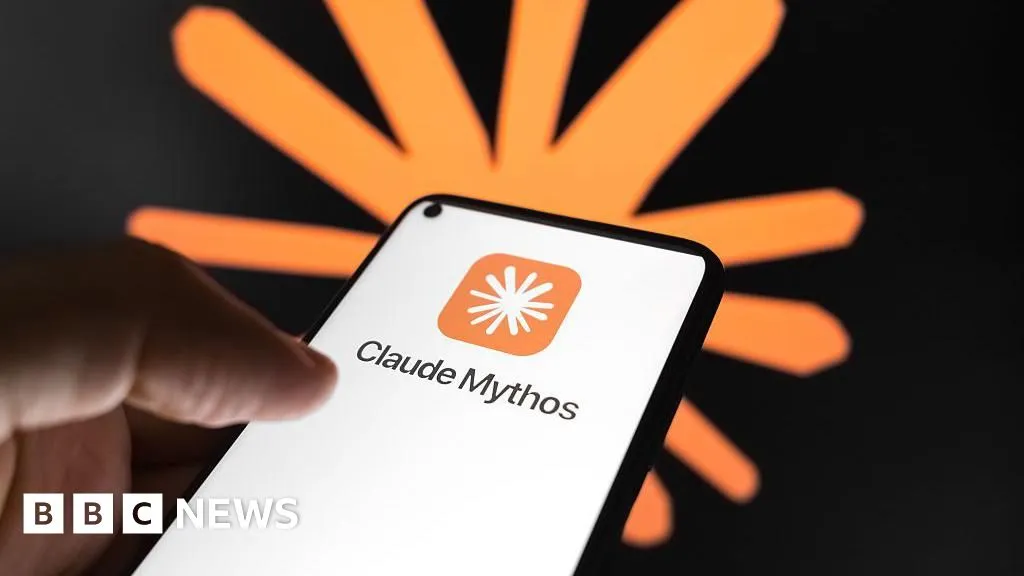
Anthropic released Claude Fable 5, a version of its Claude Mythos AI program that had already drawn attention from leaders in technology, finance, and government. For decision-makers, the key shift is a change in access, not capability, and it raises new questions about risk tolerance and oversight.
Claude Fable 5 has been released to the public, despite earlier claims that a version of the AI tool was “too powerful for public.” The BBC News Technology report frames Claude Fable 5 as a version of Anthropic’s Claude Mythos, the AI program that already caused a stir across technology, finance, and government circles.
In other words, this is not just another model drop. It is a signal from Anthropic about where it draws the line between internal testing and public availability. The headline promise is immediate: a tool that was previously considered too powerful for general release is now out in the open. That matters because “public” changes the environment around an AI system. Suddenly, more people can experiment with it, more parties can evaluate it, and more regulators can cite what is actually happening rather than what could happen.
To understand why everyone is paying attention, it helps to recall how AI risk governance usually works. Organizations rarely treat “public release” as a binary switch where nothing changes except who can click a download button. Making an AI tool broadly available tends to increase usage diversity. That means new user behaviors, new prompting patterns, and new edge cases, including ways an AI system can be pushed beyond its originally intended use. In fast-moving AI markets, this accelerates learning for builders and evaluators, but it also compresses the time between deployment and discovery of problems. That tradeoff is at the heart of why a “too powerful for public” label would matter in the first place.
Claude Mythos, according to the BBC, is what sparked the earlier stir. The report notes that the program drew attention from leaders in technology, finance, and government. That cross-sector reaction is the useful context for executives: it suggests the concern is not limited to a technical niche. Finance and government involvement typically shows up when AI systems are perceived as having potential reach into decision-making, operational workflows, or policy outcomes. When those communities get involved, it often triggers a more formal risk posture, including discussions about oversight, auditability, and appropriate constraints.
Now consider what Claude Fable 5 being released changes for each stakeholder. In technology, a public release invites broader benchmarking and competitive pressure. Other labs and integrators will compare performance, usability, and how the system responds to different prompts. In finance, a widely accessible model can raise questions about whether it can be used directly in workflows, whether it creates new kinds of operational risks, or whether it becomes part of due diligence and internal controls. In government, public availability can shift the regulatory conversation from theory to observed behavior. Regulators usually prefer evidence, and evidence is easier to gather when a system is in public hands.
For boards and leadership teams, this is also a governance moment. When an AI system is publicly released after being described as “too powerful for public,” the board has to ask what changed. Was the assessment of capability updated? Were safety mitigations strengthened? Was the “too powerful” framing meant to prevent early unrestricted access, and now the product is packaged in a safer format? The BBC report does not provide those internal details. But the external implication is clear: public release is an organizational decision with compliance and reputational weight, not just a product milestone.
There is also a market dynamic hiding inside the headlines. AI releases are accelerants. When a high-profile system moves from restricted to public, it can set user expectations across the industry. Customers start to assume faster iteration cycles and more capable tools. That raises the stakes for competitors and for companies building on top of these systems. If Anthropic is willing to put Claude Fable 5 in public view, that can pressure other leaders to justify their own timelines and safety positions, especially if they are facing similar scrutiny from finance and government stakeholders.
Finally, for decision-makers in similar roles, the strategic takeaway is simple: this is a credibility test. Claude Fable 5 is not introduced as a minor upgrade, it is presented as part of Claude Mythos, a tool that already made waves. By moving it into public release territory, Anthropic is effectively inviting the market to validate its risk stance in real time. The winners will be teams that can learn quickly from real-world use without letting adoption outrun oversight.
This story's Key Insights and Take-aways are locked.
Create a free account to unlock Executive Actions for one credit.
Register to UnlockAlways free for Executives Club members. Join the Club
More in Technology

NordVPN’s Saily now sells a US number via eSIM for $1 per month
A new Saily eSIM option turns a VPN company into a telecom-lite player, with real implications for growth and risk.

Gemini and face-ticketing are the World Cup’s fan-facing tech bet
Google drives consumer AI while biometric gates turn a fan’s face into access, reshaping security and customer flow.

Xbox boss Asha Sharma: mass audiences cannot afford “thousands of dollars” for consoles
As next-gen Xbox codename Project Helix draws near, Sharma says Microsoft must shift to radically different console business models.