

Anthropic told to cut off non-U.S. access, and open-source surged 30% in Hong Kong
The Commerce order around Mythos 5 and Fable 5 could accelerate cheaper, downloadable models, especially from China.
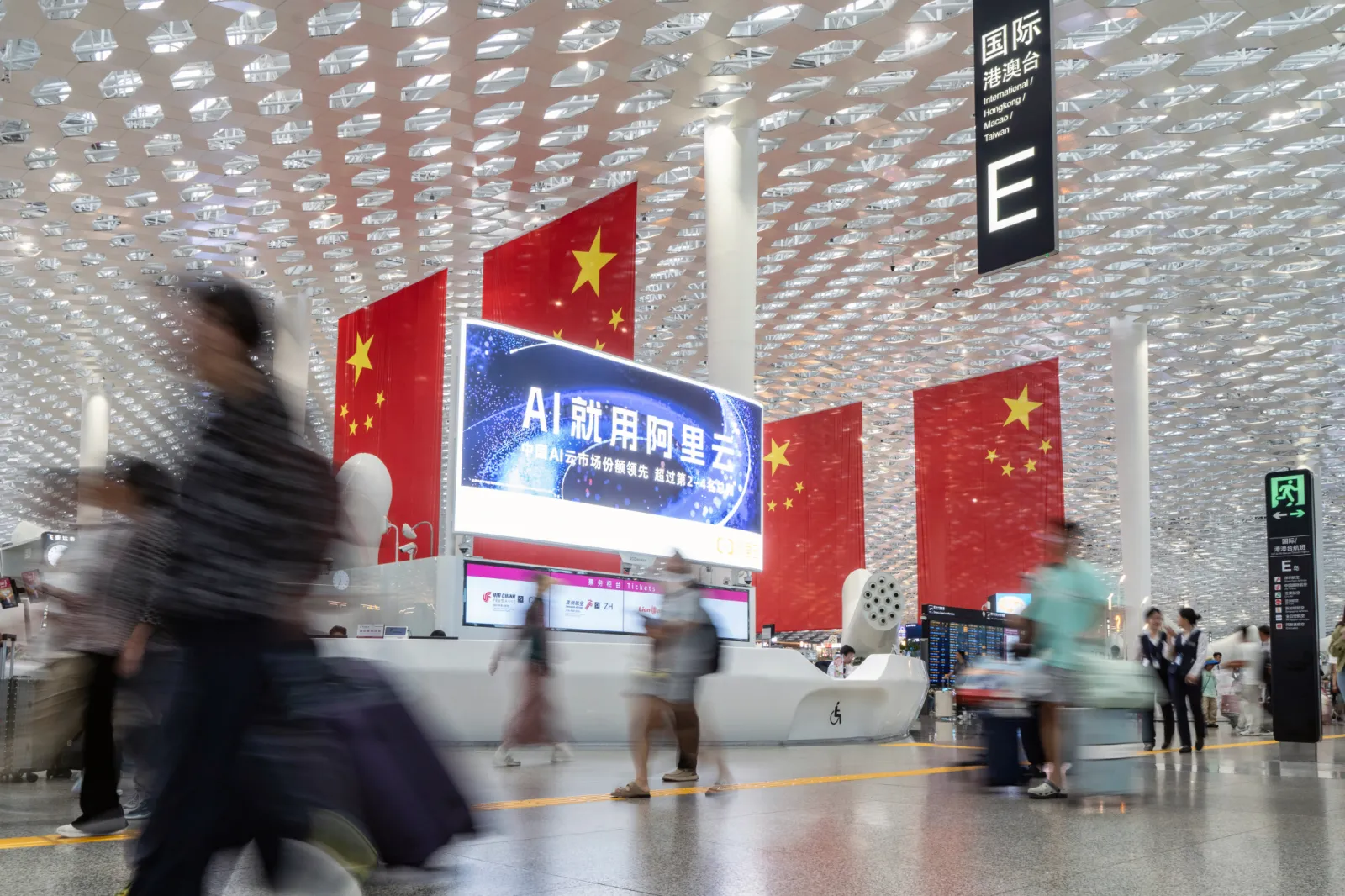
Anthropic suspended access to its frontier models Mythos 5 and Fable 5 for non-U.S. nationals after a U.S. Department of Commerce order. The fallout is already boosting open-source adoption, including Chinese lab Z.ai, whose GLM-5.2 launch helped shares jump more than 30%.
Anthropic’s Mythos 5 and Fable 5 just got a hard regulatory speed bump. On Friday, the company revealed the U.S. Department of Commerce ordered it to stop providing access to its frontier models to anyone outside the U.S., and the way export rules are interpreted also means Anthropic cannot offer the models to any “foreign national” inside the U.S., including its own employees. In response, Anthropic suspended access to these models for all users.
And while that sounds like a U.S. story, the market reaction landed across the Pacific. Fortune reports that shares in Knowledge Atlas Technology, better known as Z.ai, surged by over 30% in Hong Kong trading on Monday after it released the latest version of its open-source model, GLM-5.2. Z.ai’s shares are up more than 800% since they debuted in January. The timing matters, because it signals how fast the “access” fight turns into “capability” bets, with open-source positioned as the workaround.
Here’s the core mechanism. Open-source models can be downloaded and run by users on their own computers or cloud networks. That can sidestep whatever access restrictions both AI developers and governments try to impose, because there is no single vendor gatekeeping the model at runtime. Open-source also tends to be easier to fine-tune, letting developers adapt it for specific use cases rather than waiting for a closed vendor’s roadmap.
Z.ai is not subtle about why it thinks this moment favors its approach. After the Anthropic news, Z.ai posted that “frontier intelligence should not belong to only a few people, nor be subject to withdrawal by a handful of rules at any moment.” The statement also referenced the broader idea that “frontier intelligence should not... be subject to withdrawal by a handful of rules at any moment,” a point attributed in the source to a post by Z.ai on social media. The company’s pitch is basically that model availability should not depend on nationality and policy reversals.
The adoption data the source points to is already moving in that direction. Demand for Chinese models has overtaken that for U.S. models on OpenRouter, a platform for accessing different AI models. Last week, the top four most-used models on that platform came from Chinese companies: DeepSeek, MiniMax, Tencent, and Xiaomi. That matters to executives because OpenRouter is a “routing layer.” When access policies tighten around frontier models from U.S. providers, platforms that aggregate alternatives can see traffic shift quickly, and those shifts can become sticky even if policy later loosens.
To understand why this is happening, you have to zoom out to the regulatory logic. Anthropic had previously argued its Mythos model was too powerful to be released to the public without safeguards, and it built an early-access program called Project Glasswing to allow key institutions to uncover security vulnerabilities. Institutions in about 15 countries, including U.S. allies like Japan and South Korea, eventually got access through that program. But Commerce’s order forced a wider cutoff. The source also flags a more alarming implication: if export controls are interpreted to hit other U.S. frontier labs, then non-U.S. organizations could be locked out from the best U.S.-developed models.
That is why open-source is suddenly a board-level topic, not a developer hobby. Governments looking for “sovereign AI” can invest in models and infrastructure they can domestically control, rather than relying on U.S.-based access decisions. Paul Triolo, a partner at DGA-Albright Stonebridge Group, is quoted in the source saying this is the first time a government ordered a model developer to restrict access to a particular model based on nationality. He adds that companies and governments will reconsider how they develop applications based on a specific model, and that governments will start thinking more carefully about which partners they want for sovereign AI deployments. Until there is further clarity about what criteria the U.S. government uses, the source says organizations will explore alternatives including non-U.S. origin models, such as Mistral and Cohere, and “capable Chinese open-source models.”
Even with the hype, there are real performance gaps. The source notes that neither OpenAI nor Anthropic makes its models available in China, including Hong Kong (which sits outside Beijing’s internet controls). Both Anthropic and OpenAI have accused Chinese labs like DeepSeek of conducting “distillation” attacks, where their models are used to train smaller, more efficient models. Still, Chinese models lag U.S. frontier offerings. DeepSeek’s most recent model V4 performs at approximately the same level as Anthropic’s Claude Opus 4.6 and OpenAI’s GPT-5.4, and the source provides release timing: those U.S. models were released in February and March 2026, while DeepSeek estimated it was three to six months behind state-of-the-art frontier models.
The pricing gap is where the strategic math changes fast. The source reports DeepSeek’s V4 Pro cost $3.48 for 1 million tokens of output, while Anthropic’s Fable 5 cost $50 for the same output. A token is described in the source as a basic data unit roughly equivalent to about a word-and-a-half of English text. In other words: when access is uncertain and cost is stark, “good enough” plus deployability can beat “best possible” plus policy risk.
This also intersects with China’s longer push for tech self-sufficiency. The source ties the moment to controls that began in 2022, when the Biden administration placed restrictions on the sale of advanced chips and chipmaking equipment. Counterpoint Research’s Neil Shah is quoted saying the U.S. export controls mean Chinese labs are not on the cutting edge “because of the export controls,” but that they have their own silicon and software. For executives, the second-order implication is uncomfortable: when a country or region builds enough software capacity to keep shipping, regulatory chokepoints can shift from “access control” to “market reallocation,” and the winners may not be the ones with the flashiest benchmarks.
So what should boards do with this? If your AI strategy quietly depended on one closed provider’s access, Anthropic’s reversal is a reminder that availability can change overnight based on nationality and policy interpretation. The source says Asian governments have made public pushes for sovereign AI, including South Korea, which launched a national state-backed competition for Korean-language AI models, and Japan, which is suggesting it might turn to OpenAI to bolster cybersecurity defenses. That mix of redundancy and diversification is the takeaway: in an environment where access can be restricted by export rules, executives should treat model sourcing as supply-chain risk, not just vendor choice.
This story's Key Insights and Take-aways are locked.
Create a free account to unlock Executive Actions for one credit.
Register to UnlockAlways free for Executives Club members. Join the Club
More in Technology

Nvidia's $89B data center quarter: the 9 companies cashing in
The AI buildout is minting fortunes beyond GPUs, and memory, cloud, and cooling suppliers are riding the same wave.

A YouTuber dissected the iPhone Duo and thinks he found crackgate's cause
CuriousHagi's teardown of Apple's foldable reveals a gear-like hinge that may explain why screens crack in the same spot within hours.

Google quietly links your phone number to every Android account on your SIM
Adding a SIM now ties your phone number to all Google accounts - and future accounts inherit it. Here's the security and privacy stakes.