
Apex Capital survey finds 61% of wealthy Americans would consider leaving in 5 years
The investor-immigration world says America is starting to look like Hong Kong did in the 1980s.
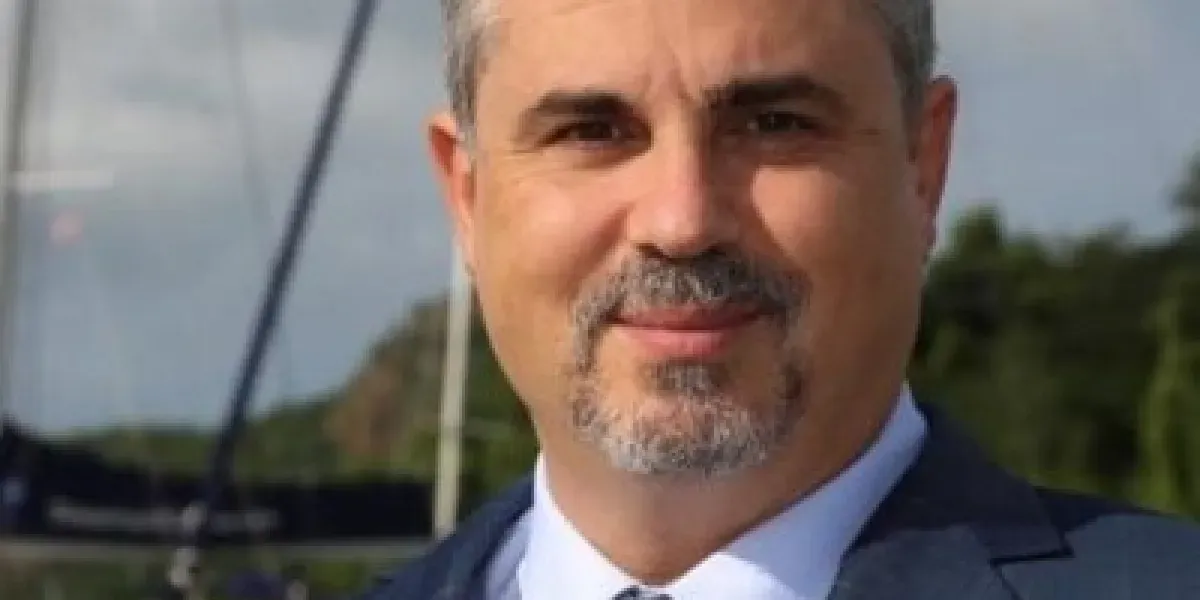
Nuri Katz, founder of Apex Capital Partners, says his firm’s June survey of 1,733 Americans earning over $200,000 found 61% would consider leaving within five years and nearly 63% considered diversifying assets abroad. The consequence for executives: a faster shift from sentiment to cross-border action, driven as much by economics as politics.
Nuri Katz is a professional witness to exits. He’s spent 34 years helping the ultra-rich move their residence from one country to another through “investor immigration,” and now he says his clients are showing something he has “never seen before” in his industry: the United States is becoming a top destination for wealthy people looking to diversify abroad.
Katz points to his June data to prove it, not just his intuition. In a proprietary survey of 1,733 Americans with household incomes above $200,000, 61% said they would consider leaving the United States within five years. Nearly 63% said they had considered diversifying assets outside the country, and three in four expressed concern about the future of the U.S. tied to the Iran War. “I don’t want to say shocked,” Katz told Fortune. “But I was surprised. That’s a blessing for my company-but a problem for the U.S.”
If you operate in finance, wealth management, real estate, compliance, or international expansion, that “problem for the U.S.” is the part worth sitting with. Katz’s industry exists because a subset of the ultra-wealthy treat passports and asset location like risk management, not tourism. And he argues the underlying fear is widening from a narrow political anxiety to a broader economic reckoning.
Start with what drives intent. In the same survey, cost of living and taxes ranked above political climate as the primary driver for those open to emigrating, cited by 68% of respondents compared to 54% who named politics. That is a shift in the client psyche for a firm whose historical client motivations “used to be related to politics.” Katz says he is seeing clients from both sides of the aisle now. People on the left are afraid of Trump and what a Trump presidency could mean, including whether he could pursue a third term. People on the right, he says, worry about a reaction to Trump that could move the country sharply left and bring socialist politicians into power, noting the rise in popularity of socialist politicians. The result is not one ideological camp getting louder. It is both camps getting nervous.
But Katz insists economics sits under the politics. Beneath the conversations about parties and elections, he hears a structural discomfort with the U.S. dollar and the ballooning national debt he believes is only starting to hit mainstream discourse. He says most entrepreneurs and wealthy people are heavily concentrated in U.S. dollar assets: 401(k)s, U.S. real estate, stock portfolios, and relatively few holdings in euros or Swiss-franc denominated assets. He claims clients are increasingly “coming to the understanding that the U.S. dollar isn’t going to be the reserve currency forever and it might end sooner than later.” He also calls out the $39 trillion national debt (and growing) as a forcing function, and he frames it in stark terms: there are “only two ways” to work out of that debt. One is “printing more money and creating higher inflation,” the kind that he says America has “never seen,” which would make post-COVID inflation look like “kindergarten.” The other is default, which he says would “end the financial world.”
Katz is not alone in the macro narrative he is pointing to. Ray Dalio, founder of Bridgewater Associates, has spent years warning about a “big debt cycle.” Dalio argued in his 2021 book Principles for Dealing with the Changing World Order that the U.S. is in the late stages of a reserve-currency pattern he has traced across centuries. Fortune notes Dalio’s posts as well, including a LinkedIn reference where he wrote, “For me, watching what is happening is like watching a movie I’ve seen many times before.” Independent research cited by Fortune adds weight to the demand picture: the Henley Private Wealth Migration Report for 2025 found a record 142,000 millionaires relocated countries that year, projected to rise to 165,000 in 2026.
So what does this mean for the “destination map” of the ultra-wealthy? Katz says the United States is emerging as the new China of the 2020s, drawing a parallel to the late 1980s era when Hong Kong’s handover to mainland China became real. He suggests his industry would not exist without that kind of geopolitical shock, because investor immigration is basically a hedge against uncertainty. Today, he says, the industry is seeing action levels that feel faster than before. Before COVID, Americans barely registered in investor immigration. Now he says North America’s growth in interest is the fastest of any country, with applications for second residences or citizenships growing “by hundreds of percentages a year.” The survey Fortune published reflects intent rather than completed moves, but Katz says the sentiment starts somewhere and then turns into action over time, and the survey’s “weak or very weak” U.S. economy rating supports that direction: 42% said they rated it that way.
Preferences are shifting too, and that’s where executives should pay attention. In Katz’s survey, 42% favored Europe, 18% Canada, and 16% the Caribbean. Katz is cautious about Europe’s pitch. He calls the EU “dysfunctional,” describes many European economies as “in a state of flux” and “in big trouble,” and says many wealthy European countries are “just bleeding money.” He characterizes Portugal’s residential real estate golden visa pathway as shuttered in 2024, notes Spain tightened its program, and says Italy’s option remains but the map is “in flux.” His next frontier, he believes, is the Caribbean, and potentially Argentina, which he says is developing the first Citizenship by Investment program in South America, with expectations of significant American interest due to time zone, hemisphere, and business climate reforms.
Put it together and you get a business signal that is bigger than one survey: Katz says he lives inside these cycles, watching empires wobble “from close range” his entire adult life. The strategic stake for boards and C-suites is that cross-border wealth decisions can accelerate quickly once concerns stop being abstract. If large pools of high earners increasingly want optionality on residence and asset location, that can ripple into capital flows, tax and compliance planning, and how global firms structure products and services. Katz’s phrase for it is blunt: he says he’s never seen anything like this in America. For the executives watching their markets, that might be the clearest early warning system available.
This story's Key Insights and Take-aways are locked.
Create a free account to unlock Executive Actions for one credit.
Register to UnlockAlways free for Executives Club members. Join the Club
More in Business

A flaw in PHP just forced governments to pull their own sites offline
European agencies from Belgium to Germany took websites dark to patch a critical weakness in the language behind almost 70% of the web, and the blast radius extends far beyond government portals.

BioWare shuts down, Mass Effect 5 dead after $55B EA buyout
The legendary RPG studio's closure lands months after a $55 billion investment group buyout of EA, raising tough questions for gaming's biggest acquirers.

Musk weighs Tesla-SpaceX mega-merger as boards form review panels
Special committees at both companies will examine a tie-up that could fuse electric vehicles and space launch, forcing a fresh look at governance and valuation.