

Arkansas funds a private school after a 40-minute assault on a 13-year-old
A private program scaled fast with vouchers, but oversight focused on money, not the classroom or operators.
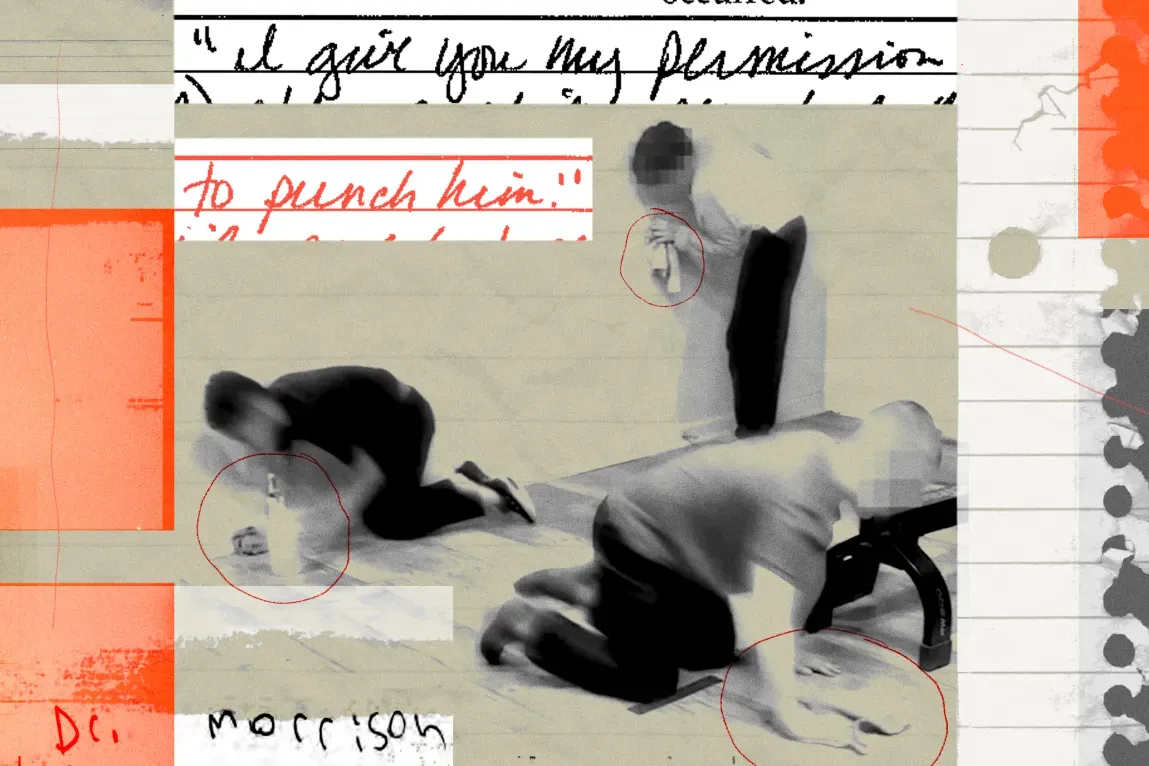
Mary “Tracy” Morrison, who founded The Delta Institute for the Developing Brain near Jonesboro, Arkansas, led a group “discussion” in April 2025 in which students assaulted a 13-year-old boy. Despite criminal charges and jail time resulting from video evidence and reports to authorities, Arkansas’ Education Freedom Account program continues to fund tuition for private schools with minimal quality oversight.
A private school in Arkansas kept operating after a video captured nearly 40 minutes of students assaulting a 13-year-old boy, with the school owner, Mary “Tracy” Morrison, orchestrating the “group discussion.” The clip shows Morrison directing a circle of 19 seated middle school students, calling out the boy’s alleged behavior, kneeling close, swatting and prompting the other children to get physical, then giving one student a high-five as the attack escalates. The assault includes slapping, pinching, punching, and a thwack with a footlong plastic cylinder, while Morrison repeatedly calls him a liar. Afterward, she makes the boy apologize to his classmates for mistreating them. Three other school employees were in the room and did not intervene.
What makes this more than a disturbing one-off is that Morrison’s school sits inside Arkansas’ rapidly expanding voucher-style Education Freedom Account, or EFA, program that lets families spend public money on private school tuition. Morrison opened The Delta Institute for the Developing Brain just outside Jonesboro in 2024 after legislators made public money available for private school tuition. The state has been “hands-off” on the content and conduct of what happens inside private and microschools, requiring only basics like regular fire drills, immunization records, and an American flag and flagpole, but not reviewing curriculum or screening operators’ backgrounds and capabilities. Morrison did not respond to ProPublica’s requests for an interview.
This all tracks with a larger policy shift. Arkansas lawmakers passed the LEARNS Act in 2023, creating the EFA program. Before that, state schools secretary Jacob Oliva promised there would be “accountability for the schools that participate,” but the oversight the department built largely emphasizes finances. The Arkansas Department of Education has the power to conduct random financial audits of private schools, require schools to report tuition and fees, and mandate that schools measure student achievement with tests of their choosing. Beyond that, the state only lightly polices how families can spend EFA money. In the spring under pressure to tweak rules, the department changed what parents can pay for with the funds, banning expenses like travel sports teams, while controversy flared among lawmakers who argued for less government interference and said parents should judge safety and learning.
Meanwhile, the private school supply surged. In 2023, Arkansas had about 100 private schools, according to state records. Now there are about 220, not counting roughly 100 microschools that were not previously tracked or publicly funded. The speed matters because it changes how risk propagates. When oversight is light and operator screening is minimal, new capacity can appear faster than quality assurance, leaving families to rely on branding, word-of-mouth, and claims made directly to parents. ProPublica reports that Morrison presented herself as an expert in autism and ADHD, known to parents and students as “Dr. Tracy,” and families said they put faith in her. Her resume says she has a doctorate in occupational therapy and cognitive neuroscience from Washington University in St. Louis. The university said that degree is only in occupational therapy.
After Morrison and the children assaulted the boy, criminal charges and jail time followed from a “group discussion” video obtained by ProPublica from The Delta Institute for the Developing Brain. Morrison’s school operating model also raises questions about fit and competence. The Delta Institute “didn’t look much like a school,” operating in a white colonial house with bedrooms converted into classrooms. Yet Arkansas’ regulatory requirements do not review curriculum or operator backgrounds, and “anyone is free to open one,” ProPublica reports. This is where the system-level incentives show up: the state can ensure certain administrative items exist, and it can audit tuition and fees, but it is not built to detect whether a school’s day-to-day practice is abusive, coercive, or unsafe before harm occurs.
The day after the assault, the boy’s mother walked into the Craighead County Sheriff’s Office to write out a report. ProPublica notes it was not the first report about Morrison’s treatment of children at the Delta Institute that the sheriff’s office took, and that another mother had reported abuse about three weeks earlier. Yet the story also includes how reporting channels for voucher-related issues appear to have stumbled. When the EFA program began, the Department set up a hotline and email address for suspected fraud or misuse. About a dozen emails raised concerns about student well-being, but several complainants told ProPublica that they did not hear back from state officials. One teacher reportedly said she got no response after emailing in April about students transferred to her school being deprived of a “basic education” at the microschool they previously attended.
Scale is the accelerant here. This upcoming school year, Arkansas expects nearly 55,000 students will use Education Freedom Accounts for tuition and other expenses. With most students getting about $7,000 each, the program cost about $310 million in taxpayer funds this past school year. Only 12% of participants reported that they’d previously attended a public school, meaning many participants are new to the public system, less able to compare experiences, and more reliant on what private operators deliver. For executives, boards, and investors watching the education-services space, the strategic stake is clear: if policy money can move faster than operator oversight, the reputational, legal, and operational blowback will land on everyone connected to the ecosystem, not just the worst actor.
Even more, the governance gap can become a competitive moat. Schools built around strong safeguarding, credible staffing, and transparent outcomes will look “expensive” relative to an arms-race of rapid openings. But in a system that funds tuition without meaningful quality monitoring, the risk is that the loudest claims, not the safest environments, win customer attention. Morrison’s case is an extreme example, but it spotlights a broader lesson executives know well in any fast-scaling regulated market: when oversight is mainly financial, the business will optimize for whatever is easiest to prove, not whatever is hardest to harm.
This story's Key Insights and Take-aways are locked.
Create a free account to unlock Executive Actions for one credit.
Register to UnlockAlways free for Executives Club members. Join the Club
More in Business

Epic and Google drop settlement bid, forcing rival Android app stores by July 22
Google told the court it is ready to carry third-party app stores starting Wednesday, July 22.

SK Hynix opens at $170, raises $26.5B, and tops foreign IPO records
In Friday's Wall Street debut, SK Hynix turns AI RAM demand into a $26.5B fundraising moment that rewrites comps.

China lands a reusable Long March booster, a first that matches SpaceX and Blue Origin
A barge landing and net-based recovery move China from theory to proof, reshaping the reusability race and satellite ambitions.