

Arteta calls Newcastle draw 'unacceptable' as Arsenal squander two points
The champions still lead by six, but Mikel Arteta's blunt verdict at St James' Park shows how little room for error he believes his side has.
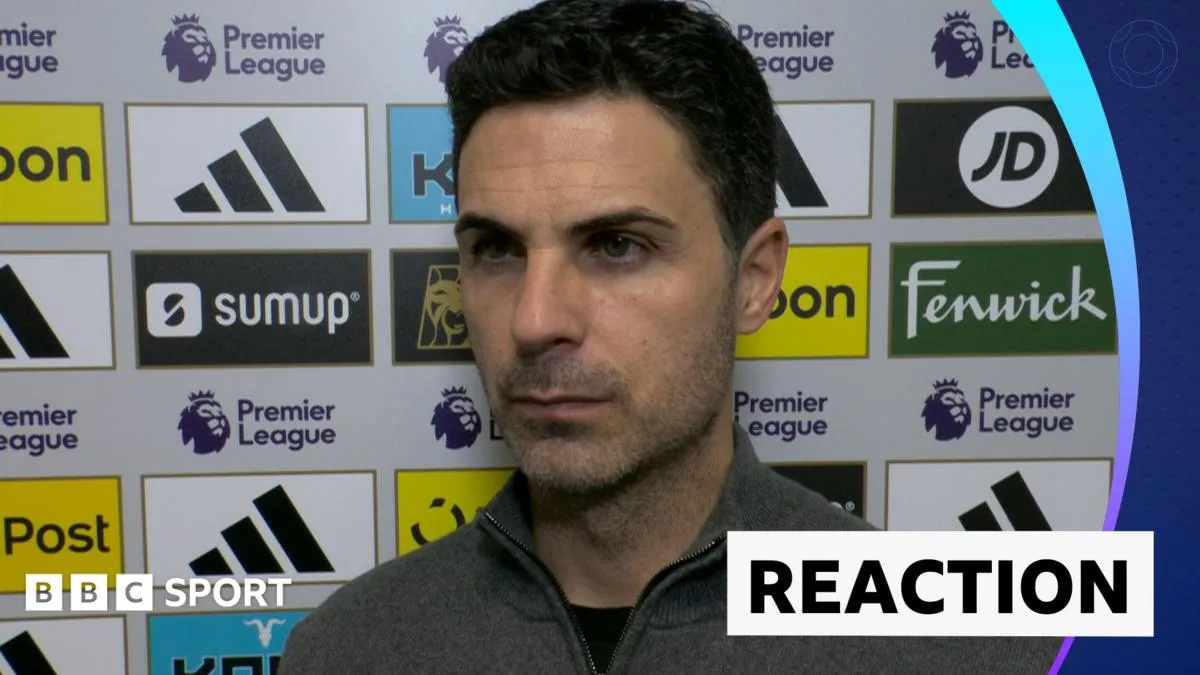
Arsenal manager Mikel Arteta said his side 'lost two points' and labelled their 2-2 draw at Newcastle United 'unacceptable', even though the result leaves the reigning Premier League champions six points clear at the top of the table. For decision-makers, the episode is a case study in how leaders frame a result that looks fine on paper but fails an internal standard, and why that framing carries real weight in a title race measured in single points.
Mikel Arteta did not sound like a manager sitting six points clear at the top of the Premier League. After Arsenal's 2-2 draw at Newcastle United's St James' Park, the Gunners boss said his side had "lost two points" and called the outcome "unacceptable", even though the result leaves the reigning champions six points clear at the summit. That is the tension worth understanding: the table says control, the manager says waste. Arteta's verdict is not a complaint about the scoreline so much as a statement about the standard he is holding his squad to, and it lands in a season where the difference between a win and a draw is the difference between a cushion and a knife-edge.
Start with the arithmetic, because it explains the mood. A Premier League season offers 38 matches and 114 points, and the title is historically decided by margins far smaller than most people assume. The 2011-12 race was settled on goal difference in the final seconds; other campaigns have turned on a single point. Two points dropped in autumn rarely feels fatal, but managers think in compounding terms: a draw here, a draw there, and a six-point lead becomes a two-point lead by spring. Arteta's phrase, "we lost two points", is the language of a coach who is already doing that math. He is not measuring the gap to second place. He is measuring the gap to the version of his team he expects to see.
Context matters for why this particular fixture produced that reaction. St James' Park has historically been one of the most demanding away trips in English football, a full house with a reputation for dragging the home side forward and unsettling visitors. Newcastle United, backed by resources that have grown substantially in recent years, are no longer a fixture that top clubs can treat as routine. Drawing there is not, on its face, a disaster. That is precisely why Arteta's language is interesting. He is refusing to let a respectable result be filed as an acceptable one, and he is doing it publicly, where his players will hear it.
The commercial backdrop raises the stakes further. Premier League title races are the league's most valuable product, driving global broadcast audiences, sponsorship interest and merchandise demand. Finishing first rather than second is typically worth millions in merit payments alone, before Champions League revenue and the performance bonuses that are common in player and manager contracts are counted. For a club of Arsenal's size, a title also resets the commercial narrative for the following season: renewal conversations, tour pricing, and the ability to attract players who want to win now. Dropped points are not just dropped points. They are a small tax on every one of those lines.
There is a management lesson buried in the phrasing. "We lost two points" frames the draw as self-inflicted, not imposed by luck, refereeing or the opponent's brilliance. That is a deliberate choice. Leaders who blame external factors protect morale in the short term but quietly lower the bar. Leaders who own the shortfall raise the bar and accept the friction that comes with it. Arteta has chosen the second path, and the trade-off is real: a squad that hears "unacceptable" after a draw at a difficult ground either sharpens or tightens. The next fixture will tell everyone which.
Rivals will read the same quotes differently. A manager publicly unhappy with a draw is a manager who has just told the chasing pack that the leaders feel vulnerable. That is not necessarily a weakness; it can be a signal of seriousness. But it does mean the six-point cushion will be treated as provisional by everyone outside the dressing room. In a league where the top clubs are separated by fine margins in squad depth and fixture congestion, the psychological framing of a result can travel further than the result itself.
For executives outside football, the pattern is familiar. A quarter that beats the plan can still fail an internal standard. A product launch that hits its targets can still be called unacceptable if the process behind it was sloppy. The discipline Arteta is displaying, holding a line when the scoreboard already looks fine, is the same discipline that separates organisations that compound advantages from organisations that celebrate too early. Arsenal are six points clear. Their manager has just made clear that he does not consider that comfortable, and that is the number worth watching as the season runs on.
This story's Key Insights and Take-aways are locked.
Create a free account to unlock Executive Actions for one credit.
Register to UnlockAlways free for Executives Club members. Join the Club
More in Entertainment

Mahershala Ali's Two Oscars Buy Him Nothing: 'There Are Not Roles for Me'
The two-time Oscar winner told the 7PM in Brooklyn podcast that his trophies do not unlock work in 'the vast majority of projects,' a blunt read on what Hollywood's franchise economy actually rewards.

Robert Pattinson Is 007: Amazon's Bond Pick Sends a Divisive Film Surging
Amazon confirmed Pattinson as Bond under Denis Villeneuve, and within days the franchise's most controversial entry started climbing the streaming charts, a reminder that casting is catalog strategy.

GTA 6 Ate Nearly a Quarter of Comcast's Traffic on Its Biggest Day
Comcast says the November 19 launch pushed network traffic 31% above an average day, and the fine print on its own chart is the part operators should read twice.