

Asha Sharma’s Xbox layoffs cut 379 Bethesda-linked jobs in Maryland and Texas
WARN notices detail the hit to Bethesda Game Studios and id Software as Microsoft shifts toward franchise-first collaboration.

New Xbox CEO Asha Sharma’s strategy overhaul is landing through cuts at Bethesda Game Studios, id Software, and ZeniMax Online Studios. Maryland WARN Act notices show 379 layoffs in Cockeysville and Rockville, alongside cuts in Texas and additional remote roles.
New Xbox CEO Asha Sharma’s studio-collaboration push is hitting Bethesda where it hurts: jobs. Maryland WARN Act notices tied to ZeniMax Online Studios show 213 employees laid off from ZOS’s office in Cockeysville, MD, and 166 from ZeniMax Media Inc. in Rockville, MD, for 379 total. On top of that, 96 staff in id Software’s office in Richardson, Texas, were cut, plus 40 additional remote roles.
These are the numbers the industry can point to when questions get political, and the timing is brutal. Microsoft’s restructure has already eliminated 1,600 jobs on Monday, with another 1,600 scheduled over the next 12 months. The reason this matters to decision-makers is simple: these cuts are not just “cost optimization.” They are tied to a strategic pivot about what Microsoft believes it can ship fast, reliably, and at scale.
In an email to Bethesda staff sent after Sharma’s Monday memo, Bethesda boss Jill Braff framed the layoffs as a response to business reality. She said the changes “reflect the realities of our industry and business - and our responsibility to ensure Bethesda is operating from a more stable foundation.” Braff’s core message was that “To be successful in the future, we need to change course,” and that Bethesda must “strengthen our business,” “return to sustainable growth,” and keep investing in its franchises and players.
Then comes the operational switch that staff are likely feeling day-to-day. Braff said Bethesda is shifting away from a “planning model primarily centered on what's next for each independent studio” to one focused on “our strongest franchises,” with a content roadmap designed to best serve “our players and Bethesda as a whole.” From there, Bethesda would “align the right talent, technology, and resources across the organization to deliver on those priorities.” Translation: fewer studio-specific bets, more centralized franchise orchestration.
That franchise-first approach is also where the real second-order anxiety shows up, especially around The Elder Scrolls 6. IGN reported this week about concern from Bethesda Game Studios (BGS) staff that the Xbox layoffs would have a “substantial and cascading effect” on development of The Elder Scrolls 6. Morale took a hit, and fears of crunch followed. The Elder Scrolls 6 has been publicly announced since 2018 and is reportedly at least two more years away from release, with the added worry that it could even be delayed. One Bethesda developer told IGN they fear being “replaced by cheaper, contracted labor,” or hired replacements who would need onboarding because “our tools are proprietary,” which could result in “more delays” and eventually “crunch to make up the time.” Another staff member said they were “already running a tight ship” and worried the layoffs would delay the game, with the important nuance that a final release date was not yet chosen.
If you’re an executive reading this, the danger is not just whether TES 6 ships. It is whether Microsoft’s franchise model can keep long-horizon, tool-heavy work on track while absorbing layoffs across multiple studios. And it is complicated by the structure of Bethesda’s teams: “blended teams across Bethesda locations” means it is difficult to isolate exactly what the affected staff were building. Still, the WARN numbers make one thing unambiguous: the restructure is real, and it is moving people.
On the Fallout side, the message looks more aggressive. Fallout: New Vegas developer Obsidian Entertainment is now working on a new Fallout game after suffering layoffs itself, and Bethesda is said to be supporting Obsidian’s development. IGN reports several Fallout projects are in development across Bethesda and partners, including Fallout 5. It sounds preposterous to think about Fallout 5 right now, but Todd Howard has spoken openly about it coming after The Elder Scrolls 6, and he has confirmed it will take into account canon events of the Fallout TV series. The intention, per IGN, is for Fallout 5 to be released eventually.
Meanwhile, the “live” Fallout project is Fallout 76, which IGN understands remains a significant operation. A source said it still has “hundreds of developers” working on it and that the multiplayer game retains “millions of players.” Fallout Shelter is also alive, and the Amazon Fallout TV show continues with Season 3 filming now. There is also an “open secret” that a Fallout 3 remaster exists, but the source frames it as something already widely expected, not a freshly announced fact.
The pressure point that could be more immediate than TES 6 is The Elder Scrolls Online. IGN reports its development roadmap was forced to change as a result of the Xbox layoffs. It’s unclear how many staff directly working on ESO were cut, but the concern is about both those who remain and the game itself. A source told IGN that ZeniMax Online Studios is supporting a new season model for ESO while also looking for ways to collaborate more closely with BGS to support “the Elder Scrolls franchise as a whole,” which sounds like support aimed at getting The Elder Scrolls 6 out the door.
Even the labor response is shaping the risk profile. BGS’s union, OneBGS, plans to march outside four offices (Rockville, Austin, Dallas, and Montreal) on July 15. In a note sent to IGN, the union alleged 35 positions at BGS were cut in the U.S. and at least 12 more in Montreal. The union claims Microsoft and BGS are trying to frame the cuts as an “entrepreneurial change in the scope of business,” calling the pivot from a “studio-based business model to a franchise-based model” a legal tactic to avoid bargaining obligations, and it says the union “completely reject[s] this corporate wordplay.”
Finally, there is the question everyone will ask internally: what happens to Starfield? After the Xbox layoffs, fans pointed out Starfield’s absence from Bethesda’s priority list. The source notes Starfield largely failed to meet expectations upon its 2023 launch and that subsequent updates and expansions have not really moved the needle. Still, some hardcore fans hoped for more expansions, and maybe a sequel. IGN reports sources say there are no changes to the current Starfield... plans as of the information provided.
For boards and operators across gaming, the stake is bigger than one studio’s morale. Microsoft is explicitly re-centering resources around bigger franchises like Halo, Minecraft, Candy Crush, Fallout, and The Elder Scrolls, and it is doing so while cutting headcount inside the very teams responsible for long-lead development. The second-order question is whether franchise collaboration can raise delivery consistency without creating a talent cliff that forces delays, crunch, and tool bottlenecks. Bethesda’s timelines may still be “on track,” but “on track” now comes with a new definition: less independence, more coordination, and a lot more uncertainty baked into how fast anything can truly move.
This story's Key Insights and Take-aways are locked.
Create a free account to unlock Executive Actions for one credit.
Register to UnlockAlways free for Executives Club members. Join the Club
More in Business
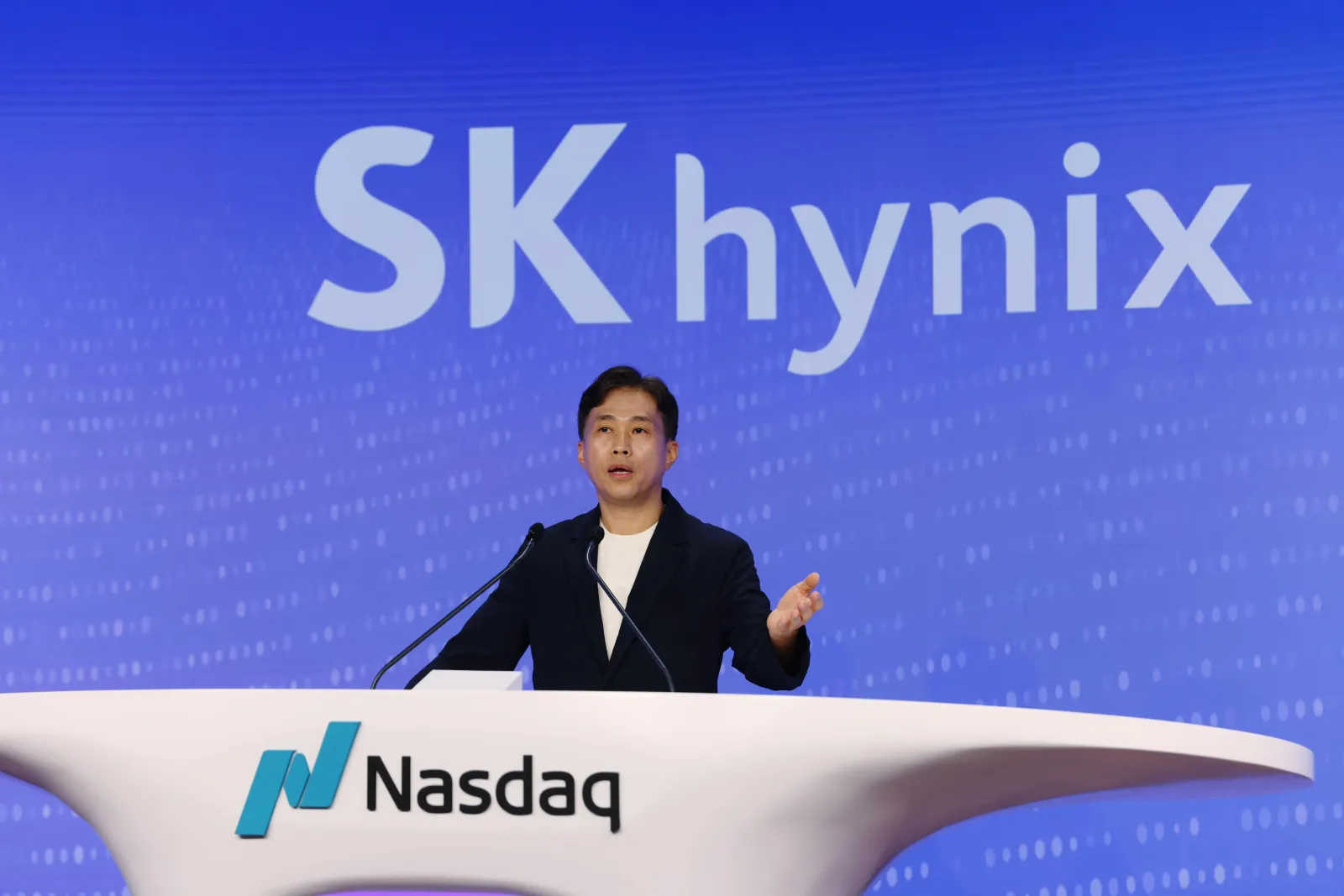
SK Hynix opens at $170, raises $26.5B, and tops foreign IPO records
In Friday's Wall Street debut, SK Hynix turns AI RAM demand into a $26.5B fundraising moment that rewrites comps.

China lands a reusable Long March booster, a first that matches SpaceX and Blue Origin
A barge landing and net-based recovery move China from theory to proof, reshaping the reusability race and satellite ambitions.

AstraZeneca $27B wipeout as Wainua late trial misses cardiovascular target
A failed late-stage heart study triggered a swift market punishment, forcing investors and boards to reset timelines and risk.