
Atlassian illegally fired a worker after policy questions, judge ruled last week
A rare federal labor ruling sets a higher bar for how tech firms respond to internal dissent.

A federal labor law judge found that Atlassian illegally fired an employee after the worker questioned company policy changes. For executives, the decision is a signal that how you handle internal pushback can become a legal liability fast.
A federal labor law judge ruled last week that Atlassian illegally fired an employee after the worker questioned company policy changes. It is a rare win for a tech worker in a space where disputes about internal speech and workplace rules often drag on, settle quietly, or never reach a clear decision.
The key point matters for decision-makers: the judge did not treat the employee’s actions as ordinary workplace friction. Instead, the ruling determined that Atlassian’s termination crossed a legal line. In other words, asking questions about policy changes is not just “culture.” It can become evidence in whether a company retaliated, and whether it followed federal labor law when tensions rose.
To understand why this is more than a single-case headline, zoom out to how modern tech policy change actually happens. Companies update remote work norms, performance frameworks, compliance rules, or collaboration expectations, then implement them through HR memos, manager guidance, and revised documentation. Employees rarely experience these changes as neutral updates. They can feel like shifts in power, workload, or job security. That is exactly where internal dissent shows up: not as rebellion, but as questions. “Why are we doing this?” “What changed, and what does it mean for my role?” “Who decided this?”
Federal labor law has long dealt with the question of what kinds of employee activity are protected, including concerted activity and certain forms of work-related discussion. But for many executives, the tricky part is that the line is not always intuitive. A company may believe it is managing performance, enforcing uniform processes, or correcting conduct. A judge may view the same sequence as retaliation or unlawful interference, especially when the timing and the employer’s response line up with the employee raising concerns.
This is where Atlassian’s case becomes a board-level issue. Tech companies operate with lean hierarchies and fast change cycles. When policy changes trigger employee pushback, leadership often wants speed: clarify messaging, stop “rumors,” and ensure managers apply rules consistently. That operational instinct can collide with legal risk if the company escalates too quickly or frames a protected question as insubordination. Even if a company’s broader policy rollout is legitimate, the decision to fire a specific employee can be viewed as disproportionate or improperly motivated if the worker was engaging in protected activity.
There is also the organizational learning effect. A ruling like this tends to create a new internal script for HR and legal teams, particularly around documentation and investigation practices. Executives who have relied on the “we had a business reason” defense will now face the reality that a judge has already weighed the facts and concluded Atlassian acted illegally. That can influence future internal training, how managers document conversations, and how investigators evaluate whether an employee’s question is being treated as dissent rather than legitimate feedback.
Second, this matters for other tech employers watching from the sidelines. When a major software maker like Atlassian loses in federal court on a labor-law theory, peers do not just ask “will this happen to us.” They ask “what does a judge consider decisive.” The answer often comes down to patterns: who raised the issue, what the company did immediately after, and whether the termination can be tied cleanly to legitimate conduct problems rather than the act of questioning the policy itself. For boards, that means legal and people leadership cannot treat these situations as purely HR events. They are enterprise risk events.
Finally, the strategic stake for leaders is simple: workplace trust is not only a retention tool, it is a legal variable. Policy changes will keep coming in tech, because competition and product priorities demand it. But companies that treat internal questions as a problem to suppress, rather than a signal to manage, may discover that the cost is not just reputational. It can be an adverse federal labor law ruling that forces leadership to rethink how decisions are made, who is protected, and how internal conversations are handled when the pressure hits.
This story's Key Insights and Take-aways are locked.
Create a free account to unlock Executive Actions for one credit.
Register to UnlockAlways free for Executives Club members. Join the Club
More in Business
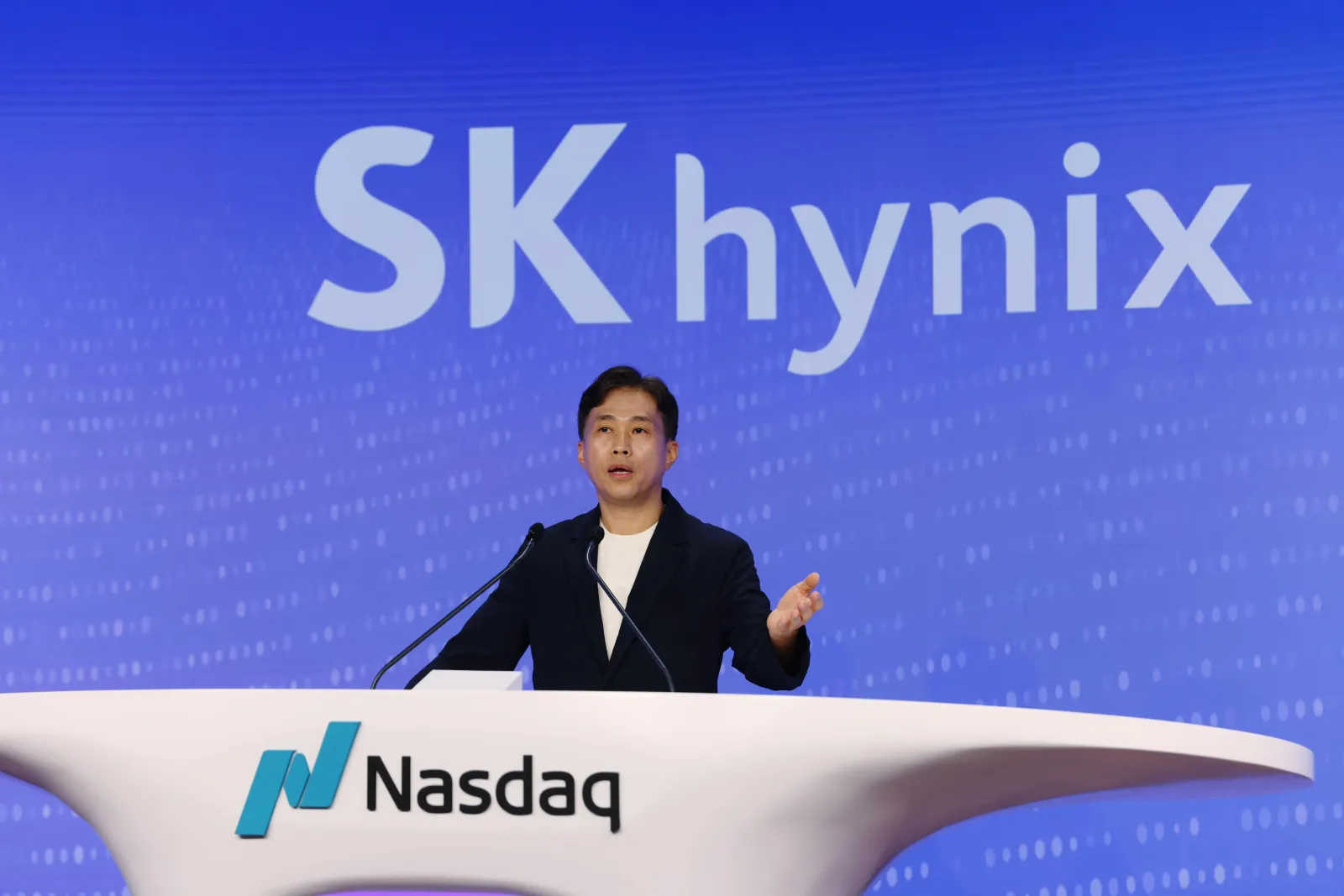
SK Hynix opens at $170, raises $26.5B, and tops foreign IPO records
In Friday's Wall Street debut, SK Hynix turns AI RAM demand into a $26.5B fundraising moment that rewrites comps.

China lands a reusable Long March booster, a first that matches SpaceX and Blue Origin
A barge landing and net-based recovery move China from theory to proof, reshaping the reusability race and satellite ambitions.

AstraZeneca $27B wipeout as Wainua late trial misses cardiovascular target
A failed late-stage heart study triggered a swift market punishment, forcing investors and boards to reset timelines and risk.