
August 2: the EU’s Roma Holocaust Memorial Day, Germany marks it. Eastern Europe does too?
The EU set the date in 2015. Germany uses services and education. The bigger question is how remembrance practices differ across the region.
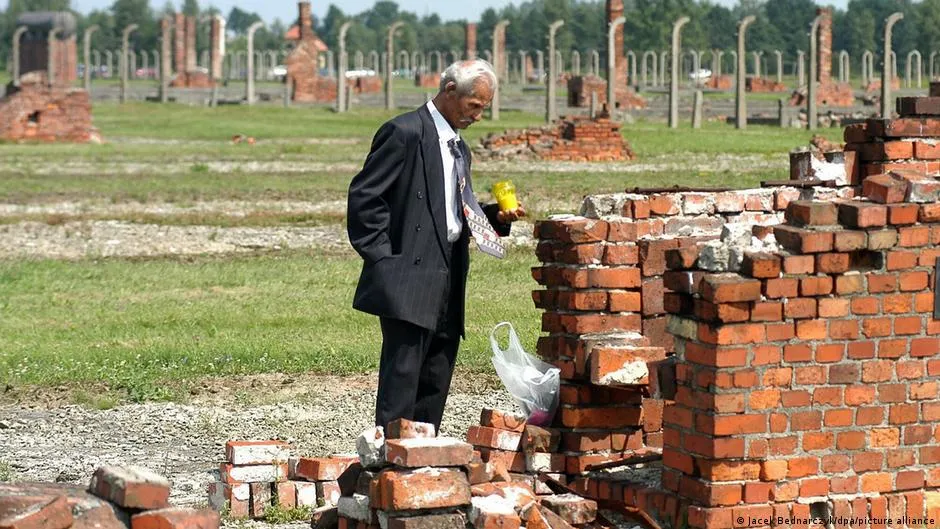
In 2015, the EU designated August 2 as the European Roma Holocaust Memorial Day, a day marked in Germany with memorial services, educational activities, and public addresses. For decision-makers, the variation in how eastern Europe commemorates the Roma Holocaust affects both public understanding and policy credibility.
In 2015, the EU designated August 2 as the European Roma Holocaust Memorial Day. Germany marks the day with memorial services, educational activities, and public addresses. That much is straightforward. What is not is the real test: how eastern Europe commemorates the same tragedy, on the same date, under the same European umbrella.
This is the kind of question that looks cultural on the surface, but lands as a governance problem. Memorial days are not just ceremonies. They are public signals about what a society chooses to remember, how institutions teach history, and what governments are willing to fund and publicly endorse. When the EU picks a date, it is trying to standardize recognition across member states and reinforce a shared baseline. But in practice, remembrance can vary by country, political priorities, and the strength of local institutions that carry history into classrooms and public life.
Germany’s approach, as described in the source, is specific: memorial services, educational activities, and public addresses. Those formats matter. Memorial services can anchor collective attention. Educational activities can translate history into repeatable knowledge, which is where long-term attitudes are formed. Public addresses turn remembrance into an institutional statement, making it harder for leaders to sidestep the past. The day becomes more than a moment. It becomes a system.
Now zoom out to eastern Europe, where the source leaves the question hanging: “And in eastern Europe?” The inclusion of that question is the point. It signals that remembrance is not uniform, even when the EU establishes a formal calendar. For executives and boards, this matters because the EU-level designation creates expectations, and expectations create accountability pressure. If one part of the continent turns a memorial day into structured education and high-visibility messaging, others can look behind the curve, whether due to capacity constraints, competing national narratives, or different political incentives.
It also matters because public commemoration is often entangled with broader policy objectives, even when the policy target is not “memory” in the abstract. In many European contexts, education policy, anti-discrimination frameworks, and human-rights commitments are connected to public narratives. A memorial day can reinforce or weaken those commitments depending on whether it is treated as a one-day ritual or a platform for sustained learning and messaging. Germany’s combination of services, education, and addresses suggests a multi-channel strategy. If eastern Europe’s commemorations differ in form, intensity, or institutional backing, that difference can ripple into how seriously Roma histories and harms are taken in public discourse.
For leaders thinking about reputational risk, it is also about credibility. The EU’s 2015 designation signals that this is not optional. It is part of Europe’s shared historical reckoning. If commemorations are uneven, observers can interpret it as inconsistent prioritization. That can affect relationships with EU institutions, with civil society organizations that advocate for remembrance and rights, and with international partners who track how countries implement their stated values.
There is another second-order implication: education is not just about the past, it is about the future. When educational activities are central to a memorial day, the goal is to shape how new generations understand persecution and genocide. When education is not emphasized, misinformation or selective history can persist. That does not require any single bad actor. It can happen simply because the system never got the chance to teach the right baseline. The source’s contrast, Germany versus the unspecified eastern Europe practices, highlights why the format of commemoration matters as much as the date itself.
So the stake for peers in similar roles is simple: even when a regulator or supranational body sets the framework, implementation is where the real story happens. The EU designated August 2 in 2015. Germany marks it with memorial services, educational activities, and public addresses. The unresolved question for eastern Europe is whether the same day becomes a similar institutional practice, or whether remembrance remains uneven. For decision-makers, that means watching not only what is declared, but what is built: education programs, public messaging, and recurring institutional commitment that can withstand political turnover and preserve historical truth.
This story's Key Insights and Take-aways are locked.
Create a free account to unlock Executive Actions for one credit.
Register to UnlockAlways free for Executives Club members. Join the Club
More in Politics
Obama Defends Ilhan Omar After Agents Search Her Home in Trump Inquiry
The former president's intervention raises the stakes in a federal probe into immigration paperwork that has put a prominent progressive lawmaker in the crosshairs.

Blair-era minister: cut welfare to fund youth job support
Alan Milburn's call for welfare cuts to fund employment support opens a Labour fight over benefits and the Neet crisis.

Hot September CPI: energy costs surge, voters feel the squeeze before midterms
The latest inflation print lands as Trump campaigns for GOP control of Congress, putting cost-of-living worries at the center of the midterm fight.