

Avengers: Doomsday poster frames Doctor Doom's vengeance with dead wife and child
IGN breaks down the new poster and why its grief-fueled logic matters for multiverse stakes.
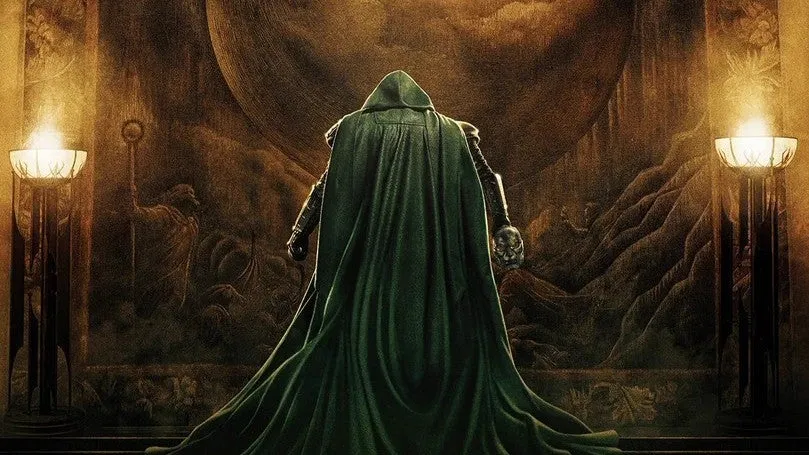
IGN reports that Marvel released the first proper Avengers: Doomsday trailer and paired it with a new poster that appears to spell out Doctor Doom's motivations. The consequence for decision-makers is a clearer story-engine for how Marvel is setting up the Multiverse Saga's final chapter and what it implies for future MCU direction.
Marvel just dropped the first proper Avengers: Doomsday trailer, and it came with a poster that feels less like marketing and more like a confession booth. The image, as IGN describes it, appears to reveal Doctor Doom's motivations: vengeance rooted in grief over lost loved ones. And if you think Doom is only “mad” in the cartoonishly villain way, the poster is trying to tell you he has a specific wound and a specific target.
Let’s start with what the poster actually shows, because the visuals do the heavy lifting. The artwork features the cloaked figure of Doctor Doom from behind, his face unseen, standing with his head bowed in front of a towering tapestry. At the top are two figures, a sad-looking woman and a child, surrounded by clouds and angels. The light shining down from above and their positioning make it “pretty clear” they are dead, while Doom stands as if he’s mourning. In his right hand, Doom brandishes his mask, glaring defiantly toward the viewer. So the emotional thesis is blunt: Doom grieves, Doom prepares, and Doom’s next move is revenge.
If that framing sounds familiar, it’s because it matches long-running fan expectations. IGN ties the poster’s clues to a common theory: Doom is mourning his lost wife and child, who have been killed (presumably accidentally) as a result of Steve Rogers' past multiversal wanderings. The article connects this to the end of Avengers: Endgame, when the original Captain America undertook one last mission to return the Infinity Stones to their previous places in time. The catch is that, as the Ancient One warned, meddling often comes with consequences. The multiverse is not a sandbox. It’s a system. Change one part, and other parts do not politely stay put.
That’s why the poster’s quiet family grief matters for the trailer’s louder multiverse promise. IGN notes that the new Avengers: Doomsday trailer includes a glimpse of Doctor Doom “fending off an all-powerful Thor with barely a shrug,” and it suggests heroes from multiple realities will be needed to bring Doom down. The poster supplies the why behind the threat: Doom’s grief is not random chaos. It is motivation with direction. If Doom believes someone’s meddling caused the death of his loved ones, it makes sense he would pursue Steve Rogers and anyone else “who has been meddling with the multiverse of late.”
There is also a more structural Marvel comparison baked into the reporting, and it’s the kind of contrast executives and creative leads obsess over because it tells you what kind of stakes the studio wants audiences to feel. IGN draws a parallel to Robert Downey Jr.'s Iron Man. Tony Stark sacrificed himself to save his family and the universe. Doctor Doom, by contrast, is willing to sacrifice the multiverse to gain revenge for his family. In other words, Doom is a mirror image of the “hero bargain,” but inverted. One side trades everything for salvation. The other side trades everything for retribution. That difference is dramatic, and it also signals what kind of emotional math Marvel is aiming to make the audience do across multiple universes.
The poster also points toward specific character gravity inside Marvel’s wider setup. IGN adds that Doom’s loss of a child may help explain why he’s interested in Franklin Richards, seen in the post-credits scene of The Fantastic Four: First Steps. That matters because it links the emotional motive (revenge for a lost child) to an on-screen mechanism (a character audiences already associate with cosmic-scale importance). Even if you treat post-credits as pure breadcrumb logic, the point is still the same: Marvel is trying to connect separate story threads into one escalating chain, and Doom appears to be a central node.
And the chain is not only about Doom targeting the past. IGN flags an ominous wrinkle for Steve Rogers. The article notes that Steve Rogers is “newly with child,” and frames this as a sign Doom’s revenge could hit close to home. That’s second-order storytelling pressure: when the antagonist’s motivation is personal, timelines get sharper and outcomes get less forgiving. Executives like to say “stakes must feel earned.” Here, the poster does that by turning Doom’s power into a delivery system for grief.
Zoom out, and there’s a business reason this kind of poster logic is worth noticing. The movie hits theaters December 18, 2026, and the official synopsis quoted by IGN says: “Universes collide and the Multiverse Saga begins its final chapter in Marvel Studios' Avengers: Doomsday.” It also states that “Beloved heroes from three distinct universes will be set on a deadly collision course and ultimately face an existential threat unlike anything they've ever encountered.” That’s the studio basically telling you the narrative endgame will be structured like a corporate merger: multiple entities are being forced into one system under extreme constraints. The Doomsday poster is the brand-level way of making that collision feel personal enough that audiences care which universe survives.
For peers in entertainment and media, the strategic takeaway is simple: Marvel is using Doom’s grief as a through-line to keep a multiverse plot emotionally coherent. If you’re tracking how studios manage attention, this is a masterclass in cause-and-effect clarity. The trailer shows action. The poster supplies motive. Together they set up a final chapter that, by design, forces heroes to confront an existential threat that is not just cosmic. It’s motivated.
This story's Key Insights and Take-aways are locked.
Create a free account to unlock Executive Actions for one credit.
Register to UnlockAlways free for Executives Club members. Join the Club
More in Entertainment

12TB Steam 'teraleak' goes beyond Valve: GTA 3, Mafia 2 prototypes exposed
A 12-terabyte dump of Steam data reveals prototypes and builds of third-party classics like GTA 3 and Mafia 2, plus unreleased Valve content, rewriting game history.

LinkedIn's romance problem: 1 in 4 workers say dating on it is fair game
A new survey shows a quarter of U.S. employees treat the professional network as fair game for romance, even as LinkedIn bans it and removes hundreds of thousands of offending posts.

Enhypen's first No. 1 album breaks K-pop's Billboard 200 streak
The K-pop group's 98,000-unit debut tops the chart while Dolly Parton's catalog reentry shows how death reshapes streaming.