
AWS billing estimates broke, and some bills jumped from cents to billions
Amazon says the displayed numbers did not match actual usage and charges, creating a real CFO panic window.
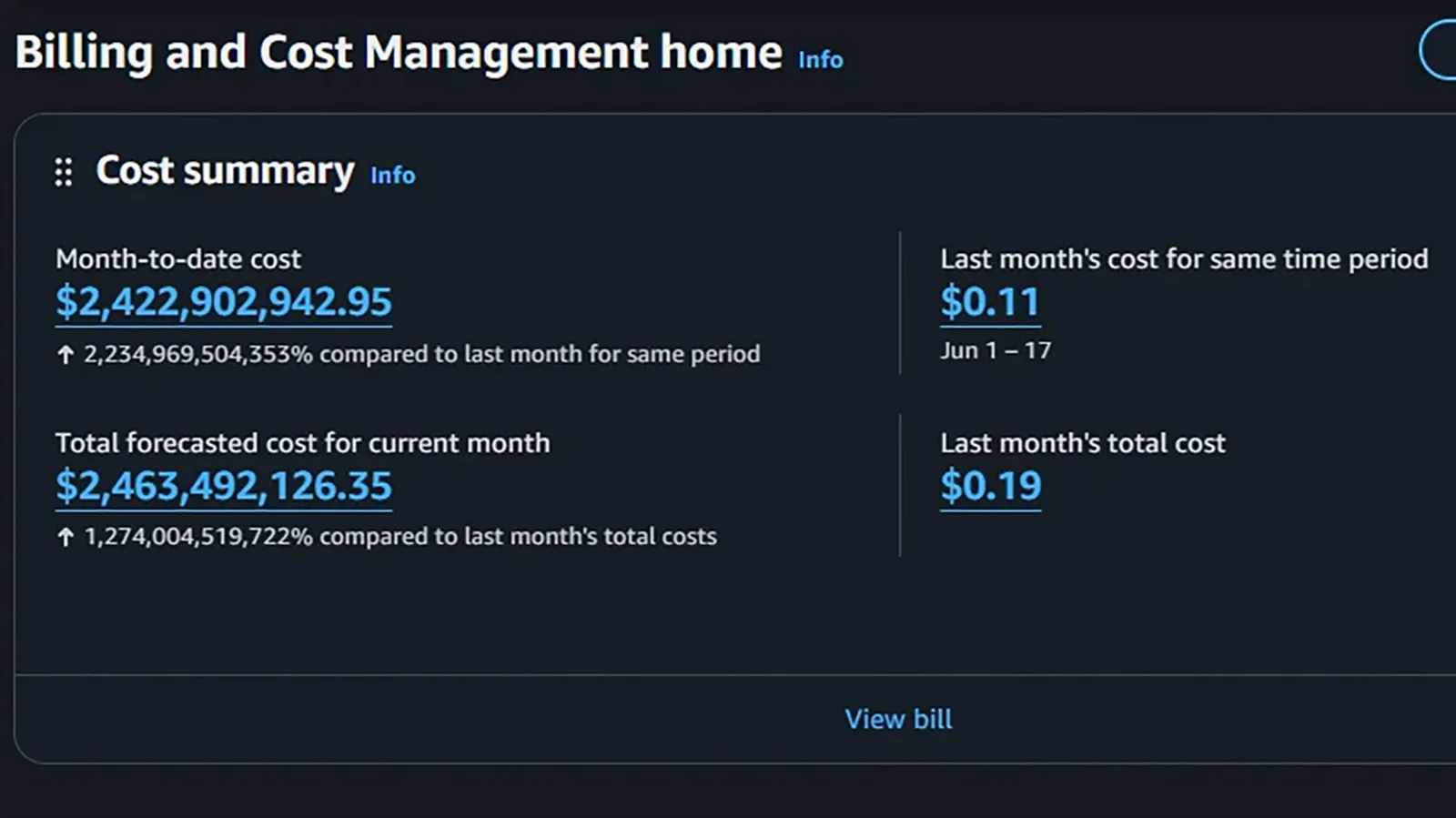
Engadget reports that a bug in AWS caused some customers' billing estimates to spike from a few cents to billions of dollars. Amazon responded by saying the displayed billing estimates do not reflect actual usage and charges.
A bug in AWS pricing and billing systems made at least some customers stare at billing estimates that looked nothing like reality, jumping from a few cents to billions of dollars. The headline is the kind of thing that triggers instant internal alarms, because it is the one number finance teams cannot afford to misread. If your procurement team is already buying compute, your finance team is already reconciling forecasts, and your CFO is already thinking about cash flow, then an estimate that is off by orders of magnitude is not a harmless glitch. It is a stress test of your entire operational rhythm.
Amazon’s explanation is blunt: “The displayed billing estimates do not reflect actual usage and charges,” Amazon said. In other words, the system was showing scary billing previews, but the underlying charges were not consistent with those displayed estimates. That distinction matters, because the damage from a billing bug is rarely only the accounting. It is the scramble that happens while teams try to figure out whether the estimate represents an impending invoice problem, an actual metering failure, or just a display-layer issue.
To understand why this can turn into a board-level story quickly, it helps to know how cloud billing typically works in practice. Most companies run on a model where they buy capacity on demand, then reconcile costs based on usage and metering. Finance teams rely on estimates to plan budgets, manage burn rate, and set internal guardrails for engineering teams. A displayed estimate that suddenly implies a multi-billion-dollar charge can cause immediate, rational actions: engineers pause workloads, procurement renegotiates terms, and leadership escalates to vendors or consultants. Even if the bug is limited to estimates, the operational consequences are immediate, and they can be disruptive enough to look like a real outage from the perspective of customers.
Amazon’s wording also gives a clue about where the failure likely sits conceptually. If “displayed billing estimates” are wrong while “actual usage and charges” are not reflected, then this is not simply a math error in the invoice itself. It is closer to a mismatch between what customers see in dashboards or previews versus what is calculated from actual metering data. That matters because it changes what customers worry about next. If customers feared the meters were broken, they might expect every downstream report and eventual invoice to be wrong. If they feared the billing interface was wrong, their focus becomes how quickly they can trust the system again and how they communicate uncertainty internally.
There is also a regulatory and governance angle that executives should take seriously, even when the company says the numbers do not reflect actual usage. Cloud service providers operate in an environment where billing transparency and accurate measurement are core to customer trust. Regulators, auditors, and enterprise procurement teams care less about whether a vendor calls it a “display issue” and more about whether the customer can demonstrate control, monitoring, and timely detection. When estimates can appear wildly incorrect, companies may need to revisit their internal controls: the processes that check dashboards, compare estimates to expected usage patterns, and decide when to escalate a billing anomaly.
This is where second-order implications get interesting for boards. A billing scare can ripple into customer communication, internal spending decisions, and contract compliance. For some businesses, billing previews drive how they allocate shared costs across teams, how they set unit economics, and how they justify spend to stakeholders. When those previews jump to billions, even temporarily, it can distort internal narratives: leadership might cut projects based on a perceived cost blowout, or it might trigger emergency budget votes based on a misunderstanding. That can create real organizational churn before the truth is confirmed.
For executives who run finance, operations, or infrastructure, the strategic takeaway is not “AWS is bad” or “cloud billing is fragile.” The true lesson is that in the cloud era, your cost visibility is part of your operational safety system. When the displayed estimates do not reflect actual usage and charges, the right response is fast verification against the real cost basis, plus tighter monitoring of the signals you treat as authoritative. In a world where customers can go from cents to billions in a screen, trust and validation become strategic capabilities, not just back-office hygiene.
If you are a peer CFO, COO, or CIO overseeing cloud spend, the question is not whether a bug could happen. It is whether your organization has enough control and clarity to absorb it. And the follow-up question for boards is even sharper: can your finance and engineering teams distinguish “what the dashboard says” from “what the invoice will show,” quickly enough that you do not reorganize your business around a number that is not real?
This story's Key Insights and Take-aways are locked.
Create a free account to unlock Executive Actions for one credit.
Register to UnlockAlways free for Executives Club members. Join the Club
More in Technology

Google quietly links your phone number to every Android account on your SIM
Adding a SIM now ties your phone number to all Google accounts - and future accounts inherit it. Here's the security and privacy stakes.

Hijacker AI 'Skynet mode' runs 100,000 attack steps against exposed models
Symantec caught a criminal AI agent that borrows other models, steals data, and mines crypto; the only relief is no confirmed victims yet.

Nvidia's AI-financier shift faces its first big test as neoclouds stumble
A rout in neocloud stocks is forcing investors to weigh Nvidia's hidden exposure as both supplier and lender to the AI buildout.