
Bill Gurley: Chasing a safe job through college makes you an AI target.
The veteran tech investor warns that workers lacking passion and purpose are the most vulnerable to automation, urging a radical shift in career strategy.
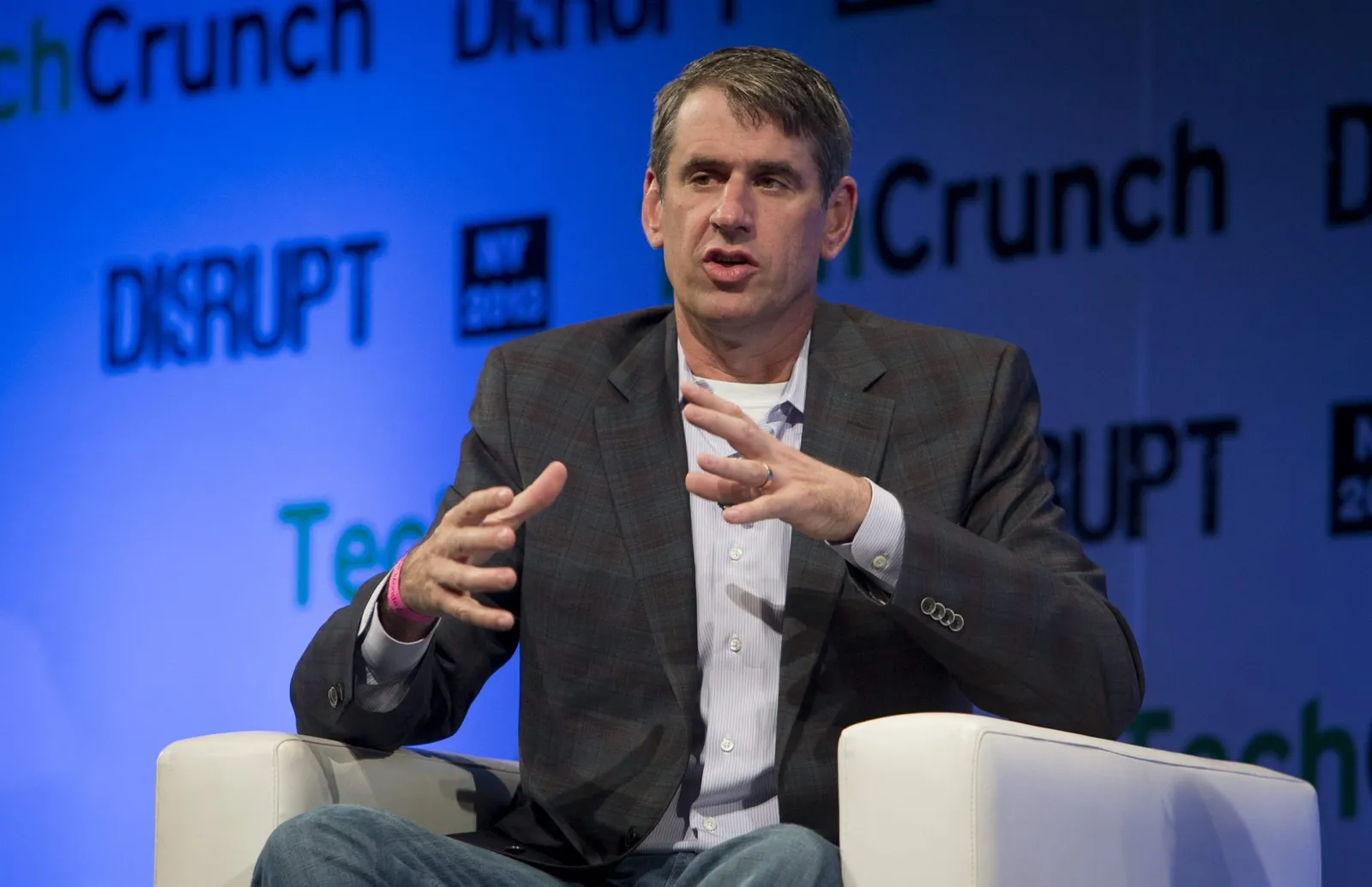
Tech investor Bill Gurley warns that the traditional career blueprint is obsolete, arguing that workers who follow the 'college conveyor belt' without passion are highly susceptible to AI disruption. Decision-makers must pivot talent strategy away from pedigree and toward demonstrable technical adaptability and intrinsic motivation.
Bill Gurley, the prolific tech financier famous for his early investments in Uber and Zillow, is sounding a major alarm about the future of white-collar work. He argues that the traditional career blueprint-the idea that attending an elite university guarantees a stable, six-figure path-is rapidly becoming obsolete in the face of AI disruption. Gurley, speaking during the On with Kara Swisher podcast, cautions that this technological shift is attacking jobs that have historically been considered untouchable, creating significant anxiety across the professional landscape.
He specifically targets the 'college conveyor belt' worker: the professional who is merely chasing a safe job or a predictable role without genuine passion or purpose. Gurley asserts that the people most at risk are those who are 'sitting idly in the job and don't really have a why or a purpose for it.' For the worker who goes through the traditional academic pipeline, chasing a secure position as a 'widget or a cog' in an industry they may not love, Gurley believes they are 'ripe for disruption.' This is not merely a critique of individual career choices; it is a high-stakes warning about the structural vulnerability of the modern knowledge worker.
Gurley’s skepticism extends beyond the technology itself to the very structure of modern higher education. He views the current college system as a 'pressure cooker.' He observes that today's students are 'programmed from a time perspective' to worry about accumulating a stacked résumé from a young age. This pressure often forces colleges to require students to apply with a major in mind, effectively funneling budding talent into a professional path before they have had the chance to freely explore what they might genuinely enjoy. This premature specialization, Gurley suggests, is a primary reason so many professionals are 'checked out at work' and, consequently, highly susceptible to automation.
This perspective is not isolated. Other industry leaders are echoing this sentiment, arguing that pedigree alone is no longer a sufficient guarantee of success in the AI era. Ryan Roslansky, the former CEO of LinkedIn, aligns with Gurley’s philosophy, predicting that the future of work will not belong to those with the fanciest degrees or the most prestigious Ivy League affiliations. Instead, he forecasts that the talent most likely to succeed will be those who are 'adaptable, forward thinking, ready to learn, and ready to embrace these tools.' This shift suggests that the value proposition of a candidate is moving from their institutional affiliation to their demonstrated capacity for rapid learning and technological fluency.
Reinforcing this necessity for technical agility is Fei-Fei Li, the Stanford professor and CEO of AI startup World Labs, often dubbed the 'Godmother of AI.' Li advises professionals that being tech-savvy on the job is arguably more important than any other credential. She stresses that it is now essential for workers to 'superpower' themselves quickly with the tools that are changing their industry. This means that even in roles that seem resistant to automation, the ability to leverage AI as a co-pilot or an efficiency engine is the key differentiator.
For the individual worker facing this reckoning, Gurley offers a strategic path forward. He advises against blindly following the established career blueprint and instead encourages professionals to 'craft your own career path' tailored to their distinct skills. If a sector switch or self-employment is not feasible, the most critical action is to become the most 'AI-aware person in your job.' By understanding precisely what AI is capable of within their specific industry, a professional can transform from a replaceable cog into an indispensable asset. This proactive stance is the only way to ensure they are not on the chopping block when the inevitable wave of automation hits.
While the government has been discussed as a potential regulator or resculler, Gurley is skeptical that large-scale government intervention can effectively manage this rapid technological shift. The onus, therefore, falls heavily on the individual and the organization. For companies, this means a fundamental re-evaluation of talent acquisition and internal upskilling programs. The strategic edge, Gurley concludes, lies in pursuing a career of passion, not just a career of safety. The 'why' behind the work is becoming the most critical factor in determining long-term career resilience.
This story's Key Insights and Take-aways are locked.
Create a free account to unlock Executive Actions for one credit.
Register to UnlockAlways free for Executives Club members. Join the Club
More in Technology

Anthropic Mathematician Claims Claude Helped Prove Riemann Hypothesis in Six Weeks
Levent Alpöge says the AI tool helped him develop a solution to one of math's most important unsolved problems in about six weeks, a claim that, if verified, would reshape AI's role in research.

Anthropic mathematician claims Claude helped crack the Riemann hypothesis
If the proof holds, AI has toppled math's most famous open problem; if it does not, it is a case study in announcing breakthroughs before anyone verifies them.

AI's $4 Trillion Wipeout Erases Nasdaq's Gains for the Year
A brutal week took roughly $4 trillion off the AI sector and left the Nasdaq flat for the year, and the damage ran the full length of the supply chain.