
Bill O'Reilly tells Trump to take a month off, 'golf and relax' before Iran, gas, midterms
In a No Spin News monologue, O'Reilly advises Trump to get a breather as multiple crises stack up.
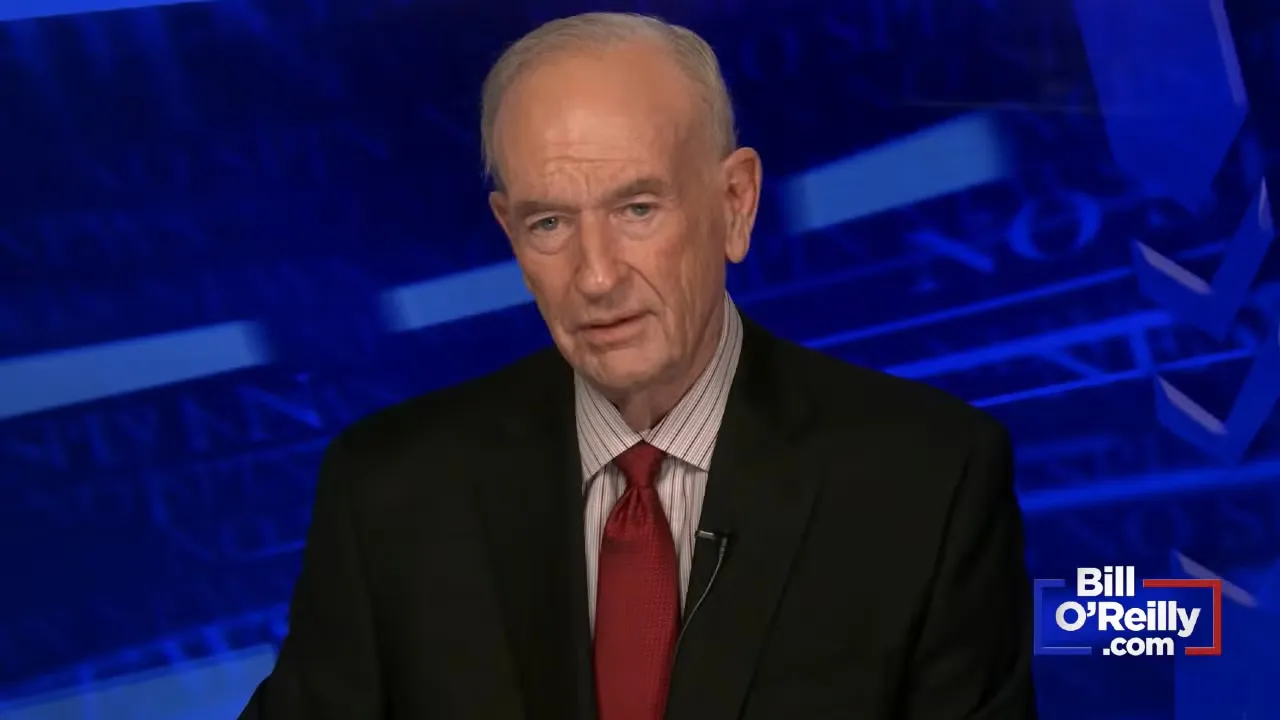
Bill O'Reilly, the host of No Spin News, told President Trump to
"relax a little bit" and take the next month off, arguing the president is dealing with a lot at once. O'Reilly said he has known Trump for 35 years and noticed he is “hunching over a little bit,” which he called a normal sign of getting older.
O'Reilly’s core message was simple, and unusually direct for television politics: “So my advice to Donald Trump is to take the next month off, if you can.” He then sharpened it with his preferred prescription for leadership under pressure, “Golf and relax a little bit.” According to O'Reilly, the stakes are not abstract either. He explicitly framed Trump’s workload as a sequence of growing pressures that are hard to process without a break.
The “why now” matters, because O'Reilly linked the advice to an agenda that, in his telling, is crowded and getting louder. He said Trump has to deal with Iran and described “renewed, full-on conflict with Iran” as “seeming more and more like an inevitability.” In that same breath, he pointed to another real-world pressure point: “growing issues” around gas prices, which he said Trump is also facing questions about “yet again.” Then he added the political deadline that turns every policy choice into a campaign question: the president has “this fall's pivotal midterm elections to think about.”
O'Reilly did not deny the policy workload, but he argued that some of it can be managed without constant physical presence. He said, “You can do that on the phone and you can do that with [your] people coming.” The point was not that Iran disappears, or that gas prices will magically resolve themselves. The point, from O'Reilly’s perspective, is bandwidth. Even if a president can delegate parts of decision-making, sustained attention, personal stamina, and recovery time still affect how leaders show up for the next crisis, the next briefing, and the next political firefight.
This is where the “hunching over” comment becomes more than an odd detail. O'Reilly emphasized the personal cost of aging and the temptation to power through anyway. He told viewers, “You get older, every malady in the world is going to visit you.” He also added a glimpse of how he thinks about leadership load from his own body, saying he was “actually feeling sorry for myself the other day,” then quickly pivoted to what he meant by that. He mentioned having “this and that, a blood test” and implied that even after decades of experience, leaders still end up dealing with health and logistics that can’t be ignored.
In executive terms, this is a reminder that crisis management is not only about strategy and messaging. It is also about human limits, and about how quickly the body and the calendar catch up with the job. That matters for decision-makers because an admin can delegate tasks, but it cannot fully outsource outcomes. When multiple hot topics overlap, the risk is not just poor decisions. It is also the compounding effect of fatigue, diminished recovery, and reduced capacity to absorb new information. O'Reilly’s advice is, at least on its face, personal, but the logic he offers has operational consequences.
O'Reilly also addressed the timing directly. He said he needs his own “breather” and that he “was actually feeling sorry” for himself, then claimed he is “going to build it into August.” But he argued Trump needs time off “much more than I do.” He framed the month-off suggestion as a necessity, not a luxury, and he made that recommendation while acknowledging the reality of Iran and the political timetable.
The monologue ended with broad respect for the office of the presidency. O'Reilly said, “We wish the best for not only President Trump, but all the presidents, even [Joe] Biden, Barack Obama, Jimmy Carter.” He added that he “always respected the office,” and he said it “did. Always.” That matters because it sets a tone: the segment is advice about leadership under pressure, delivered with personal commentary, but delivered with an attempt at institutional respect.
So what should other leaders, founders, and investors take from this? Even though this is about TV host commentary, the scenario O'Reilly describes is a familiar governance stress test: multiple simultaneous pressures, deadlines that cannot be postponed, and public scrutiny that never fully turns off. For executives, boards, and senior operators, the second-order question is whether leadership is planning recovery time the way it plans strategy sessions. O'Reilly’s advice to “take the next month off” and “golf and relax” is comedic in its framing, but his underlying claim is about capacity. When Iran, gas prices, and midterms overlap, the bottleneck can become the decision-maker’s ability to stay sharp and functionally present. O'Reilly’s monologue is a reminder that “breathers” are not just personal wellness. They are a continuity risk management tool, whether you call it rest, recuperation, or operational sustainability.
For peers in comparable roles, the lesson is not that a leader should always step away. It is that leadership time is strategic capital. O'Reilly’s argument is that Trump has enough on his plate that the calendar itself may need restructuring so the person at the center can still deliver when the next wave hits.
This story's Key Insights and Take-aways are locked.
Create a free account to unlock Executive Actions for one credit.
Register to UnlockAlways free for Executives Club members. Join the Club
More in Politics

LA County: DOJ's 20,000 'noncitizen' voter list is 'unreliable,' includes U.S.-born
Preliminary review by Los Angeles County election officials finds errors in the federal list, raising the stakes for voter roll integrity ahead of November.
Trump's $1.5B Pentagon chip investment lands in North Carolina
A $1.5 billion defense infusion for North Carolina chipmaking signals a new era of Pentagon-backed reshoring - here's what it means for the industry.
Nigeria confirms first Ebola case in Abuja, a woman just off a Uganda flight
Health Minister Muhammad Ali Pate says the patient flew in from Uganda, putting Africa's latest outbreak on Nigeria's doorstep.