
BlackRock’s best day in 1+ year: ETF inflows double, profits jump after Q beats
World’s biggest asset manager rallies as exchange-traded fund flows surge and quarterly profits clear Wall Street targets.

BlackRock shares jumped Wednesday after strong inflows into exchange-traded funds and buoyant markets helped the firm beat Wall Street earnings expectations for the latest quarter. For decision-makers, the move is a reminder that ETF flow momentum and market conditions can quickly translate into earnings outperformance.
BlackRock stock logged its best day in more than a year on Wednesday, and the reason was not subtle: strong inflows into exchange-traded funds, plus buoyant markets, helped the world’s biggest asset manager beat Wall Street’s earnings expectations for the latest quarter.
In other words, investors did not just like the headline. They rewarded the mechanism. When ETFs draw in money, asset managers typically collect more fees based on assets under management, and when markets are rising, those assets can grow faster than inflows alone. That combination is exactly what the report points to as the driver behind the rally, and it landed after earnings cleared expectations.
To understand why this matters beyond one stock chart, it helps to zoom out on how asset management tends to “feel” in real time. Earnings for large managers are often a blend of recurring fee revenue and market-linked performance, which means good quarters can arrive even when specific product launches are not the story. In practice, when a broad risk-on environment lifts asset prices and ETF channels pull in incremental capital, it can create a two-front tailwind. That tailwind shows up in quarterly results and, just as importantly, in how quickly investors are willing to trust the next quarter’s revenue trajectory.
Now, the Wednesday move also matters because it came as a sentiment check for the whole asset-management complex. When BlackRock beats expectations, it signals that the industry’s most scale-reliant business model is currently working in the market’s current configuration. Large managers are built for steady demand, but markets are never steady. They reprice risk, shift investor behavior, and change the pace at which money migrates between mutual funds, ETFs, and cash. A best day in more than a year is a market’s way of saying: “Okay, we’re paying attention to the flow story again.”
There is also a governance and capital-allocation angle executives care about. When results come in stronger than expected, boards and senior management get more flexibility, whether that means managing costs aggressively, investing in distribution and product, or calibrating capital returns. The report’s core point is earnings beat supported by ETF inflows and market buoyancy. That type of quarter tends to reduce uncertainty around near-term cash flows, which can influence discussions ranging from operating expense discipline to how much management can afford to lean into longer-term platform bets.
Regulatory framing is the other background layer decision-makers track, even when it is not the headline. ETFs operate inside a rules-based ecosystem where product structure, disclosures, and market integrity are all scrutinized. When ETF flows accelerate, it can be a sign that investors are finding the access, liquidity, and portfolio mechanics they want. For an asset manager at scale, stronger ETF demand can also change the competitive map. Rivals are all fighting for the same pool of client capital, and flow momentum can become self-reinforcing: more assets can lead to more distribution traction, and more traction can lead to more assets.
The second-order implication is that BlackRock’s performance acts like a benchmark. If the world’s biggest player can beat expectations on the back of ETF inflows and buoyant markets, it puts pressure on other managers to justify their positioning. It also raises the bar for forecasting accuracy. In this business, “expectations” are not vague. They are tied to fee revenue assumptions, assets under management trajectories, and how market movements translate into performance-related drivers.
For peers across wealth management, institutional investing, and ETF-focused strategies, the strategic takeaway is straightforward. When markets are friendly and ETF channels are pulling in capital, the winners are often the firms with scale, efficient distribution, and the ability to translate flows into fee-generating assets quickly. BlackRock’s rally is a real-time reminder that earnings outperformance can be driven by the plumbing of where money goes, not only by product headlines. In short: flows and markets can combine into a quarter that clears Wall Street, and when they do, the stock can react decisively.
This story's Key Insights and Take-aways are locked.
Create a free account to unlock Executive Actions for one credit.
Register to UnlockAlways free for Executives Club members. Join the Club
More in Business

Epic and Google drop settlement bid, forcing rival Android app stores by July 22
Google told the court it is ready to carry third-party app stores starting Wednesday, July 22.
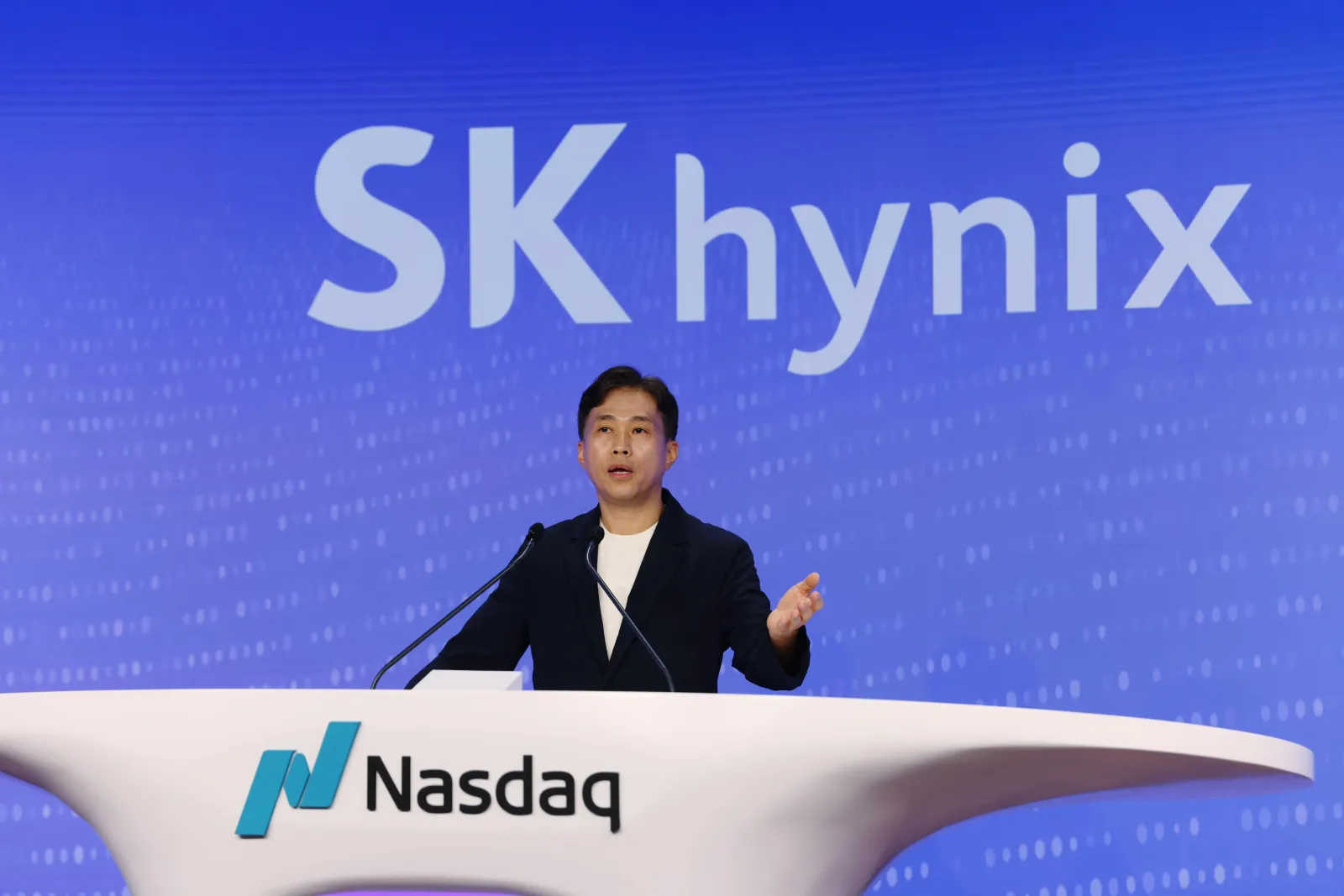
SK Hynix opens at $170, raises $26.5B, and tops foreign IPO records
In Friday's Wall Street debut, SK Hynix turns AI RAM demand into a $26.5B fundraising moment that rewrites comps.

China lands a reusable Long March booster, a first that matches SpaceX and Blue Origin
A barge landing and net-based recovery move China from theory to proof, reshaping the reusability race and satellite ambitions.