
Blanche’s Check-Mate remarks spark conflict-of-interest worries tied to gun magazine maker
Democrats and gun control advocates question incentives after comments about Check-Mate Industries, led by his mother-in-law.
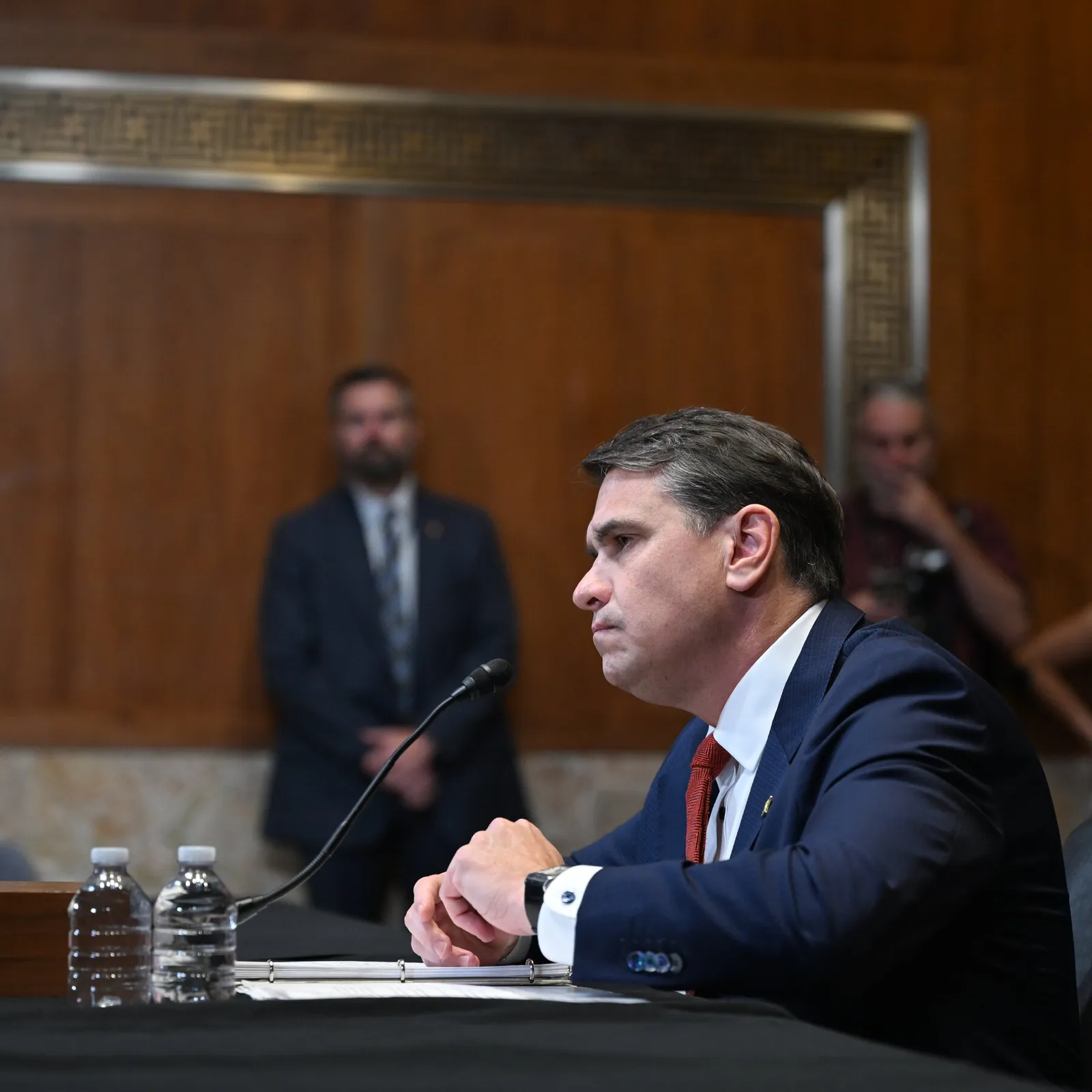
Blanche’s comments about Check-Mate Industries, a company that manufactures magazines and is led by his mother-in-law, are drawing scrutiny. Democrats and gun control advocates say the remarks could reveal a conflict of interest, raising pressure for transparency.
Blanche’s comments about Check-Mate Industries are now the center of a fresh conflict-of-interest debate, and the concern is specific: Check-Mate is a gun industry supplier, and it is led by his mother-in-law. Democrats and gun control advocates say that connection turns what might otherwise be routine discussion into something politically sensitive, because it links an influential public voice to a company operating in a regulated, high-stakes market.
The worry, as framed by Democrats and gun control advocates, is straightforward. When someone comments on a company that makes magazines, and that company is connected to their family through a leadership role, observers start asking whether the public message is being shaped by private incentives. In other words, the issue is not just whether Check-Mate Industries sells a product. It is whether Blanche’s relationship to the leadership of that company could color the intent, the emphasis, or the implications of his remarks.
To understand why this matters, zoom out to the incentives problem that shows up whenever politics intersects with firearms manufacturing. Gun magazines are not niche widgets in the firearms ecosystem. They are part of how firearms function, and the broader policy fight about firearms often turns on who makes the components and how those components are regulated, marketed, and distributed. That is why even indirect lines of influence, like family ties to executives or owners, can become flashpoints. In regulatory debates, perception is policy fuel: if an audience believes a decision-maker benefits personally or professionally from an industry outcome, it becomes harder to sustain public trust in regulatory motives.
This is also the kind of situation that can tighten scrutiny from multiple directions. Democrats and gun control advocates are raising questions because they have long framed gun policy as a problem of industry leverage and the political influence of manufacturers and suppliers. But even for people who are not ideologically aligned, conflicts-of-interest concerns tend to follow a familiar pattern: the more direct the relationship and the more prominent the public comments, the greater the expectation for disclosure, recusal, or clearer separation between official duties and private affiliations.
There is a regulatory background to why magazine manufacturers are often in the conversation. While the specific mechanics vary by jurisdiction and by administration priorities, firearms regulation in the United States commonly targets either end products or categories of components, especially where component regulation could affect functionality. That means companies that manufacture magazines can find themselves at the intersection of rulemaking, enforcement, and litigation. For an executive or board member, that can translate into uncertainty around compliance costs, distribution rules, or changes in legal interpretation. For a politician, it translates into pressure to demonstrate that their public stance is driven by policy goals rather than personal relationships.
And that brings us to the second-order implications for decision-makers watching this kind of controversy. Even if Blanche’s remarks are not intended as advocacy for a family-connected company, the mere appearance of a conflict can push institutions to react. Legislators, agencies, watchdog organizations, and even counterparties inside the industry can respond by demanding documentation, clarifications, or timelines. For boards and executives, the same lesson applies across sectors: when your public positioning overlaps with a vendor or partner that intersects with family interests, the governance burden rises fast. Internal ethics processes become real, not theoretical.
For other political figures and for the industry leaders who work with them, the stakes are not just reputational. Conflicts-of-interest concerns can influence how effectively policy proposals move, how quickly opponents can build narratives, and how aggressively regulators or courts scrutinize decisions. In this case, the scrutiny is being driven by Democrats and gun control advocates, who are focused on whether Blanche’s comments about Check-Mate Industries, led by his mother-in-law, reveal an improper incentive structure.
The bottom line is that the story is about trust under pressure. Family ties to a gun magazine manufacturer are making Blanche’s remarks a governance test. For anyone managing public messaging in a regulated industry, the message is clear: connections that might be legally benign can still become politically consequential when they intersect with a high-attention supply chain and a politically charged policy arena.
This story's Key Insights and Take-aways are locked.
Create a free account to unlock Executive Actions for one credit.
Register to UnlockAlways free for Executives Club members. Join the Club
More in Politics

LA County: DOJ's 20,000 'noncitizen' voter list is 'unreliable,' includes U.S.-born
Preliminary review by Los Angeles County election officials finds errors in the federal list, raising the stakes for voter roll integrity ahead of November.

Trump's $1.5B Pentagon chip investment lands in North Carolina
A $1.5 billion defense infusion for North Carolina chipmaking signals a new era of Pentagon-backed reshoring - here's what it means for the industry.

Nigeria confirms first Ebola case in Abuja, a woman just off a Uganda flight
Health Minister Muhammad Ali Pate says the patient flew in from Uganda, putting Africa's latest outbreak on Nigeria's doorstep.