

Blue Origin’s stock option plan quietly adds an 18-month non-compete forfeiture
Employees can cash out more opportunities, but the plan includes a rarely seen clause that can wipe out options after you leave.

Blue Origin, founded by Jeff Bezos, adopted a new stock option plan in May that gives employees added chances to cash out. A previously unreported non-compete forfeiture clause says employees forfeit all stock options if they join a competitor within 18 months of leaving.
Blue Origin’s new stock option plan, adopted in May, comes with a catch that could change what employees actually get paid. According to a copy of the agreement Business Insider reviewed, employees will forfeit all their stock options if they join a competitor within 18 months of leaving Blue Origin. In plain English: the plan may open a door to “liquidity,” but it also puts a time-based tripwire right at the moment people are most likely to switch jobs.
This is the incentive math underneath Blue Origin’s equity update, and it helps explain why the rollout drew attention. Blue Origin has been lagging behind Elon Musk’s SpaceX in the race to dominate the space industry, and employees at SpaceX have watched their stock options translate into major wealth. Business Insider reports that the new Blue Origin structure is designed to let employees cash out more similarly to SpaceX, but the non-compete forfeiture clause is an unusual constraint that could reduce (or erase) the payout if someone leaves for a rival.
That non-compete clause is not universal. It does not apply to workers in California and Washington, which have passed strict laws banning non-competes. But it still covers a significant portion of the workforce, which is mostly in Florida, Texas, and Alabama. Blue Origin’s total number of employees is not known, but the company reportedly employed around 12,600 workers as of last February, including around 4,000 people in Florida and 1,600 in Alabama. For workers on the West Coast, the forfeiture clause is legally blocked; for others, it may be enforceable depending on the specific circumstances.
Why does this matter to the people running companies, and not just employees? Because equity plans are usually sold as retention tools with upside alignment. But the forfeiture structure changes the risk profile. Employment attorneys and wealth managers told Business Insider that including a non-compete forfeiture clause in an employee options scheme was unusual for fast-growing private startups. Mary Russell, an attorney at Stock Option Counsel PC who specializes in startup equity compensation, said these conditions make it less likely employees will be paid out on their equity if the company strikes it big.
Russell’s point is grounded in how startups actually behave across exit timelines. In earlier eras, people might expect earlier liquidity through an IPO or acquisition. Now, startups can stay private much longer. Russell said this makes it “very likely” that startup employees will leave before a companywide exit event. If they leave to join a competitor inside that 18-month window, the forfeiture clause can turn what looks like an equity “jackpot” into something closer to a stranded asset.
The plan also has a second layer that is already out of step with how many startup employees imagine stock options work. Under the agreement, employees would never actually own Blue Origin stock directly. After options vest and are exercised to buy shares during a “liquidity event” (which includes an IPO, a sale of the company, or certain external funding rounds), those shares are “immediately and mandatorily” repurchased by Blue Origin. Employees are paid for their options at a “fair market value,” which, if Blue Origin has not gone public, is determined by the company. Russell said this repurchase structure was more common among private-equity-backed companies but rare among venture-capital-backed firms.
Blue Origin’s goal seems clear: make options feel more real by expanding opportunities to cash out. The new stock option plan offers more opportunities for employees to cash out, including certain external funding rounds, and it was adopted in May. The options vest up to 25% in the first year, then in quarterly installments. If there is no liquidity event, they expire 18 months after the employee leaves. Employees get options at a fixed price of $9.50. Business Insider reports that Ars Technica and The Financial Times previously reported some elements of the plan, and that Blue Origin first introduced employee stock options in 2016. Former employees previously told Business Insider that earlier versions of the options were effectively worthless because they could only be exercised if Blue Origin was sold or went public, and the company met neither condition.
This is where Blue Origin’s competitive pressure against SpaceX sharpens the stakes. Two former SpaceX employees who left the company to join Blue Origin told Business Insider that their option plans at SpaceX did not have a non-compete clause. In addition, one former SpaceX employee told Business Insider that SpaceX’s option program allowed current and former employees to cash out vested options around twice a year. SpaceX went public in a record-breaking $86 billion IPO last month, minting thousands of millionaires across roles including welders, cafeteria workers, and janitors. For Blue Origin, which is still private, matching that wealth-generation experience is harder. The new plan attempts to close the gap.
Blue Origin’s capital strategy makes the timing even more sensitive. Business Insider reports that last week Blue Origin told employees that, for the first time, it would seek external funding, raising $10 billion at a valuation of $130 billion. The new stock option plan allows employees to exercise their options during a “qualifying external funding round,” but the document viewed by Business Insider states Blue Origin has the “sole discretion” to determine whether a funding round qualifies as a liquidity event. That means employees may need to wait longer to cash out, depending on whether the company decides the round counts.
So the strategic stake for executives and board members is not just “we changed the plan.” It is what the change signals about how Blue Origin wants to manage talent, liquidity, and competitive risk at the same time. In the space industry, movement between companies is common because the ecosystem is close-knit. When a company adds retention-linked forfeiture clauses to an equity plan, it can discourage talent from jumping to rivals quickly. But it can also reduce employee motivation if employees view the terms as overly restrictive, especially when the company is still working through technical and commercial milestones such as New Glenn, a key part of NASA’s plan to return to the moon, which exploded on the launchpad in May.
Blue Origin did not respond to a request for comment. For decision-makers elsewhere in venture-backed or founder-backed industries, the lesson is less about space and more about design: equity plans are incentive systems. If the plan includes mechanisms that can erase payouts, those mechanisms will inevitably shape behavior, mobility, and trust, especially in the long window between hiring and a real liquidity moment.
This story's Key Insights and Take-aways are locked.
Create a free account to unlock Executive Actions for one credit.
Register to UnlockAlways free for Executives Club members. Join the Club
More in Business

Epic and Google drop settlement bid, forcing rival Android app stores by July 22
Google told the court it is ready to carry third-party app stores starting Wednesday, July 22.
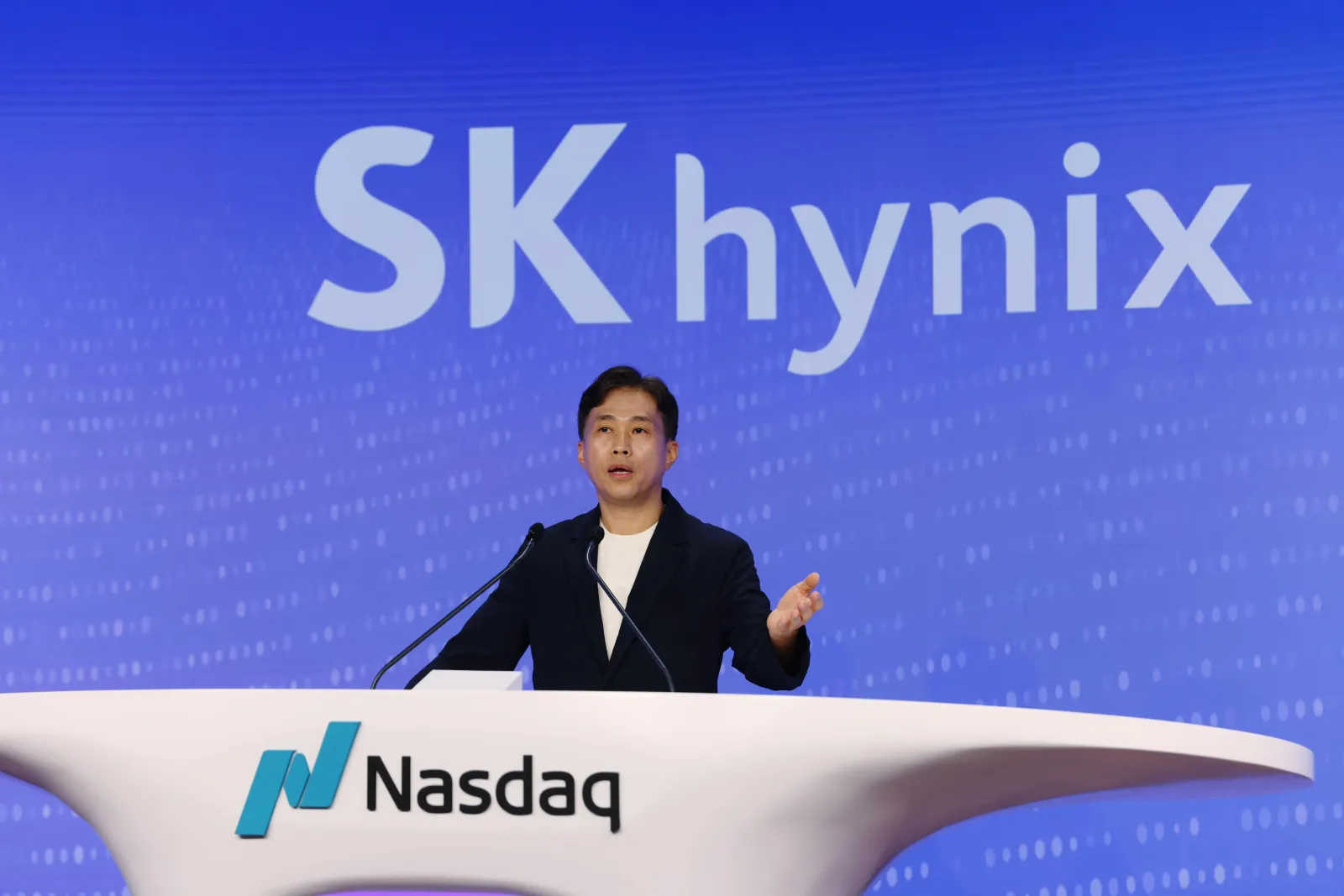
SK Hynix opens at $170, raises $26.5B, and tops foreign IPO records
In Friday's Wall Street debut, SK Hynix turns AI RAM demand into a $26.5B fundraising moment that rewrites comps.

China lands a reusable Long March booster, a first that matches SpaceX and Blue Origin
A barge landing and net-based recovery move China from theory to proof, reshaping the reusability race and satellite ambitions.