

BOE’s $9.3B Chengdu OLED plant ramps to 10M panels this year, with major PC brands present
The new 8.6-gen line signals faster OLED supply for laptops and intensifying price competition across displays.

BOE has started mass production at its new 8.6-generation OLED panel plant in Chengdu, built in just over two years, costing about 63 million RMB (around $9.3 billion). Representatives from Lenovo, Asus, MSI, Oppo, Vivo, Honor, ZTE, Transsion, Xiaomi, and Nothing reportedly attended the opening ceremony, and BOE’s first output is expected to support early laptop OLED launches.
BOE has officially flipped the switch on a new OLED manufacturing plant in Chengdu, and it is not small. The display maker says it is now in mass production at its 8.6-generation OLED facility, described as the first of its kind in China. The scale is the story: the plant is expected to produce 10 million OLED panels this year alone, with significantly more planned for the second year. The build took just over two years and cost roughly 63 million RMB, about $9.3 billion.
That is a headline number for a simple reason. OLED panels do not win markets by vibes, they win by supply. When output rises, buyers get options, pricing pressure increases, and product teams can promise specs without the constant fear of shortages. BOE’s ramp comes with a who’s who in consumer electronics showing up at the opening ceremony. Representatives from Lenovo, Asus, MSI, Oppo, Vivo, Honor, ZTE, Transsion, Xiaomi, and Nothing reportedly attended, and the implication is direct: each is expected to use the OLED panels produced there.
Zoom in on what BOE is actually making, because that matters for gaming and higher-end devices. The first wave, according to the reporting, targets small to medium-sized OLED panels rather than TV-sized variants. No timeline was announced for TV-sized production, which is typical when a new fab starts up. Early focus is usually about quality, yields, and repeatable supply for devices with tight spec requirements.
The plant is also built around 8.6-gen output, and the high-end panels coming out of it are expected to use stacked tandem panel layers. The technology detail included in the source is LTPO, which is often associated with adaptive refresh behavior. Those high-end offerings are also described as supporting 240 Hz VRR refresh rates. For anyone building or buying hardware around OLED performance, that is the practical hook: fewer compromises between smoothness and power efficiency, plus a path to faster refresh OLED configurations.
There is also an early product angle. One of the first reported items is a 14-inch OLED panel for Asus, Acer, and Lenovo laptops. The names are not random. These are players whose laptop lines live or die on whether display upgrades actually show up in mass-market channels at competitive prices. A new source of OLED panels does not guarantee cheaper end products overnight, but it often improves the bargaining position for buyers. It gives display purchasers leverage and reduces the “only one supplier can deliver this” bottleneck that can keep pricing sticky.
Boardrooms should also notice the competitive geography. BOE is not building in a vacuum. Samsung Display reportedly booted up a similar 8.6-gen facility in South Korea earlier this year. Meanwhile, TCL and Visionox also have 8.6-gen OLED panel plants in the works. Put those together and you get the market dynamic: multiple new fabs scaling up around the same generation. That tends to push the industry into a capacity race, where the winners are the ones that achieve stable yields while the losers burn cash on slower ramp.
Strategically, this is why the opening ceremony attendee list matters. When major brands are present for a fab launch, it signals that downstream demand is already lined up. Even though the source does not spell out contracts or volumes per brand, the attendance list across PC, mobile, and related device makers suggests BOE is trying to de-risk ramp by aligning supply with near-term buyers. In plain English: the plant is expensive, so it cannot be allowed to sit idle, and brand participation hints at intentional channel coverage.
For executives tracking the display supply chain, the second-order implication is pricing and spec cadence. The source notes that smaller OLED gaming monitors have already been dropping to more reasonable money over the last few months, and argues that an influx of high-specced panels could accelerate a “competitive pricing” shift. Even if pricing changes take time, capacity expansion at the panel level is a lever that can reshape product roadmaps. If laptop and gaming display teams can reliably plan around OLED features like LTPO-backed performance and 240 Hz VRR, you can expect faster refresh cycles across models.
Finally, this is the kind of move that forces peers to respond. If BOE, Samsung Display, TCL, and Visionox are all scaling 8.6-gen OLED production, companies that rely on OLED availability must decide how to secure future supply, whether to commit to new panel configurations, and how to price against an expanding set of sources. The strategic stakes are straightforward: whoever gets the best OLED supply agreement and the best timing hits the market first with the most convincing spec stack. Everyone else risks watching the competition ship new OLED devices while buyers chase the better value.
This story's Key Insights and Take-aways are locked.
Create a free account to unlock Executive Actions for one credit.
Register to UnlockAlways free for Executives Club members. Join the Club
More in Business

T. rex sells for $50M, surpassing the stegosaurus Ken Griffin bought for $44.6M
A $50 million T. rex auction record reshuffles the rare-fossil leaderboard and sends a clear wealth signal to high-end bidders.
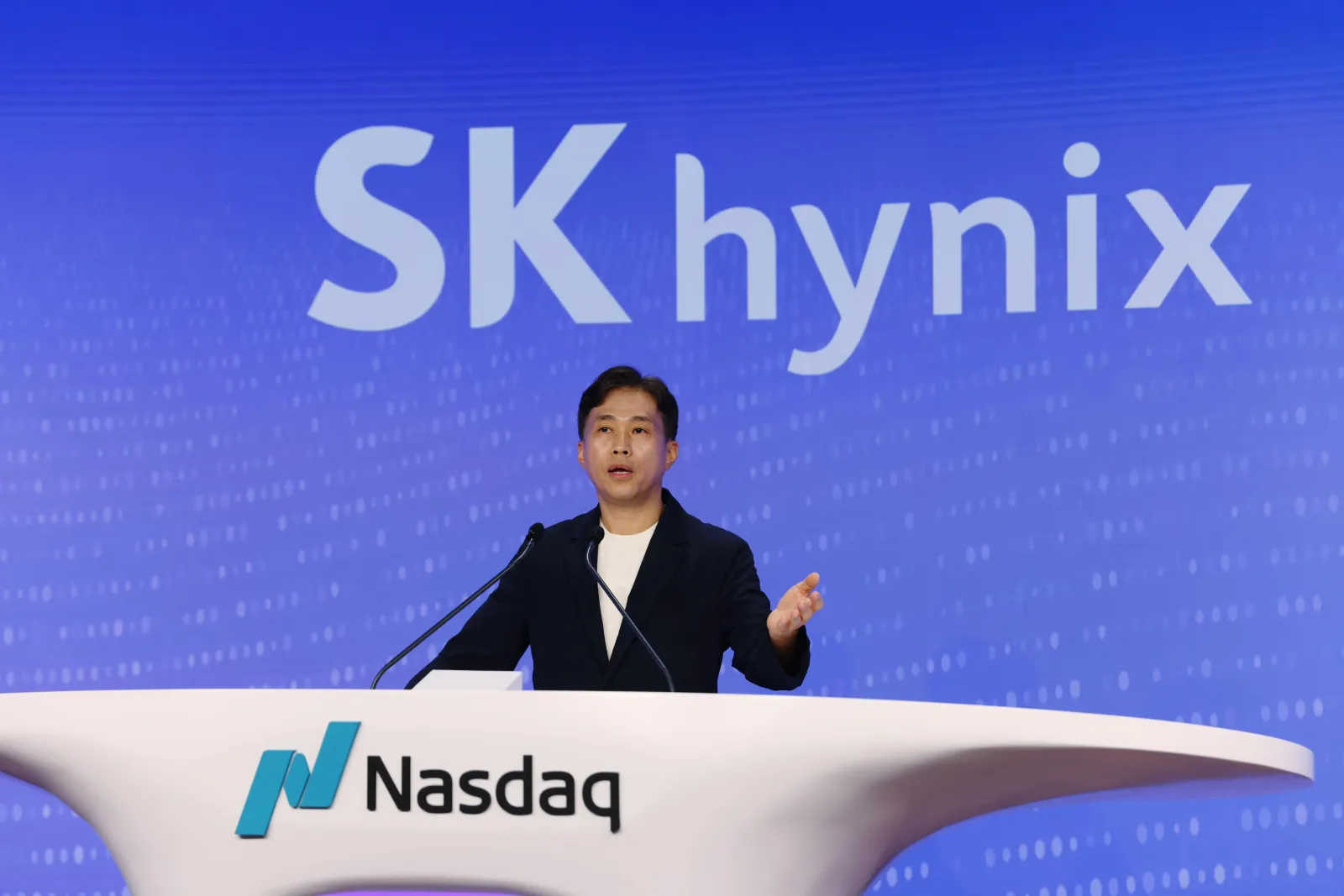
SK Hynix opens at $170, raises $26.5B, and tops foreign IPO records
In Friday's Wall Street debut, SK Hynix turns AI RAM demand into a $26.5B fundraising moment that rewrites comps.
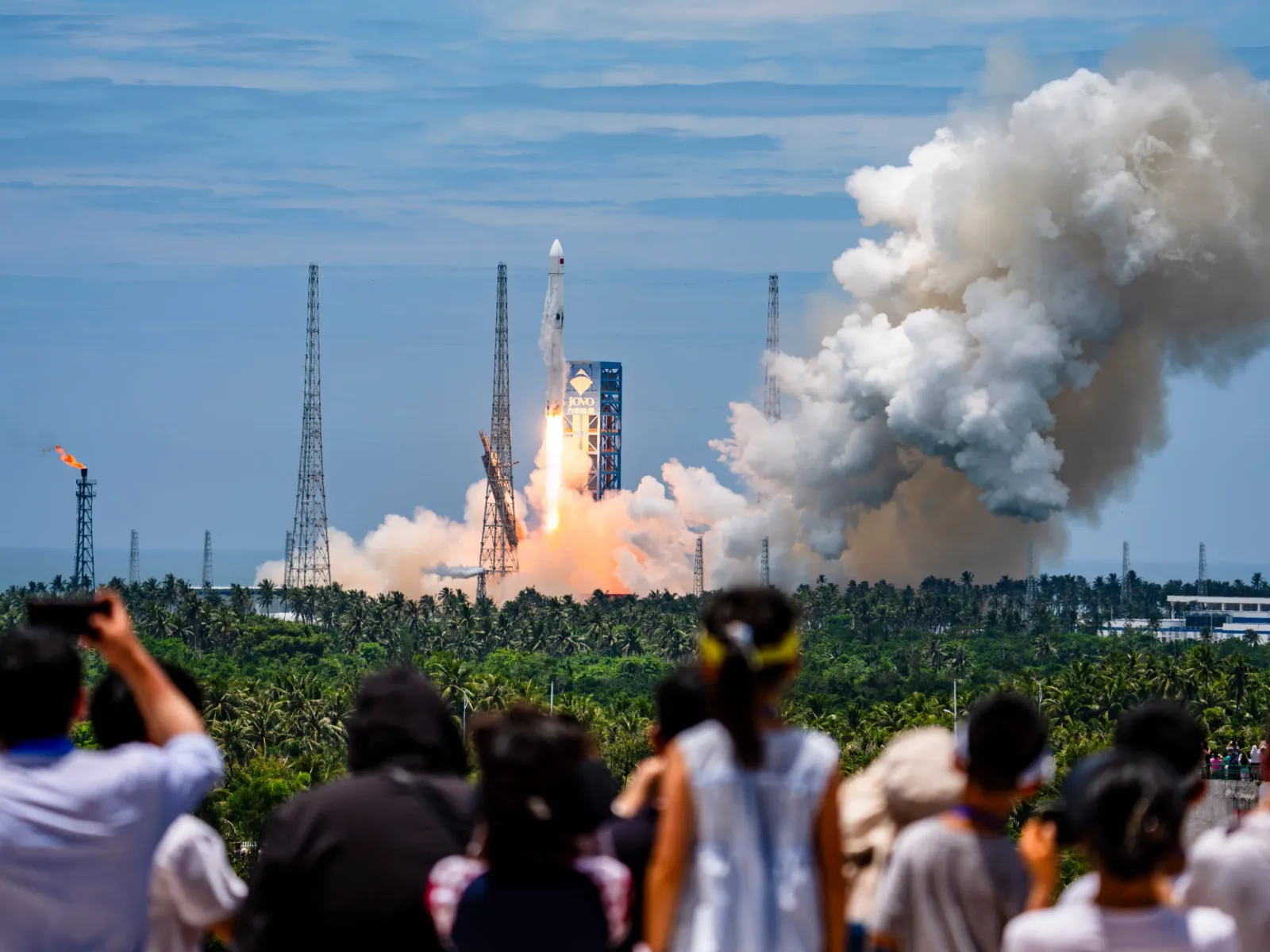
China lands a reusable Long March booster, a first that matches SpaceX and Blue Origin
A barge landing and net-based recovery move China from theory to proof, reshaping the reusability race and satellite ambitions.