

Brexit’s fallout is no longer avoidable, and the new UK prime minister inherits it
The policy reset does not erase the economic and regulatory bill. Decision-makers need to plan for the trade-offs now.
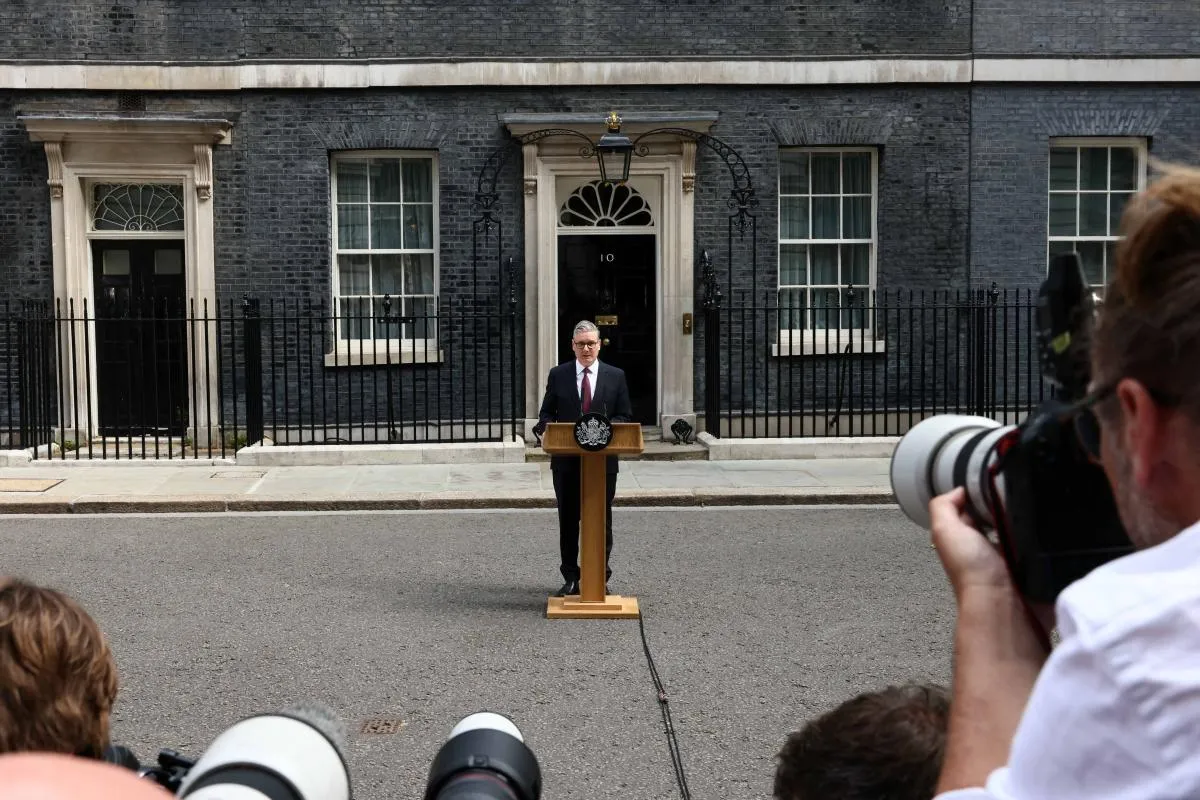
The piece argues that Brexit's consequences can no longer be deferred, even with a new UK prime minister. For decision-makers, the implication is clear: regulatory, economic, and market uncertainty created by Brexit will shape strategy, budgets, and risk models going forward.
Brexit has officially reached the point where it stops being a political debate and becomes a scheduling problem for everyone affected. Foreign Affairs frames the core issue bluntly: the consequences of Brexit can no longer be avoided. In other words, a change at the top does not change the underlying constraints. The new prime minister may reset tone and priorities, but the structural realities created by Brexit still have to be managed, paid for, and absorbed.
That is the central takeaway for executives and boards, and it matters precisely because “avoidance” used to be a strategy. For years, many firms, regulators, and investors operated under a hope that uncertainty would eventually resolve itself through negotiations, alignments, or creative transitional rules. Foreign Affairs argues that this runway is effectively over. Brexit is no longer something you can treat as a temporary shock. It is now the permanent operating environment you build processes, supply chains, compliance programs, and financial forecasts around.
To understand why this shift is so consequential, it helps to remember what Brexit actually did to the decision system. The UK left the EU, which means the UK no longer automatically shares the same regulatory defaults that used to govern trade, product standards, services rules, and labor mobility. In practice, that alters incentives for both sides. Regulators face pressures to protect local markets and manage friction. Companies face pressures to reduce exposure to border delays, changing standards, and compliance costs. Investors face pressures to price in policy risk that used to be partially diversified away by regulatory alignment.
A “new prime minister, same problem” is not just a slogan. It is a warning about how institutional momentum works. Political leaders can renegotiate priorities, but they cannot instantly rewrite the economic contracts already embedded in relationships across industries. Think of the second-order effects: compliance teams do not disband because a government changes. Logistics networks do not re-route on election day. Banks do not recalculate risk models in a single quarter because headlines shift. When Foreign Affairs says the consequences can no longer be avoided, it is pointing at this inertia. The system has moved from uncertainty about the future to uncertainty about the operating details of the present.
For businesses, that means strategy has to become more operational. Brexit affects where value sits in the system. Even when tariffs are not the headline, friction can show up as paperwork, inspections, certification requirements, and different rule interpretations across borders. It can show up in delays that change inventory decisions. It can show up in costs that management teams previously treated as “one-off” adjustments. And it can show up in procurement choices, because cross-border contracting starts to incorporate regulatory uncertainty as an actual variable, not just a risk narrative.
For boards and senior finance leaders, the key is to update how you think about time horizons. Brexit did not only change regulations; it changed the timing of uncertainty. When something is continually “soon to resolve,” you can sometimes underinvest in compliance or postpone capex decisions. But if the consequences are no longer avoidable, then postponement becomes expensive. You either absorb the cost of operating in a new regime now, or you pay the price later in penalties, stranded assets, and missed opportunities when competitors have already adjusted.
This is also why investors should pay attention. Foreign Affairs is essentially arguing that the Brexit story has moved from headline-driven volatility to structural exposure. Market pricing tends to stabilize when the policy direction becomes persistent. But persistence can be harsher than volatility, because it forces long-lived adjustments: new suppliers, new legal structures, new compliance workflows, new product strategies. The new prime minister may change messaging, but it does not undo the regulatory separation that has already taken hold.
So the strategic stakes are immediate for anyone in leadership roles who governs risk, allocates capital, or oversees growth across borders. The question is no longer whether Brexit will produce consequences. Foreign Affairs says it already has, and now the consequences cannot be avoided. The question is whether your organization treats Brexit as an exception management problem or as a core planning constraint. The organizations that adapt fastest will feel less pain because they are building processes for reality, not hopes for resolution.
This story's Key Insights and Take-aways are locked.
Create a free account to unlock Executive Actions for one credit.
Register to UnlockAlways free for Executives Club members. Join the Club
More in Politics

Obama Defends Ilhan Omar After Agents Search Her Home in Trump Inquiry
The former president's intervention raises the stakes in a federal probe into immigration paperwork that has put a prominent progressive lawmaker in the crosshairs.

Blair-era minister: cut welfare to fund youth job support
Alan Milburn's call for welfare cuts to fund employment support opens a Labour fight over benefits and the Neet crisis.

Hot September CPI: energy costs surge, voters feel the squeeze before midterms
The latest inflation print lands as Trump campaigns for GOP control of Congress, putting cost-of-living worries at the center of the midterm fight.