

CT Group pressed to disclose full payments after MPs call cash-for-coverage an “attack on democracy”
A lobbying firm tied to Lynton Crosby faces mounting demands to reveal exactly what it paid journalists for favourable stories.
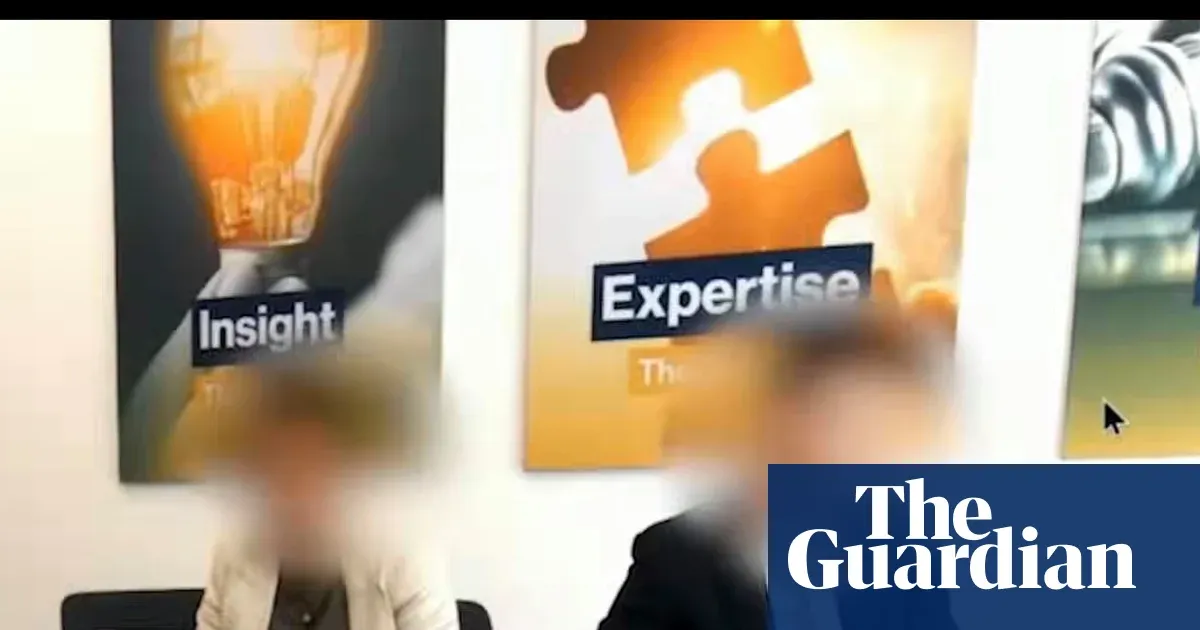
MPs and transparency advocates are pressuring CT Group, co-founded by campaign strategist Lynton Crosby, to disclose full details of payments to journalists for favourable articles. Decision-makers now face a live test of how far lobbying and media influence can go before regulators and reputations break.
A political lobbying firm, CT Group, is now facing calls to reveal full details of payments it made to journalists for articles described as favourable to its clients. The pressure has landed after MPs and others denounced the practice as a dangerous “attack on democracy”, framing it not as a minor ethics slip but as a threat to public trust in how information gets produced and circulated.
This matters because CT Group is not a faceless contractor in a grey zone. The firm is co-founded by Lynton Crosby, a campaign strategist widely known as an election guru who has previously been hired by both David Cameron and Boris Johnson. When a shop with that pedigree is accused of covertly paying for positive coverage, the allegation hits two systems at once: political messaging and the credibility of media reporting.
So what exactly is at stake? The core claim is straightforward: CT Group offered cash for favourable stories about clients. Even if the individual articles or editorial decisions are not detailed here, the underlying mechanism is what has triggered the strongest response. If money changes who gets heard, and how issues are framed, then the public is no longer evaluating information on its merits alone. Instead, attention can be shaped by a hidden sponsorship arrangement that readers cannot observe.
That is why the reaction is coming not only from MPs but also from “senior lobbyists and transparency campaigners”. In other words, it is not just partisan outrage. The condemnation signals an industry-wide fear that covert payment schemes make it harder for legitimate communications work to maintain a boundary with unethical influence. Once trust degrades, every campaign, briefing, and advocacy effort gets dragged into the same suspicion pool. The second-order consequence for professional lobbyists is clear: boards and compliance teams may respond with stricter internal rules, more reporting, and higher legal risk tolerance, which can slow deals and communications plans.
There is also a regulatory and governance angle, even without a named regulator in the excerpt. In the UK context, lobbying and influence operations typically live under an expectation of transparency, accurate reporting, and clear separation between paid advocacy and independent journalism. When payments are linked to favourable coverage, that separation becomes the disputed line. That is why calls are moving beyond acknowledgement and into disclosure. If a firm cannot clearly explain the scale, structure, and purpose of such payments, it becomes difficult for oversight bodies, lawmakers, or watchdogs to assess whether this is a one-off incident or a repeatable model.
The criticism described in the source also points to a political reckoning. The phrase “attack on democracy” is deliberately high-voltage. It reframes the controversy from “media ethics” into something closer to a constitutional concern: the idea that democratic debate depends on citizens receiving information that is not secretly purchased. For executives, that language is not just rhetoric. It affects how quickly scrutiny ramps up, how aggressively investigations are pursued, and how costly it becomes to wait out the news cycle.
For companies that rely on lobbying, communications, and media relations, the lesson is not only about reputation. It is about operational risk. A board cannot treat media influence scandals as PR problems alone. They force hard questions about compliance controls, who approves relationships with journalists, how vendors and agents are selected, how contracts are documented, and what documentation exists to prove independence. Even without new numbers or additional disclosures in the excerpt, the direction of travel is obvious: pressure is being placed on CT Group to reveal full details, meaning whatever documentation exists could become central evidence.
The strategic stake extends beyond one firm. If MPs and transparency campaigners succeed in extracting comprehensive payment details, it sets a precedent for how future lobbying controversies might be investigated and prosecuted. Other lobbyists and communications firms may respond by increasing transparency proactively, tightening internal policies, and revising engagement models. For executives, the board-level challenge is to manage influence work without creating an appearance of bought coverage, because once the public narrative shifts from “advocacy” to “covert purchase,” trust becomes expensive to rebuild.
This story's Key Insights and Take-aways are locked.
Create a free account to unlock Executive Actions for one credit.
Register to UnlockAlways free for Executives Club members. Join the Club
More in Politics

LA County: DOJ's 20,000 'noncitizen' voter list is 'unreliable,' includes U.S.-born
Preliminary review by Los Angeles County election officials finds errors in the federal list, raising the stakes for voter roll integrity ahead of November.

Trump's $1.5B Pentagon chip investment lands in North Carolina
A $1.5 billion defense infusion for North Carolina chipmaking signals a new era of Pentagon-backed reshoring - here's what it means for the industry.

Nigeria confirms first Ebola case in Abuja, a woman just off a Uganda flight
Health Minister Muhammad Ali Pate says the patient flew in from Uganda, putting Africa's latest outbreak on Nigeria's doorstep.