

Britain’s biggest community solar farm shuts for summer after grid overload order
Devon’s solar project is told to switch off by the energy system operator, leaving members facing about 2m pounds in lost revenue.
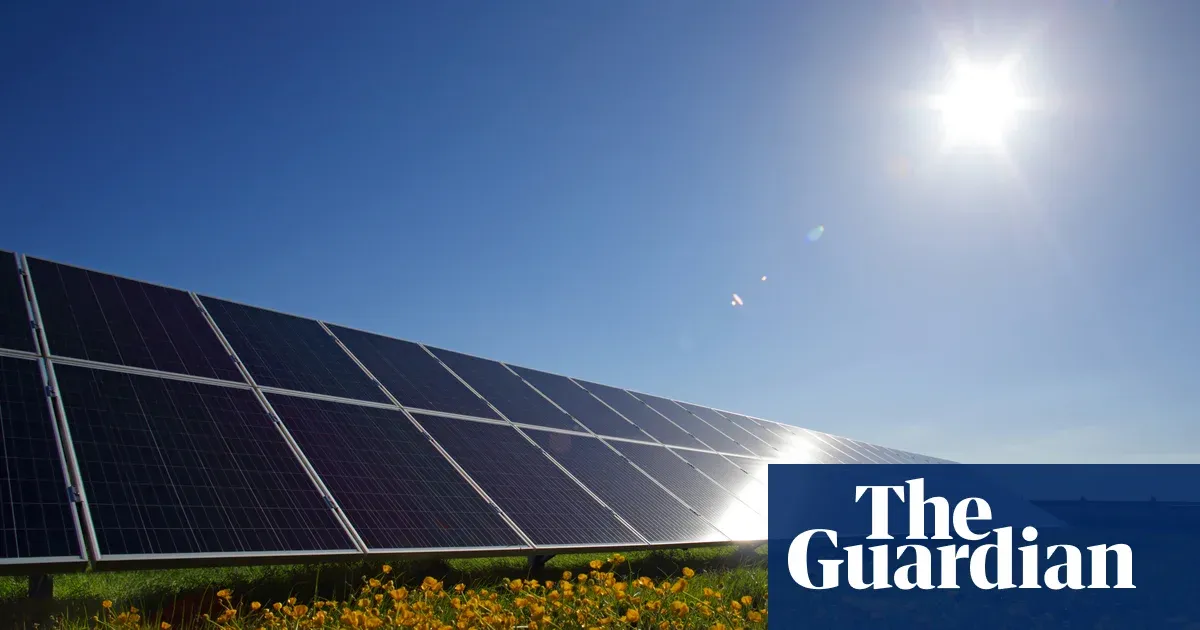
A North Devon community solar farm has been forced to shut for the duration of its first summer after Britain’s energy system operator ordered the switchoff to avoid local grid overload. The board says the timing “could not be worse,” with members facing an estimated 2m pounds in lost revenue.
Britain’s biggest community solar farm has been ordered to shut down for the duration of its first summer, and the board says the timing “could not be worse”. The North Devon project is being forced off the grid by the government’s energy system operator over fears that too much renewable generation could overload the local network.
The economic hit is immediate: members face an estimated 2m pounds in lost revenue. According to the report, the shutdown was ordered weeks before record high temperatures across Europe triggered wider power supply warnings, with concerns that a large amount of rooftop solar in the area could destabilise the power grid by triggering what the report calls a “thermal overload”.
For executives and boards, this is a brutal example of how grid management can reach straight into a business model. Community solar projects are often built around the idea that distributed generation will reliably feed the grid and produce predictable income. But “predictable income” collides with the reality that electricity networks are physical systems with thermal limits, local constraints, and operating rules that do not care that the electrons came from panels rather than power plants.
In practical terms, the energy system operator’s concern is that the local grid could experience overload conditions when generation ramps up. Solar output tends to peak during sunny periods, and in the kind of weather the report references, that is exactly when rooftop solar across an area can surge at the same time. The report links the timing to the lead-up to record high temperatures and power supply warnings, essentially arguing that while the board is losing revenue now, system operators are trying to prevent a more dangerous scenario where the network cannot safely accommodate the surge.
The board dynamics here matter too. A community energy scheme has stakeholders whose economics depend on production. When the grid operator steps in with a switch-off order, directors are not just managing an asset. They are managing expectations, member communications, and the project’s financial runway. If a project is already in its first summer, its operating “learning curve” is supposed to be where problems get identified and tuned. Instead, the report says it is being forced to shut, right at the moment the project was meant to prove itself.
Zoom out and the second-order implication gets sharper. For investors and operators watching renewable buildouts, this highlights a growing theme: grid reliability and interconnection capacity increasingly shape the timeline and viability of generation, even for clean assets. The deterrent is not that solar is uncompetitive. It is that the ability to absorb solar at scale can become a binding constraint, creating situations where projects face curtailment or shutdown orders to protect network stability.
That also changes how boards should think about risk. Traditional project risk often focuses on construction, panel performance, and financing terms. This story adds operational grid risk as a central variable, one that can abruptly turn “summer revenue” into a liability. If a scheme can be forced to switch off to avoid thermal overload or similar safety thresholds, governance teams may need to treat grid interaction not as an engineering footnote, but as a core part of the business case.
The strategic stakes are obvious if you are a peer decision-maker. Community solar, rooftop solar partnerships, and other distributed generation models depend on getting energy onto the grid safely and consistently. When a grid operator orders a shutdown, the consequence is felt in lost revenue, stakeholder trust, and the broader narrative around how fast the energy transition can scale. Today’s 2m pounds lost in North Devon is not just a local inconvenience. It is a signal that, during peak conditions, the grid’s ability to handle renewables can become the bottleneck that determines who wins, who waits, and who gets forced off early.
This story's Key Insights and Take-aways are locked.
Create a free account to unlock Executive Actions for one credit.
Register to UnlockAlways free for Executives Club members. Join the Club
More in Business

SK Hynix opens at $170, raises $26.5B, and tops foreign IPO records
In Friday's Wall Street debut, SK Hynix turns AI RAM demand into a $26.5B fundraising moment that rewrites comps.

China lands a reusable Long March booster, a first that matches SpaceX and Blue Origin
A barge landing and net-based recovery move China from theory to proof, reshaping the reusability race and satellite ambitions.

AstraZeneca $27B wipeout as Wainua late trial misses cardiovascular target
A failed late-stage heart study triggered a swift market punishment, forcing investors and boards to reset timelines and risk.