

Bunkerhill Health raises $55 million for hospital AI agents, targeting paperwork and missed follow-ups
The new $25 million Series B with Khosla lead arrives as hospitals shift AI from pilots to operations.

Nishith Khandwala, CEO of Bunkerhill Health, said the startup just closed a $25 million Series B led by Khosla Ventures, bringing total funding to $55 million. The company is deploying AI agents inside hospitals, blending operational workflows with nine FDA-cleared clinical algorithms.
Bunkerhill Health just closed a $25 million Series B, bringing its total funding to $55 million, and the pitch is refreshingly unglamorous: not diagnosing more diseases, but fixing how care gets delivered. Nishith Khandwala, CEO of the company, is betting that healthcare’s most valuable AI work happens in the messy middle of hospitals, where paperwork, wait times, and missed follow-ups quietly determine outcomes.
This is not a “cool demos in a lab” story. Bunkerhill says it works with 15 health systems through its Carebricks platform, including Cleveland Clinic, Mayo Clinic, Ballad Health, Intermountain Health, Sentara Health, Endeavor Health, and the University of Texas Medical Branch (UTMB) Health. Embedded inside that platform are two buckets: operational agents that take on hospital tasks, and nine clinical AI algorithms that are FDA-cleared, including one for early detection of silent heart valve disease and another that assesses osteoporosis risk. In other words, the startup is trying to land inside day-to-day operations and then expand from there.
The origin story matters because it explains why the company is so focused on translation, not novelty. Khandwala was a Stanford computer science student in 2017, along with classmate David Eng, building an idea around using existing radiology scans and AI to check them at scale and detect early heart disease and heart attack risk. They ran into a wall: hospitals shooed them away, even when the model worked. Then in 2020, Khandwala’s father had a heart attack, and the cardiologist told him there had been a scan in the past showing increased risk, implying earlier detection could have changed the trajectory.
That personal jolt turned into a mission with a sharper operational edge. Bunkerhill, cofounded by Khandwala and Eng in 2019, takes its name from a single-season 2010s CBS TV show that was panned but carried a “medicine can iterate faster” idea. Bunkerhill says hospitals do not get pushed a menu of use cases. Instead, hospitals ask whether Bunkerhill’s agents can solve a problem. That approach aligns with why AI agents are becoming easier to deploy in hospitals: they can plug into the work that already happens, rather than demanding that clinicians change their entire diagnostic workflow overnight.
The regulatory framing is a big part of why boards should pay attention. When something is FDA-cleared, it carries a credibility that many pure automation vendors cannot claim. Bunkerhill’s platform includes nine FDA-cleared clinical algorithms alongside operational agents, effectively combining compliance-tested clinical components with broader operations support. That mix may help explain why adoption is happening now, with UTMB deploying 22 of Bunkerhill’s agents.
Vinod Khosla, known as an early OpenAI backer and a Sun Microsystems legend, has been backing healthcare companies for decades, and he argues hospitals are more eager to adopt new technology than ever. In comments to Fortune, he said AI has become a mandate now. He also pointed to the historical pain: software was a friction point for hospitals because it sat between staff and medical records. Today, he says, hospitals are trying to adopt AI, and the tone has changed because “AI” is now driving urgency.
Part of that urgency is capital, and part of it is competition dynamics. Fortune notes a “minor tidal wave” of funding into healthcare AI admin startups in recent months, and Alfred Lin, partner at Sequoia, has backed Bunkerhill since leading its $6.5 million seed round in 2023. Lin’s stance is basically: too many entrants is not a reason to slow down. If there are many teams, he argues, innovation and competition mean the best solutions will win, favoring what he called “1,000 flowers bloom.” He also said he likes industries with regulatory capture, and healthcare fits that framework because it is harder to change incentives inside entrenched systems.
Khandwala’s counterpoint lands the thesis from the founder side. He questioned the need for hospitals to work with “100 different companies to solve 100 different problems.” His argument is that most vendors still solve one narrow problem, and Bunkerhill believes hospitals have moved beyond that fragmented stage. For decision-makers at health systems, insurers, and AI operators, the second-order implication is straightforward: the winner may not be the company with the flashiest model. It may be the one that reduces the number of vendors touching critical workflow, while still earning trust through FDA-cleared clinical components and measurable operational impact.
And for investors, the Bunkerhill raise is a signal that healthcare AI is evolving from “adjacent experiments” into infrastructure-like deployment, with agentic systems running inside hospitals and clinical algorithms already cleared by regulators. If that transition holds, every board looking at healthcare software will need to ask a sharper question than “Does it work in a pilot?” It is “Can it survive the hospital week, with all its paperwork and real-world constraints, while still improving outcomes?”
This story's Key Insights and Take-aways are locked.
Create a free account to unlock Executive Actions for one credit.
Register to UnlockAlways free for Executives Club members. Join the Club
More in Business

Epic and Google drop settlement bid, forcing rival Android app stores by July 22
Google told the court it is ready to carry third-party app stores starting Wednesday, July 22.
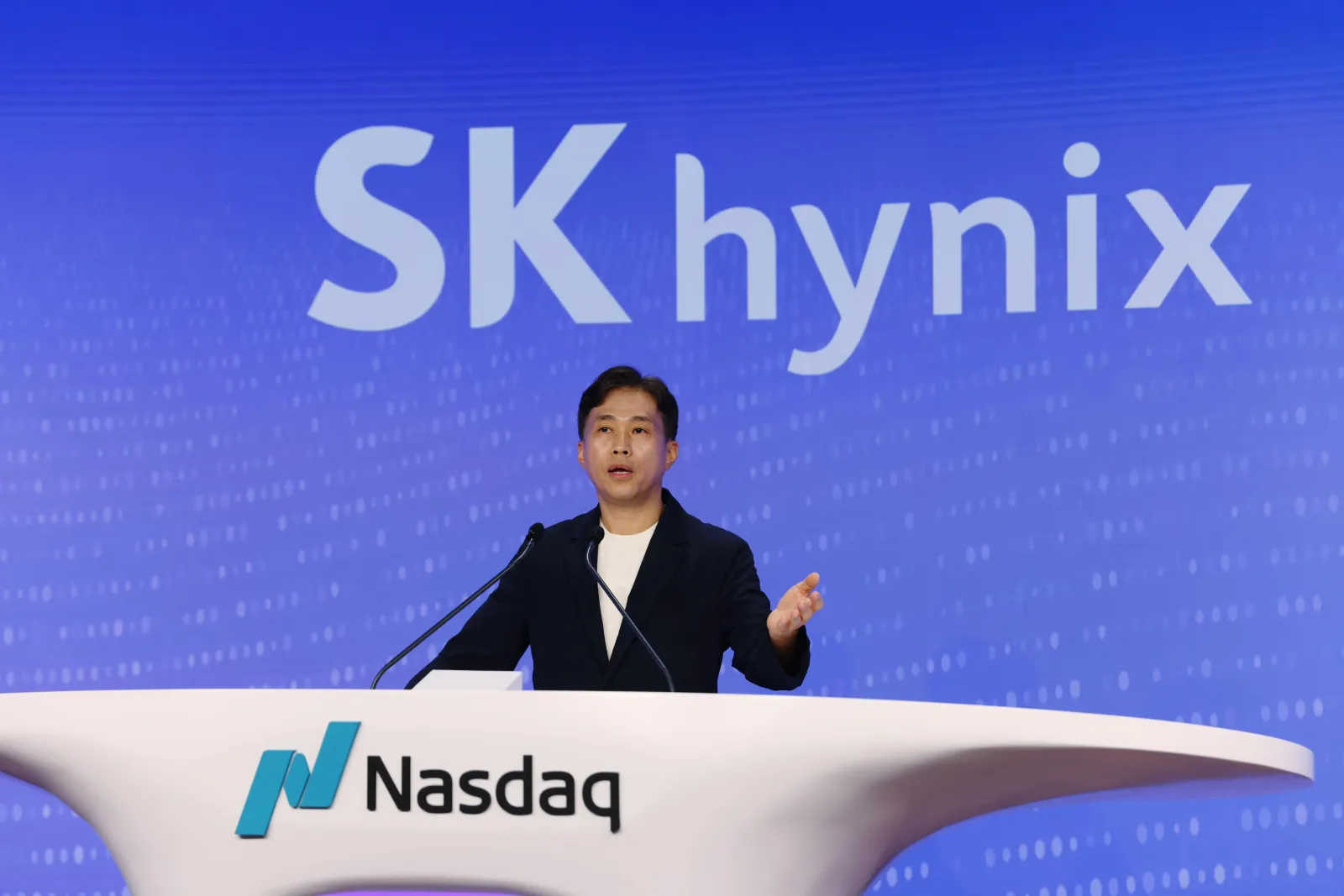
SK Hynix opens at $170, raises $26.5B, and tops foreign IPO records
In Friday's Wall Street debut, SK Hynix turns AI RAM demand into a $26.5B fundraising moment that rewrites comps.

China lands a reusable Long March booster, a first that matches SpaceX and Blue Origin
A barge landing and net-based recovery move China from theory to proof, reshaping the reusability race and satellite ambitions.