

Bureau of Reclamation warns Lake Powell may hit 3,492 feet by March 2027
Federal modeling says dangerously low Lake Powell levels could threaten hydroelectric power production next year.
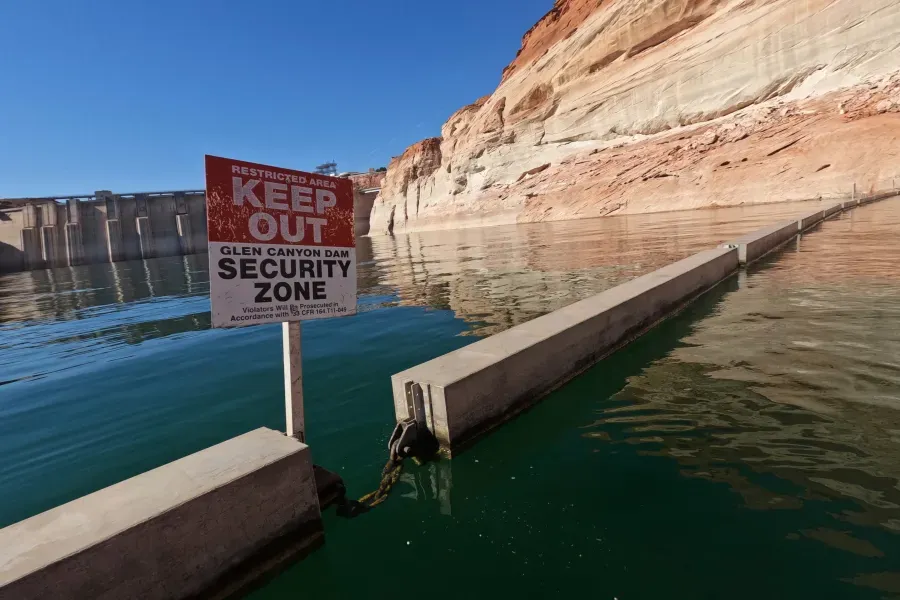
A new federal analysis from the U.S. Bureau of Reclamation projects that Lake Powell could fall to just under 3,492 feet at the end of March 2027. For decision-makers, the risk is less about scenery and more about whether hydropower output can be sustained.
Lake Powell could fall to just under 3,492 feet by the end of March 2027, according to a new study released by the U.S. Bureau of Reclamation. That is the kind of number grid operators, utilities, and investors do not want to see attached to hydropower, because it signals that the reservoir is approaching levels that can directly constrain power production.
Why the timing matters: Lake Powell is a Colorado River reservoir that serves as a source of hydroelectric power, and a late-winter or early-spring low sets up operational headaches for the next year. If the elevation ends up near 3,492 feet, the downstream consequence is straightforward. Hydropower depends on stored water and the ability to move it through generating facilities. Lower reservoir levels can mean less water available for generation, more stress on how water is managed, and more uncertainty for planning.
This is not just a water-supply story. It is an energy reliability story hiding in plain sight behind reservoir elevations. Hydroelectric power is one of the major ways the power system can generate electricity without burning fuel each time demand spikes, so when the underlying water “fuel” drops, the entire risk profile changes. Utilities and system operators typically plan around expected inflows and reservoir behavior. When a federal study projects very low levels, it effectively raises the probability that planning assumptions will be challenged.
The Bureau of Reclamation study adds urgency because it is projecting a specific end-of-March 2027 elevation, not a vague “could be low someday” warning. The projection that Lake Powell’s elevation could be just less than 3,492 feet anchors the discussion in a measurable threshold. For boards and finance teams, that matters because it turns environmental variability into something closer to a line-item risk: generation output, dispatch planning, and the cost of securing replacement power if hydro production is constrained.
Zoom out to the governance layer, too. The Colorado River system is heavily regulated and managed through federal and basin-wide planning frameworks. Federal analysis carries weight because it feeds into how agencies and stakeholders interpret conditions and adjust expectations. When the Bureau of Reclamation releases projections, it often becomes part of the operating backdrop for discussions among water managers, utilities, regulators, and other stakeholders who all need to coordinate around limited water.
Now consider the second-order effect executives should watch: hydropower is not the only thing that can feel the squeeze when reservoirs decline. System planning tends to cascade. If hydropower generation is reduced, utilities may need more power from other sources during periods when demand remains steady. That can increase volatility in procurement strategies and shift costs. Even if the exact financial impact is not spelled out in the study itself, the operational mechanism is clear, and it is the mechanism that changes how CFOs and boards think about budgets.
This is why the “very low levels” framing is such a big deal. Reservoirs are physical assets with constraints, not abstract goals. Lake Powell being in danger of reaching very low levels means management decisions and planning scenarios likely have to move from contingency mode into near-term preparedness. And for peers who sit in similar roles, the question becomes less “what happens to Lake Powell” and more “how quickly do we have to assume worse hydro availability than we planned for, and what does that do to reliability, cost, and risk controls?”
This story's Key Insights and Take-aways are locked.
Create a free account to unlock Executive Actions for one credit.
Register to UnlockAlways free for Executives Club members. Join the Club
More in Politics

LA County: DOJ's 20,000 'noncitizen' voter list is 'unreliable,' includes U.S.-born
Preliminary review by Los Angeles County election officials finds errors in the federal list, raising the stakes for voter roll integrity ahead of November.

Trump's $1.5B Pentagon chip investment lands in North Carolina
A $1.5 billion defense infusion for North Carolina chipmaking signals a new era of Pentagon-backed reshoring - here's what it means for the industry.

Nigeria confirms first Ebola case in Abuja, a woman just off a Uganda flight
Health Minister Muhammad Ali Pate says the patient flew in from Uganda, putting Africa's latest outbreak on Nigeria's doorstep.