
Magnitude 7.3 quake hits Mexico coast, triggers tsunami alert across US network
A Friday quake near Guatemala prompted evacuations and a US Tsunami Warning System alert, with no immediate damage reports.
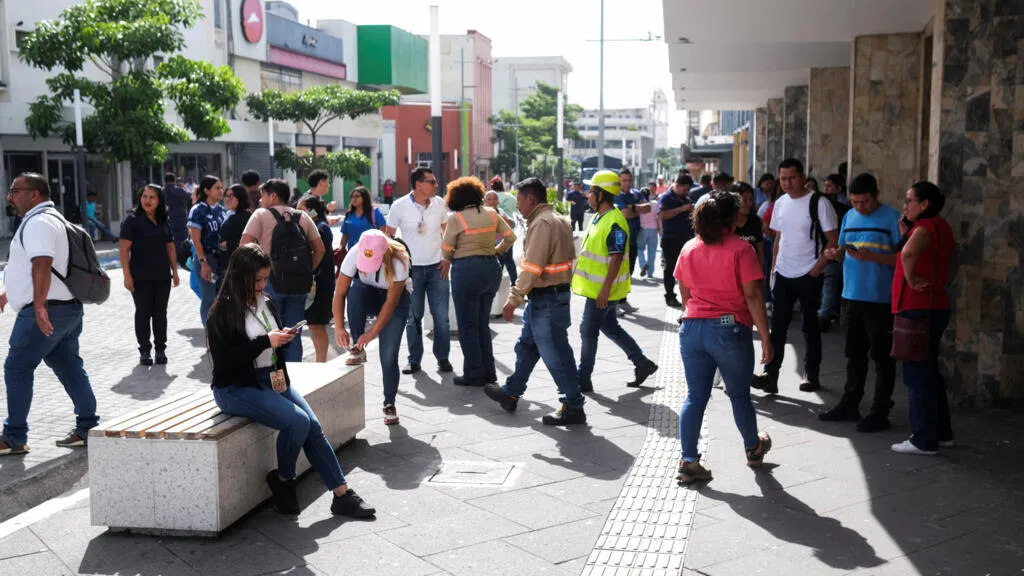
A Magnitude 7.3 earthquake struck the southern Mexican Pacific coast on Friday, triggering evacuations in neighbouring Guatemala and El Salvador and an alert from the US Tsunami Warning System. Decision-makers now have to balance emergency response readiness with rapid information verification as authorities sort out impacts.
A magnitude 7.3 earthquake struck the southern Mexican Pacific coast on Friday, immediately triggering evacuations in neighbouring Guatemala and El Salvador and setting off an alert from the US Tsunami Warning System. In the same early window, officials reported no immediate damage or casualties, but the mere fact of a tsunami alert turns a shaking event into a time-critical operations problem.
For executives and leaders watching from afar, the key is the combination: a high-magnitude quake, cross-border evacuations, and a formal tsunami warning workflow. The alert from the US Tsunami Warning System signals that the event crossed the threshold where waiting for perfect certainty is no longer acceptable. Even without confirmed casualties or damage in the first reports, evacuation behavior shows how quickly governments and public agencies move when the risk category changes.
This is how these events ripple through systems, not just neighborhoods. When the ground moves, you get immediate uncertainty: what damage is real, what is forecast, and what is merely possible. Tsunami alerts add another layer because the timeline matters. Authorities do not need to know the final outcome in order to take protective action. That is why evacuation decisions in Guatemala and El Salvador could unfold even while damage assessments are still pending.
There is also a communications discipline that organizations should understand, even if their core business is unrelated. The absence of immediate reports of damage or casualties does not mean the situation is stable. It means that, at the time the report was issued, there was no confirmed information flowing through the channels yet. In disaster response terms, this is the gap between “we acted” and “we have verified outcomes.” Leaders in crisis management, logistics, insurance, and infrastructure planning all recognize this gap. It is where misinformation, rumor surges, and decision paralysis can live if systems are not built to operate under partial information.
From a regulatory and coordination perspective, the US Tsunami Warning System alert matters because it reflects an established transnational information pipeline. Earthquakes often do not respect borders, so warning systems and emergency actions must interlock. In practice, that means public authorities in nearby countries may receive guidance through information sharing frameworks, then translate it into local instructions like evacuating buildings. Executives who oversee operations in regions prone to natural hazards should treat these alerting mechanisms as part of the broader risk governance landscape, not as “just a news headline.”
For boards and senior leaders, the second-order question is not only “Was anyone hurt?” It is “How resilient are our operating assumptions if a comparable warning system activates again?” Even if there is no immediate damage or casualties, a tsunami alert can interrupt travel, suspend shipments, disrupt construction schedules, and trigger business continuity workflows. It can also create reputational risk if organizations downplay instructions that governments are already acting on.
And there is another practical stake: if damage is later found to be more significant than early reports suggested, the organizations that prepared for a wide range of outcomes will have less scrambling to do. Those scrambling moments are expensive in time and attention, especially for cross-border supply chains and multinational teams. The early phase in this story, where evacuations were already prompted but consequences were not yet confirmed, is a preview of the uncertainty that disaster management plans are supposed to absorb.
Bottom line: a magnitude 7.3 quake on Mexico’s southern Pacific coast triggered evacuations in Guatemala and El Salvador and an alert from the US Tsunami Warning System, but with no immediate reports of damage or casualties. That combination is exactly the scenario where executives should test their crisis readiness to function under fast-moving alerts, partial information, and cross-border coordination needs.
This story's Key Insights and Take-aways are locked.
Create a free account to unlock Executive Actions for one credit.
Register to UnlockAlways free for Executives Club members. Join the Club
More in Politics

LA County: DOJ's 20,000 'noncitizen' voter list is 'unreliable,' includes U.S.-born
Preliminary review by Los Angeles County election officials finds errors in the federal list, raising the stakes for voter roll integrity ahead of November.

Trump's $1.5B Pentagon chip investment lands in North Carolina
A $1.5 billion defense infusion for North Carolina chipmaking signals a new era of Pentagon-backed reshoring - here's what it means for the industry.

Nigeria confirms first Ebola case in Abuja, a woman just off a Uganda flight
Health Minister Muhammad Ali Pate says the patient flew in from Uganda, putting Africa's latest outbreak on Nigeria's doorstep.