
CameraMatics raises up to €49M to scale AI fleet safety across North America
Irish video-telematics startup CameraMatics plans expansion after funding aimed at preventing crashes before drivers notice.
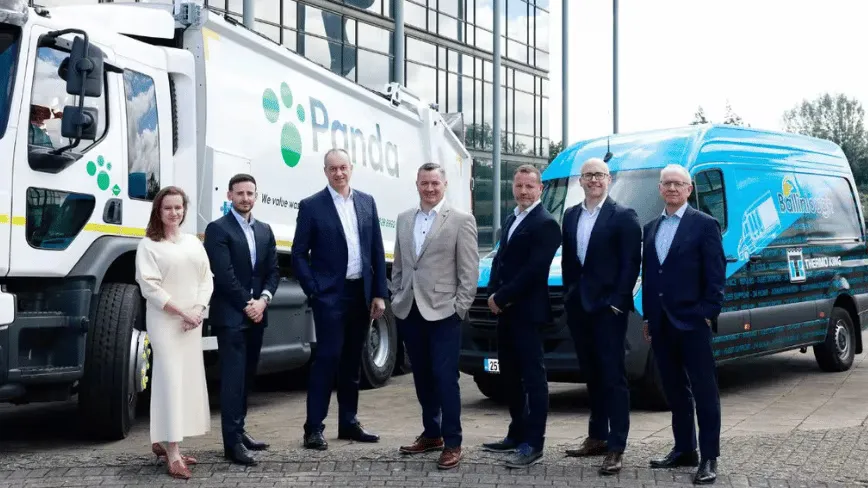
CameraMatics, an Irish company founded in Dublin in 2016, raised up to €49M for its AI-based video-telematics platform that watches both the road and the cab. The funding is designed to accelerate expansion in North America and Europe, shaping how commercial fleets approach safety compliance and risk.
CameraMatics, the Dublin-founded fleet-safety firm, just raised up to €49M to expand its AI video-telematics platform in North America and Europe. The company is building a system that watches the road and the cab at the same time, then uses AI to spot crash risk before the driver sees it coming.
That timing matters. In commercial fleet operations, the margin between “almost” and “incident” is often seconds, and those seconds can show up as paperwork, insurance costs, vehicle downtime, and in worst cases injuries. CameraMatics positions its cameras and software as an early-warning layer, aiming to prevent crashes rather than simply document them after the fact. For executives making safety, procurement, and risk decisions, this is the kind of platform shift that can change vendor shortlists and internal standards.
To understand why this round is strategically meaningful, zoom out to what the category actually does. Video-telematics for fleets is not just about tracking location or recording footage. CameraMatics’ pitch, as described in the source, is that the system monitors both what is happening on the road and what is happening inside the cab. In plain English, that means it is trying to connect the external hazard with the human context, because driver behavior and roadside dynamics often interact. If the AI can reliably detect patterns indicative of danger, then the fleet can intervene earlier with coaching, operational changes, or alerts that break the chain from near miss to collision.
This kind of capability also lands in a regulatory and insurer-friendly reality, even when the core technology is “just” computer vision. Across many markets, fleet safety is increasingly measured not only by outcomes (crashes) but also by demonstrable safety processes. Regulators and customers frequently care about how companies manage risk, and safety vendors that can show proactive monitoring can fit into broader compliance programs more cleanly than systems that only capture events after something goes wrong. The source does not claim a specific regulation, but it does make clear the operational direction: prevent crashes before drivers see them coming.
Now look at the capital side. Raising up to €49M is not just a growth stunt. It is a signal that CameraMatics is willing to invest ahead of time in scaling deployments, supporting customers, and strengthening its product in two geographies: North America and Europe. That matters because expansion into new regions often means more than shipping hardware. Fleets run on different vehicle mixes, driving patterns, and operational workflows. Even before you get to integrations, scaling an AI video system tends to require substantial effort to support real-world use, improve model performance, and handle the messy variability of weather, lighting, road types, and driver routines.
There is also a board-level implication here. Investors funding fleet safety platforms are essentially betting on a buyer who has both urgency and budget discipline. Commercial fleet operators feel pain from incidents quickly, but they also tend to scrutinize ROI and implementation risk. When a company positions its technology around earlier detection, the “payoff” story can be direct: fewer incidents, less downtime, fewer downstream costs, and a stronger safety posture that can help with customer retention and procurement criteria.
Finally, for peers in the exec suite, this funding round is a reminder that the safety stack is evolving from reactive to proactive. A system that can watch the road and the cab at the same time, powered by AI, attacks the problem at the moment it begins. If CameraMatics executes as intended, it can raise the baseline expectations for what fleet safety tools should do, not just what they should record.
This story's Key Insights and Take-aways are locked.
Create a free account to unlock Executive Actions for one credit.
Register to UnlockAlways free for Executives Club members. Join the Club
More in Technology

OpenAI says 10,000 agents cracked a 90-year math problem in 88 hours
The company's claim is audacious, but one mathematician is pushing back. Here's what it means for AI-driven discovery.

Meta still serves child sexual abuse ads on Instagram in India - BBC report
A new report following the BBC Eye investigation says the ads are still there - what it signals for every platform with a self-serve ad engine.

White House yanks 'Build the Wall' game after Tetris Company copyright warning
The administration's arcade game vanished in hours - and the takedown playbook every brand can learn from.