
Casey Harrell’s speech BCI hits 3,800+ hours alone in 22.6 months
A brain implant helped Casey Harrell speak, control a cursor, and use the system at home without constant researchers.

Casey Harrell, living with ALS, has used a speech brain-computer interface (BCI) with electrodes implanted in July 2023, and his team reports results today in Nature Medicine. The consequence for decision-makers: the bar for BCI usability shifts from “works in a lab” to “works in daily life, mostly independently.”
Casey Harrell, who has ALS and is paralyzed, used his speech brain-computer interface (BCI) for more than 3,800 hours at home without any researchers present within the first 22.6 months after it was implanted, the team reported today in Nature Medicine. That is the kind of number that turns “amazing demo” into “systems question,” because it tests reliability over time in a real routine, not a controlled session.
Harrell is also no longer stuck waiting for a research team to show up with a laptop and a plug. In 2023, team members had to visit his home and physically connect and disconnect him. “Not anymore,” says Sergey Stavisky, a neuroengineer at the University of California, Davis. Harrell’s care partner can now “don and doff” the system for him: he wakes up, gets plugged in, and “just get going.”
To understand why this matters, you have to remember what BCIs are up against. These systems are new. Not many people have had them implanted for long periods of time. Scar tissue can form around electrodes in the brain, interfering with the ability to pick up neural activity. The team’s results with Harrell suggest that, at least for him, that long-term degradation did not derail the system early. And the bigger story is that he has clocked thousands of hours of use since he first started “speaking” sentences in 2023, using help from a research team at the beginning.
The pathway to this point started with a major clinical milestone. Three years ago, 45-year-old Harrell entrusted David Brandman, an associate professor of neurological surgery at UC Davis, and his colleagues with his brain. Diagnosed with ALS, Harrell had lost muscle control, relied on others to manage his wheelchair and to dress and feed him, and also struggled to speak clearly. The team asked if he wanted to trial a brain implant that could help him communicate, and he agreed. In July 2023, during a five-hour operation, doctors implanted four arrays of 64 electrodes each into his brain. Two “pedestal” connection points on the exterior of his skull provide docking locations to connect the electrodes to a computer.
From there, the engineering problem was decoding speech, step by step. Their system records activity from the speech motor cortex, a region of the brain responsible for the movements that allow people to speak. The core concept is mapping neural activity related to producing speech sounds. The team notes that there are 39 phonemes that make up the sounds in American English. They map brain data to phonemes, then phonemes to words. Nicholas Card, a neuroengineer at UC Davis and a team member, says they built a personalized speech decoder and software that can “speak” those words. According to the report, the team got Harrell’s speech decoder working on the first day; in August, he used the device to speak with a 50-word vocabulary, with 99.6% of the words as he intended.
The system then expanded quickly. That vocabulary later grew to 125,000 words with 97.5% accuracy. And this is where the “power user” label earns its weight: Harrell is not merely trying speech BCI as a research artifact. The team calls him “the first power user of a speech BCI,” with Stavisky making the point that he has used it extensively. Harrell himself frames the goal in terms that are harder to reduce to metrics. Living with ALS, he says, people are supposed to have diminished dreams. He told MIT Technology Review, “I do not.” He argues that having options for communication, independence, and everyday access is “truly revolutionary.”
Independence is also getting engineered into the product layer. Stavisky says the system is now 99% accurate. Harrell can control a cursor, which the team describes as a “game changer,” enabling him to send text messages and emails, surf the web, and keep up with his job as an environmental activist. The team has also added features based on Harrell’s requests, including a “privacy mode” that deletes decoded text automatically when active. He can also use a “profanity filter” while he is talking to his young daughter.
One important reality check is that Harrell’s case, promising as it is, is still a single trial experience. Mariska Vansteesel, a BCI researcher at Utrecht Medical Center who was not involved in the trial, emphasizes that these technologies need testing in settings where they will eventually be used, to show value and usability without constant research-team involvement. She also cautions about the long-term question: she worked with a woman with ALS using a fully implanted device that used “brain clicks” (cursor clicks made using brain activity). That device worked for seven years but stopped toward the end, apparently due to brain degeneration.
Similarly, Jane Huggins, developing noninvasive BCIs at the University of Michigan and not involved in the trial, notes an “aversion to hospital stays” among people with progressive conditions like ALS. Long-term, independent use with efficient and accurate communication is her description of the “holy grail of BCI,” but adoption is constrained by how invasive these approaches are.
For executives and board members watching this space, the second-order implication is straightforward: the market is moving from feasibility to operational reality. Harrell’s report is not a regulatory filing that creates immediate mass rollout, but it is a signal that the design target is changing. “Usable” means the system works not only when the researchers are present, but when a caregiver can manage setup, when software features protect privacy, and when the user can keep doing normal work and relationships.
The team is already aiming higher. Stavisky says they want to restore Harrell’s “full voice” by developing a “brain-to-voice” system that could decode brain activity into a speaking voice with natural cadence, inflection, and intonation. Harrell, for his part, calls the device “nothing short of revolutionary,” tying communication back to employment, insurance, friendships, parenting, and the ability to read and help his daughter sharpen her reading skills. If BCI systems can keep clearing this independence and accuracy bar over time, the strategic stakes for the entire ecosystem are huge: fewer “lab-only” outcomes, more product-grade reliability, and more urgency for regulators, funders, and teams to treat long-term usability as the central KPI.
This story's Key Insights and Take-aways are locked.
Create a free account to unlock Executive Actions for one credit.
Register to UnlockAlways free for Executives Club members. Join the Club
More in Technology

Nvidia's $89B data center quarter: the 9 companies cashing in
The AI buildout is minting fortunes beyond GPUs, and memory, cloud, and cooling suppliers are riding the same wave.
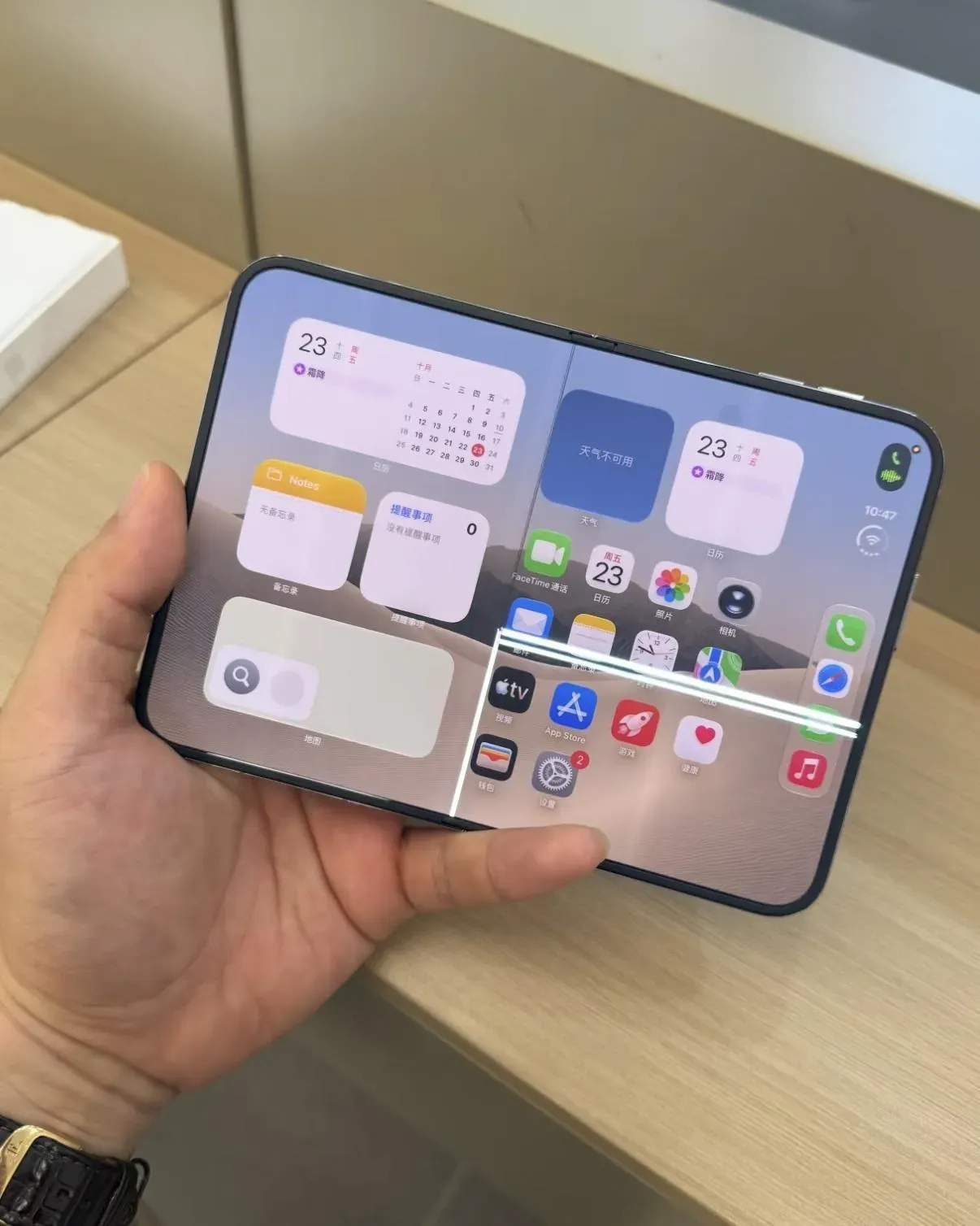
A YouTuber dissected the iPhone Duo and thinks he found crackgate's cause
CuriousHagi's teardown of Apple's foldable reveals a gear-like hinge that may explain why screens crack in the same spot within hours.

Google quietly links your phone number to every Android account on your SIM
Adding a SIM now ties your phone number to all Google accounts - and future accounts inherit it. Here's the security and privacy stakes.