
Cat leg whiskers are real sensory tools, not weird fur: carpal vibrissae explain how cats grab
From forepaw placement to climbing and prey handling, carpal vibrissae likely help cats do three high-stakes jobs in the dark.
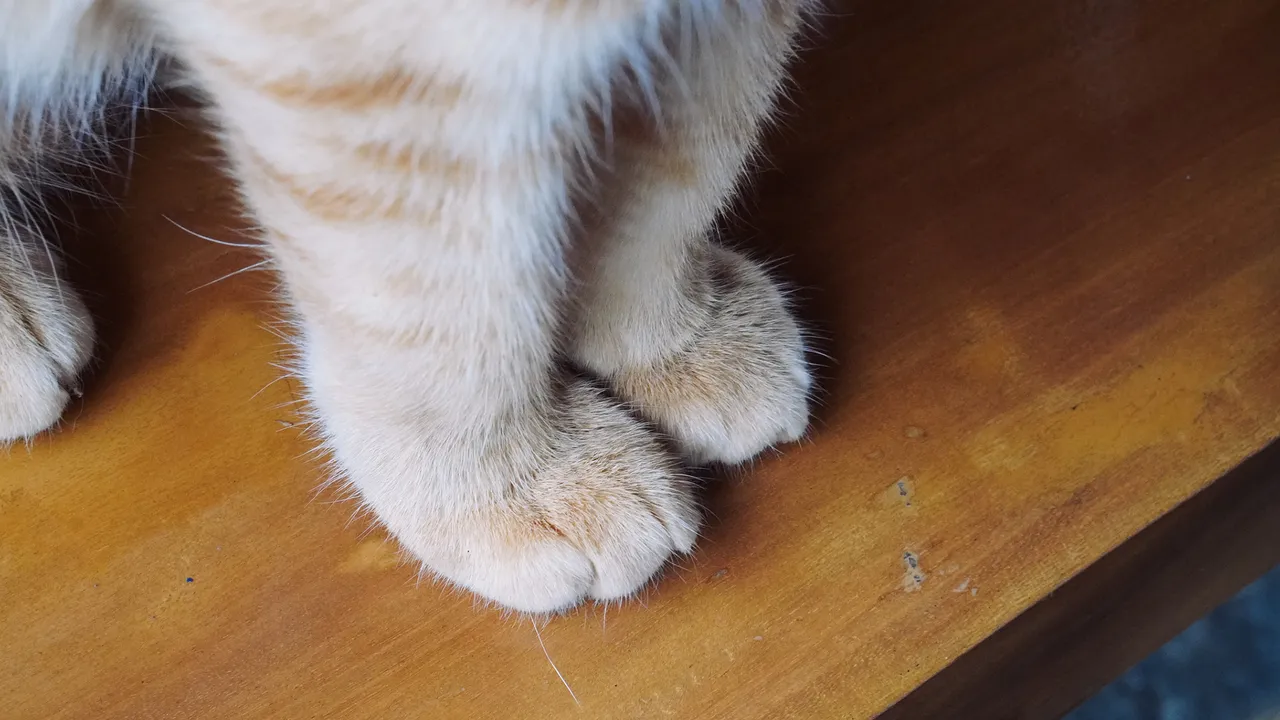
Live Science explains that cats have specialized whiskers on their faces and on their forelegs called carpal vibrissae. These leg whiskers are part of a broader sensory system that helps cats navigate, grasp, and potentially handle prey when vision is limited.
If you think cat whiskers are only for faces, you have been underestimating the cat. Cats also have whiskers on their forelegs, tucked onto the back of each front leg. Live Science reports these whiskers are known as carpal vibrissae, and they are attached to the bones around what corresponds to the wrist area in humans.
So why does this matter beyond “cute anatomy”? Because cats use these sensory hairs to compensate for a real limitation in how they see up close. According to Live Science, cats cannot really focus on anything less than 10 inches (25 centimeters) from their eyes, so they use whiskers to figure out where things are. That same logic of “vision needs help” likely extends from facial mystacial vibrissae to leg whiskers, especially during close-range tasks like grasping, climbing, and handling prey.
To understand how whiskers can be so useful, start with what they are. Whiskers, technically known as vibrissae, are specialized hairs that are stiffer and several times thicker than other hairs. They do not contain nerves themselves, but their bases are rooted in specialized receptacles loaded with nerve endings. Translation: the hair is not the sensor, the base is. It means whiskers are extremely sensitive.
Live Science quotes Robyn Grant, a sensory biologist at Manchester Metropolitan University in the U.K., who says facial whiskers are as sensitive as human fingertips. That comparison lands because it frames whiskers as a tactile input channel, not just a “look at me” feature. Facial whiskers include mystacial vibrissae, the long hairs around a cat’s nose. Live Science cites a veterinary reference book, “The Feline Patient” (Wiley, 2025), saying there are about 12 mystacial whiskers set in four rows on each side of the muzzle on average, though there is variation among cats. Above each eye are superciliary vibrissae, which Live Science says help protect a cat’s vision by triggering a blink when stimulated by anything that might fly into their eye, again based on “The Feline Patient.” Cats also have chin whiskers (mandibular vibrissae) and genal vibrissae on each side of the head between the ear and chin, supporting awareness of nearby space.
Now zoom down to the foreleg. Live Science says cats possess a tuft of four to six whiskers on the back of each front leg, each about 0.8 to 1.2 inches (2 to 3 centimeters) long. These are called carpal vibrissae. Jonathan Losos, an evolutionary biologist at Washington University in St. Louis and author of “The Cat’s Meow: How Cats Evolved from the Savanna to Your Sofa” (Viking, 2023), explains that “carpal” refers to the bones that, in humans, are in our wrists, and that carpal whiskers are attached to cat forelegs near the carpal bones. But the cat version of the “wrist” is not in the same spot as in humans, because cats essentially walk on their toes and not their palms.
The interesting part is who else has these whiskers. Losos tells Live Science that most carnivores have carpal whiskers, and many rodents do too. He also points to lemurs and armadillos. Dogs do not have carpal whiskers, but other canine species do. Rabbits and ungulates, such as horses and cattle, do not have them either. That pattern suggests carpal vibrissae may be linked to how animals use their forelimbs, especially when grasping or climbing makes what you are doing hard to see.
Live Science connects the dots this way: the species that have carpal whiskers tend to be the ones that either grasp things with their forelimbs or climb up trees. Losos says the idea is that if it is hard for the animals to see what they are grasping, carpal whiskers can supplement their vision. He also offers a possible reason why cats might have them while dogs do not. In his explanation, cats can move their forearms laterally from side to side and put their palms together to grab things, whereas dogs cannot.
What role do carpal whiskers play specifically in cats? Live Science is careful here: it says it remains uncertain what role they play in cats. But it provides two likely functions based on expert reasoning. First, Grant suggests they likely “guide locomotion,” meaning safe forepaw placement, especially during complex locomotion like climbing. Second, they might guide prey handling too. That combination is a big deal for understanding how animals operate in the real world. Climbing and grasping are exactly where small sensory errors become big physical consequences. If you are a policy maker, product builder, or investor looking at animal movement science, the second-order implication is that “sensing” is not just eyes and ears. It is distributed across the body, and tiny anatomical features can carry big behavioral weight.
The strategic stakes are simple: if carpal vibrissae help cats place forepaws safely and handle prey, then models of locomotion, robotics grasping, and even veterinary rehab might be missing a key feedback channel. Cats did not evolve leg whiskers as a gimmick. They built a whole-body sensory system to operate in situations where vision is not enough, and the leg is one of the places that does the heavy lifting.
This story's Key Insights and Take-aways are locked.
Create a free account to unlock Executive Actions for one credit.
Register to UnlockAlways free for Executives Club members. Join the Club
More in Science

Alaska's 1,580-foot tsunami had warning signs. Scientists just found them.
Rapid glacier retreat, heavy rainfall, and thousands of tiny tremors preceded Alaska's 1,580-foot tsunami, a warning for every coastal community in a warming world.

The rare mutation that lets high-risk brains dodge Alzheimer's
Scientists found a natural defense against protein buildup, opening a new path to preventive treatments.

3,000 steps a day may halve Alzheimer's decline, study finds
New research links a modest daily walk to less tau buildup and nearly half the cognitive and functional decline, even for those with early signs.