
China Eastern’s $9.35B Airbus A330neo order shows EU tech may strengthen China’s aviation rival
The airline booked 25 A330neos, and the deal lands in a bigger fight over who controls aircraft supply chains.
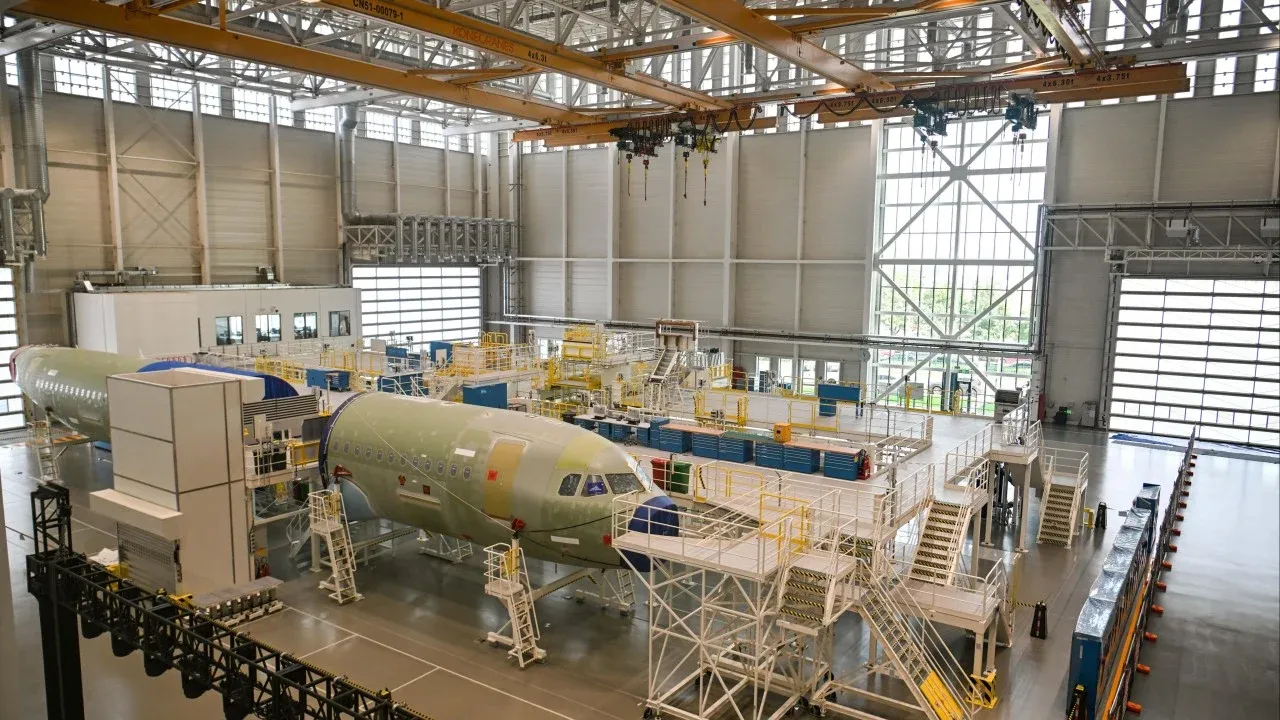
China Eastern ordered 25 Airbus A330neo jets, a transaction valued at US$9.35 billion at catalogue prices, after placing another Airbus order just three months earlier. The consequence for decision-makers is straightforward: Europe is not just selling airplanes to China, it is also helping shape the competitive landscape for China’s homegrown push.
Last month, China Eastern ordered 25 Airbus A330neo jets, with a catalogue price total of US$9.35 billion. This is not a one-off purchase either. The airline, which operates the inaugural commercial routes of China’s home-grown C919, placed another Airbus order just three months earlier. In other words, the same carrier betting on a domestic jet is also sending billions to a European manufacturer.
That combination is the entire point. An A330neo is a widebody jet, and it competes in a segment where the competitive battle is not only about which aircraft fly, but also about which ecosystems airlines rely on for delivery schedules, maintenance practices, parts, training, and long-term fleet strategy. When a major Chinese airline splits its bets like this, it raises a sharper question than “who sold what?” It is “what does that procurement do to China’s effort to reduce dependence on foreign competitors, including those backed by European industrial and regulatory capabilities?”
The A330neo order matters because it sits inside the widebody demand funnel. Widebodies typically anchor long-haul routes, connect hub airports to international destinations, and carry the scale economies that help airlines make money when route competition gets brutal. For China Eastern, ordering 25 A330neos means expanding or modernizing a fleet segment that can be harder to replicate quickly with new domestic designs. Even if China is building aircraft like the C919, the market reality is that airlines still need planes that match route networks and maturity timelines. So the procurement decision becomes a balancing act between domestic ambition and operational certainty.
And this is where the headline’s sharper claim comes in: the EU is not just selling aircraft to China. It is helping strengthen a competitor. The reason is structural. Airbus sells far more than a metal tube. Long-term commercial aircraft competitiveness often depends on industrial know-how, supplier ecosystems, certification pathways, and after-sales service capability. Those elements do not sit neatly inside a single transaction. They accumulate. Each order deepens operational familiarity, keeps maintenance and parts pathways active, and reinforces the incentive for airlines to continue choosing the same manufacturer for future capacity.
That dynamic becomes even more consequential when you factor in the policy backdrop. The deal lands against a Chinese government objective to supplant foreign aviation capability with homegrown alternatives. China’s C919 is a symbol of that push, and China Eastern operating its inaugural commercial routes is another. So when the same airline still books a massive Airbus widebody program, it implies that “homegrown” and “foreign supply” can coexist inside one carrier’s fleet strategy. For executives watching procurement outcomes in China, that coexistence is not just a headline. It is a signal about how quickly domestic aircraft ecosystems can scale to cover the full range of commercial needs.
There is also an investor and board-level implication. If an airline can run domestic jets on one aircraft family and still expand foreign widebody capacity on another, then the competitive threat facing foreign manufacturers may be slower and more uneven than simple narratives suggest. This affects how risk is priced across the sector, from aircraft manufacturers to component suppliers, and it can even influence partner decisions in joint ventures and maintenance services that orbit around fleet bases.
For Airbus and other Western suppliers, the immediate takeaway is straightforward: Chinese demand remains resilient even when domestic competition is rising. For China’s aircraft ecosystem, the takeaway is more uncomfortable: orders for foreign jets can help domestic builders learn, but they can also delay the moment when a homegrown program becomes the default across route planning. That delay is exactly what government industrial strategies try to prevent.
Ultimately, the strategic stakes land on multiple desks. For airline leaders, it is about fleet reliability, cost, and route coverage. For industrial policy watchers, it is about whether supply-chain realities will align with substitution goals. For executives evaluating competitors in aviation, China Eastern’s $9.35 billion A330neo booking is a reminder that aircraft competition is not a single contest. It is a multi-stage system where procurement decisions can either accelerate or slow the transition from imported capability to domestic dominance.
This story's Key Insights and Take-aways are locked.
Create a free account to unlock Executive Actions for one credit.
Register to UnlockAlways free for Executives Club members. Join the Club
More in Business

SK Hynix opens at $170, raises $26.5B, and tops foreign IPO records
In Friday's Wall Street debut, SK Hynix turns AI RAM demand into a $26.5B fundraising moment that rewrites comps.

China lands a reusable Long March booster, a first that matches SpaceX and Blue Origin
A barge landing and net-based recovery move China from theory to proof, reshaping the reusability race and satellite ambitions.

AstraZeneca $27B wipeout as Wainua late trial misses cardiovascular target
A failed late-stage heart study triggered a swift market punishment, forcing investors and boards to reset timelines and risk.