

China lands a recovered rocket at sea, accelerating reusable launches despite remaining technical hurdles
The successful sea recovery is a concrete milestone for reuse in China, with big implications for launch costs and momentum.
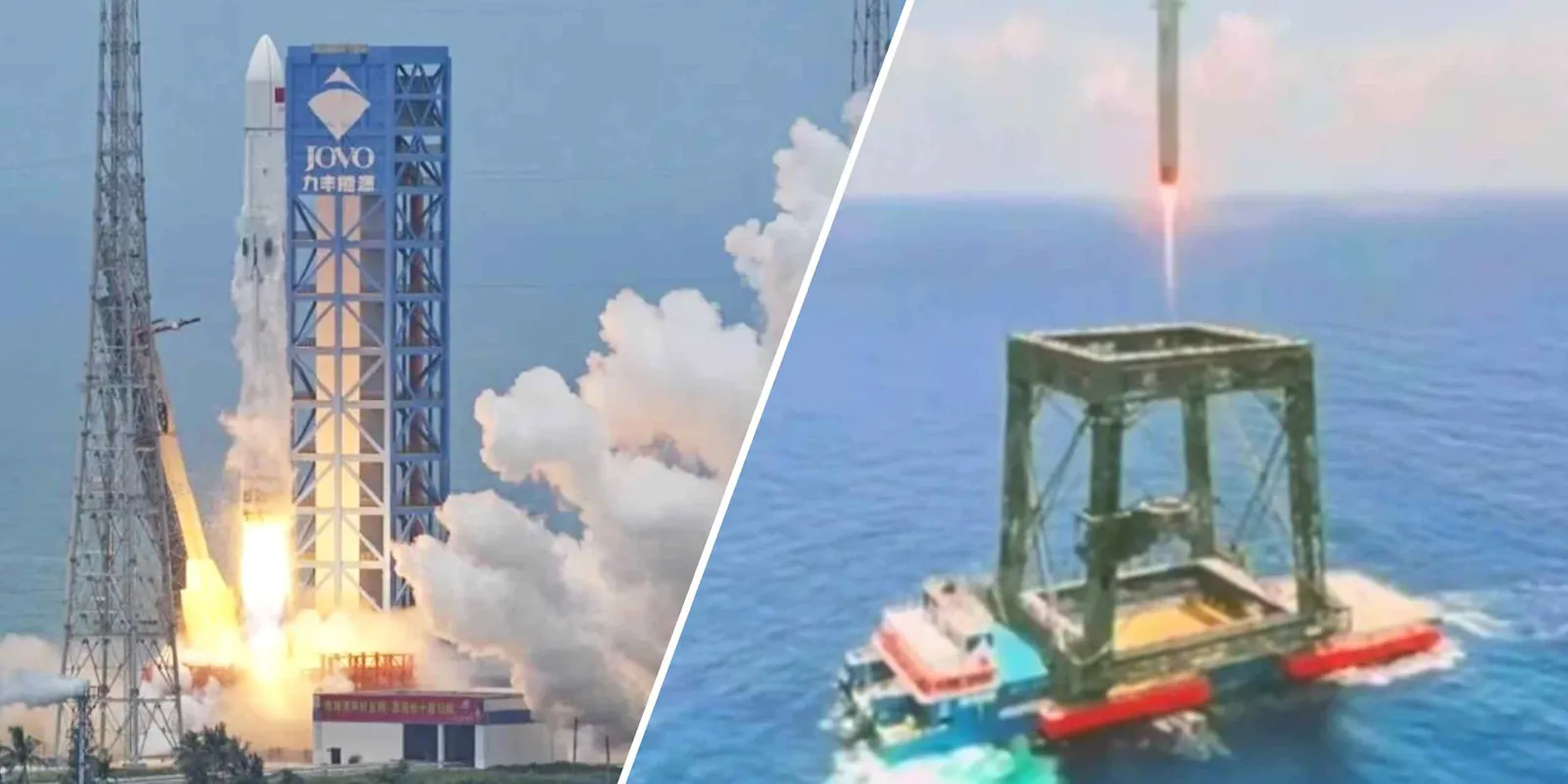
China has successfully recovered a rocket at sea, a step forward in its push for reusable launches. For decision-makers, the milestone affects how quickly launch economics can shift from one-off missions toward repeatable service.
China’s space program just notched a milestone that matters way more than it sounds: it successfully recovered a rocket at sea as part of its push for reusable launches. The key point is not the recovery ceremony. It is the practical proof that a rocket can come back from a flight and be recovered in a real maritime recovery operation. That is a foundational requirement for making reuse more than a technical slogan.
A successful sea recovery does two things at once. First, it reduces the operational gap between “we can launch” and “we can launch again with the same hardware concept.” Second, it shifts reuse from a lab-grade experiment into a repeatable industrial process. Reusability is not only about fuel burn and engine performance. It is about recovery logistics, inspection, refurbishment cycles, and how quickly teams can return a vehicle to a launch-ready state.
For executives watching the space economy, there is an obvious incentive wrapped inside this technical milestone: reuse is the fastest lever to bend launch pricing. When rockets are treated as disposable assets, each mission has to fully reprice the vehicle, the manufacturing, the supply chain, and the risk of losing hardware. Reuse changes that risk math. Even if not every component is reused at the same rate, partial reuse and faster turnarounds can still drive down marginal costs. But the market will only trust the economics after it sees credible recovery and reuse iterations, not just successful flights.
This is where sea recovery becomes important. A recovery at sea is not a symbolic ending. It is a complex choreography involving tracking, navigation, ship operations, retrieval, and safety procedures. It also tests whether a booster can endure the stresses of reentry or descent profiles and then be handled without turning recovery into another point of failure. In other words, the milestone is not simply “rocket recovered.” The milestone is “rocket recovered in a way that suggests a path to operational cadence.”
Regulatory and oversight dynamics also matter, even if the details are not front and center in a single article. Launch and recovery activities sit within a broader framework of licensing and compliance, especially when rockets perform complex maneuvers and recovery operations in populated areas or international waters. As countries move toward reuse, regulators and range operators face new questions: what happens when a vehicle is flown, then recovered, then reused; how launch safety analyses account for a vehicle that has already flown; and how companies document vehicle health and refurbishment methods. A successful recovery does not rewrite the rules by itself, but it pressures the ecosystem to evolve the playbook.
Board-level implication: reuse programs force a long-term investment posture. Vehicles, ground infrastructure, and recovery capabilities all require capital before the cost curve fully benefits. That is why milestones like a recovered rocket matter in governance terms. They are visible proof points that can justify continued funding, adjust timelines, and sharpen program risk assessments. Without recovery success, reuse funding often becomes speculative. With recovery success, it becomes a matter of scaling and iteration.
There is also a competitive angle. When one major space power demonstrates a concrete step in reusability, it raises the strategic bar for everyone else in the commercial and institutional launch market. Customers care about launch availability, schedule reliability, and price stability. Faster reuse cycles can create more frequent opportunities for launches and potentially more attractive contract terms. Even if the overall system still has bottlenecks, a credible path to reuse can influence how companies structure procurement and how satellites and constellations plan their launch schedules.
Second-order effect for peers: recovery success shifts internal performance metrics. Teams cannot evaluate reusability purely on “did it reach orbit” anymore. They need hard data on recovery outcomes, refurbishment timelines, inspection findings, and reuse turnaround. For executives, this means management attention gradually moves from flight campaigns toward operations and reliability engineering. That is a different kind of competence, and it is often where programs win or lose in the real world.
Bottom line: China successfully recovered a rocket at sea in its push for reusable launches, and that is a meaningful milestone on the road from one-off experiments to a repeatable launch system. For decision-makers, the strategic question is no longer whether reuse is possible in principle. It is how quickly the industry can convert recovery success into predictable operations, acceptable risk, and sustainably lower costs for customers who are waiting to buy the next launch window.
This story's Key Insights and Take-aways are locked.
Create a free account to unlock Executive Actions for one credit.
Register to UnlockAlways free for Executives Club members. Join the Club
More in Business
China lands a reusable Long March booster, a first that matches SpaceX and Blue Origin
A barge landing and net-based recovery move China from theory to proof, reshaping the reusability race and satellite ambitions.

AstraZeneca $27B wipeout as Wainua late trial misses cardiovascular target
A failed late-stage heart study triggered a swift market punishment, forcing investors and boards to reset timelines and risk.

Comcast shares jump 25% as it plans to split NBCUniversal and Sky
The tax-free spin-off could reshape focus, funding, and competition across media and tech for years.