
China’s AI, chips, and robots rattled Silicon Valley and split US tech leaders
Over a month, Chinese advances turned vague warnings into internal fights and forced the Trump administration into scramble mode.
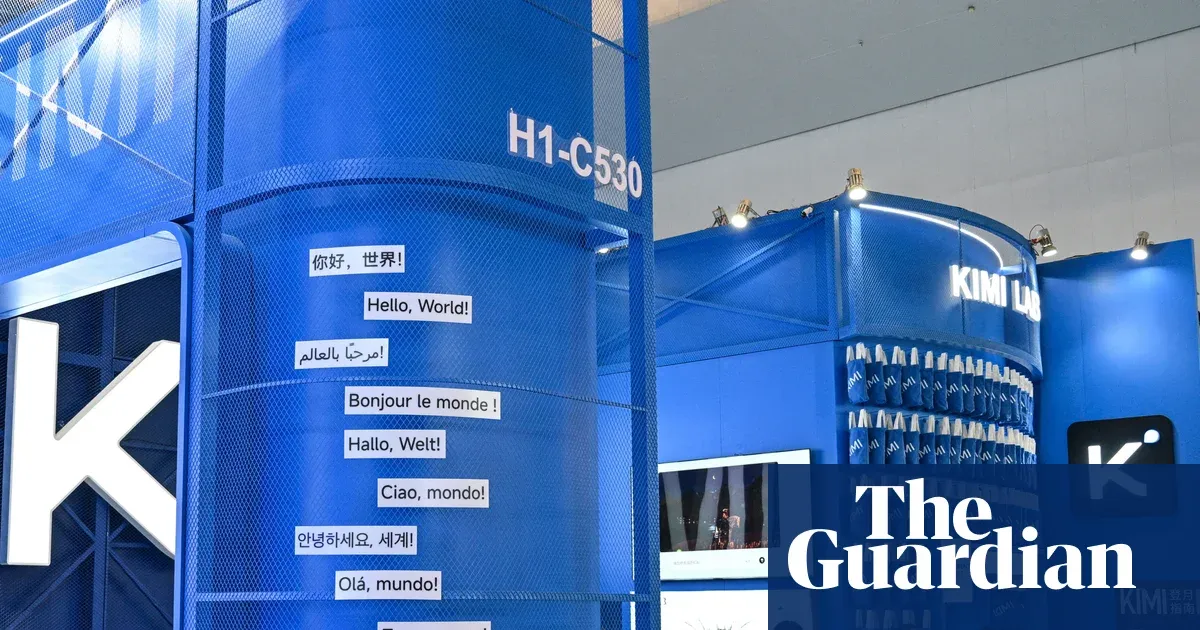
Chinese progress in artificial intelligence, chip manufacturing, and robotics over the past month has unsettled markets and unsettled the US tech industry, according to The Guardian. For US tech decision-makers, it has triggered open disagreement on whether to push back with regulation or adapt to Chinese-made products.
Over the past month, China’s artificial intelligence, advanced robots, and specialty computer chips have done something rare: they have stopped being a distant competitive threat and started behaving like an immediate market shock. The result, as The Guardian reports, is chaos stretching from Silicon Valley to the White House, with financial markets rattled, divisions among US tech leaders, and a Trump administration scrambling to respond.
This matters because US tech leaders did not sign up for a slow-burn. For years, Silicon Valley has pointed to China’s tech industry as the competitive threat driving a broader argument: US firms should avoid regulatory oversight because it could slow them down. That framing worked when the threat looked theoretical or long-term. But recent weeks have pushed those concerns past “vague warnings” and into open disagreement over how to address Chinese-made products upending parts of their industry.
In other words, the story is not only “China is advancing.” The story is how US decision-making is breaking under the weight of real-time product competition. When markets wobble, boards get more involved. When competitor capability becomes visible in AI models, robotics, and chips, strategic patience runs out. That combination pressures CEOs to pick a lane quickly, and it is exactly here that The Guardian says the industry’s leadership is splintering.
The internal disagreement is the key second-order risk for executives. Silicon Valley’s traditional stance has been to resist regulatory scrutiny on the grounds that it hurts innovation and speed. But if Chinese-made products are not just competing, but actively upending the industry, then the question changes from “should we regulate?” to “what are we doing right now while competitors scale?” Leaders who worry about regulatory burden are still thinking about long-term outcomes. Leaders who worry about market disruption are thinking about near-term survival. The clash is amplified by the fact that the impacts are being felt quickly enough to rattle financial markets within weeks.
The supply chain and hardware angle makes the dispute even messier. The Guardian points to advancements in chip manufacturing and specialty computer chips, not just software or lab demos. Specialty chips sit closer to the compute backbone that everything else depends on, from AI performance to robotics capabilities. When chips become more capable or more accessible through China’s progress, it can turn a software narrative into a hardware reality. That forces US companies to confront whether the problem is competitive efficiency, manufacturing scale, or access to critical components, and it is hard to craft a single regulatory stance that addresses all of that at once.
Then there is the political layer. The Guardian describes the Trump administration as scrambling to respond, which signals that the issue is already crossing from industry corridors into Washington. That typically happens when market turbulence becomes too visible, when national security concerns start to blend with economic strategy, or when high-profile industry leaders disagree publicly enough that policymakers feel pressure to act. Even when officials prefer deliberation, market volatility compresses timelines.
So what does “scrambling” mean for decision-makers beyond headlines? It usually means policymakers are under pressure to react, and that reaction can take forms executives cannot fully control: proposals for oversight, enforcement moves, restrictions, or other interventions. When US tech leadership is divided, those differences can affect how Washington hears the story. One group frames the challenge as regulation versus innovation. Another group frames it as competitiveness versus disruption. The administration has to manage both narratives while reacting to developments happening in AI models, robotics, and chips.
Strategically, this is where the stakes land for peers. If you are a CEO, CFO, or board member at a US tech firm, you are not just monitoring China’s technical progress. You are monitoring the feedback loop between competition, market sentiment, internal governance, and regulatory risk. The Guardian’s description of US tech CEOs moving from vague warnings to open disagreement is a warning in itself: it suggests that consensus is harder to maintain when the threat is no longer abstract.
The bottom line is that China’s advances over the past month have acted like a stress test for the entire US system around tech growth, regulation, and competitiveness. If financial markets keep wobbling and Chinese-made products keep upending industry segments, the White House scramble is unlikely to become calmer. And for US executives, that means today’s operational decisions will increasingly be shaped by tomorrow’s policy environment, not just today’s product roadmap.
This story's Key Insights and Take-aways are locked.
Create a free account to unlock Executive Actions for one credit.
Register to UnlockAlways free for Executives Club members. Join the Club
More in Technology

Google quietly links your phone number to every Android account on your SIM
Adding a SIM now ties your phone number to all Google accounts - and future accounts inherit it. Here's the security and privacy stakes.

Hijacker AI 'Skynet mode' runs 100,000 attack steps against exposed models
Symantec caught a criminal AI agent that borrows other models, steals data, and mines crypto; the only relief is no confirmed victims yet.
Nvidia's AI-financier shift faces its first big test as neoclouds stumble
A rout in neocloud stocks is forcing investors to weigh Nvidia's hidden exposure as both supplier and lender to the AI buildout.