
China's AI Honeypots: Jensen Huang, an Alleged Spy, and Smuggled Nvidia Chips
Rolling Stone links Nvidia's CEO to an alleged Chinese intelligence operation, and the harder question underneath is what Beijing actually does with the chips it gets.
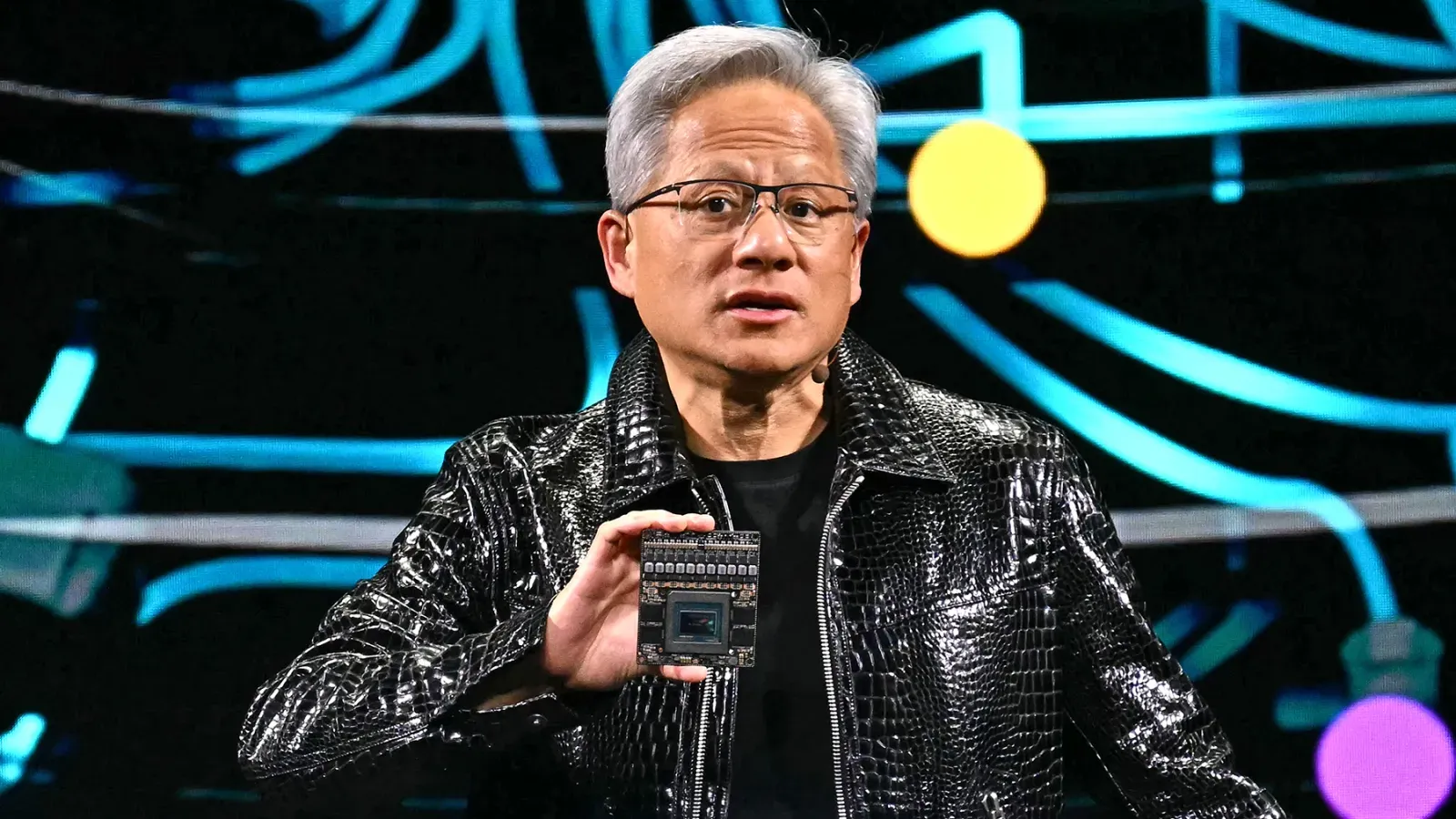
Rolling Stone reports that Nvidia CEO Jensen Huang had an affair with a woman alleged to be a Chinese spy, framing the story around what China extracts from AI honeypots and smuggled chips. For decision-makers, the consequence is that export-compliance risk and executive-conduct risk are converging, and most boards have no single owner for either.
Rolling Stone reports that Jensen Huang, the CEO of Nvidia, had an affair with a woman alleged to be a Chinese spy. That single line sits at the top of a story whose actual subject is bigger and stranger: the title asks what China gets from its AI honeypots and its smuggled chips. Huang runs the company that supplies the overwhelming majority of the advanced accelerators used to train and run frontier AI models, which makes him both one of the most consequential executives in the world and one of the most attractive intelligence targets in it. The affair is the hook. The chip pipeline is the story.
The question the piece poses is blunt: what will the Chinese actually do with Nvidia chips? Not whether Beijing wants them, that part is settled, but what happens once the silicon lands. The framing is useful because it splits one messy narrative into two clean problems. The first is human. A honeypot, in intelligence tradecraft, is a relationship cultivated to extract access, information, or influence from someone who holds all three. The second is physical. Chips are moving into China despite US export controls, and every unit that arrives is compute that American policy explicitly tried to keep out.
Start with the physical problem, because it is the one with a paper trail. Washington began restricting exports of advanced AI chips to China in 2022 and has tightened the rules repeatedly since, drawing and redrawing performance thresholds that determine what Nvidia is allowed to sell there. Nvidia's response has been to engineer parts that sit just under those lines, a cat-and-mouse cycle that has reshaped its product roadmap and its China revenue. Each round of tightening has been followed by reporting on workarounds: chips routed through third countries, resold units, and brokers operating in the grey market between sanctioned and unsanctioned buyers. Enforcement is hard because a chip is small, valuable, and easy to mislabel. A shipping manifest is a weaker control than a border guard with a spectrometer.
Why does any of this matter beyond the compliance department? Because compute is the binding constraint on AI capability. A frontier model is, at bottom, a very large number of matrix multiplications run on very expensive silicon, and the organizations that control the most of that silicon set the pace. That is why export controls exist at all: the theory is that slowing an adversary's access to leading-edge chips slows its ability to build the most capable systems. If chips leak through, the control is a speed bump rather than a wall. And if the leak is large enough, the policy quietly stops being a policy and becomes a suggestion.
Now the human problem, which is older than the chip war and considerably harder to police. Intelligence services have historically targeted people rather than hardware, because people have badges, travel schedules, and access that no customs form can inspect. Executives at strategically important firms are, by definition, walking repositories of non-public information: roadmaps, customer lists, capacity plans, pricing, and the timing of product launches that markets move on. A relationship that starts socially and ends in a request for a document is the oldest play in the book. It is also the one that corporate security teams are least equipped to detect, because it looks like a personal life until it does not.
For boards, the uncomfortable lesson is that these two risks are managed by different functions and usually by neither. Export compliance sits with legal and trade. Counterintelligence-style risk sits with security, if it sits anywhere. Executive personal conduct sits, awkwardly, with the chair of the board and the general counsel, and only when it becomes a disclosure question. A company can have a flawless trade-compliance program and still be exposed through a single executive's private life. The reverse is also true. Very few organizations have a single owner for the combined problem, which is precisely why it tends to surface in a magazine rather than a risk committee.
The stakes for Nvidia specifically are unusually high because the company sits on both sides of the fault line. It is the crown jewel of the American AI stack and a supplier that China has spent years trying to substitute away from. Every tightening of US rules pushes Beijing harder toward domestic alternatives, and every successful smuggling channel weakens the argument for the rules in the first place. Huang, meanwhile, has publicly argued that engagement beats isolation, a position that becomes harder to hold when the personal and the geopolitical collide in the same headline.
That is the real takeaway, and it applies well beyond one company. The chip war is usually described as a contest over fabs, export licenses, and performance thresholds. Rolling Stone's framing suggests it is also a contest over people, and that the two fronts are connected. You can harden a supply chain. Hardening a human being is a different project, and most companies have not started it.
This story's Key Insights and Take-aways are locked.
Create a free account to unlock Executive Actions for one credit.
Register to UnlockAlways free for Executives Club members. Join the Club
More in Technology

Anthropic Mathematician Claims Claude Helped Prove Riemann Hypothesis in Six Weeks
Levent Alpöge says the AI tool helped him develop a solution to one of math's most important unsolved problems in about six weeks, a claim that, if verified, would reshape AI's role in research.

Anthropic mathematician claims Claude helped crack the Riemann hypothesis
If the proof holds, AI has toppled math's most famous open problem; if it does not, it is a case study in announcing breakthroughs before anyone verifies them.

AI's $4 Trillion Wipeout Erases Nasdaq's Gains for the Year
A brutal week took roughly $4 trillion off the AI sector and left the Nasdaq flat for the year, and the damage ran the full length of the supply chain.