

Chinese medical device makers bet on Europe after China hospital buys drop 12% in 2026
Anti-corruption pressure at home is squeezing revenue while European trade defenses rise, reshaping who wins tenders.
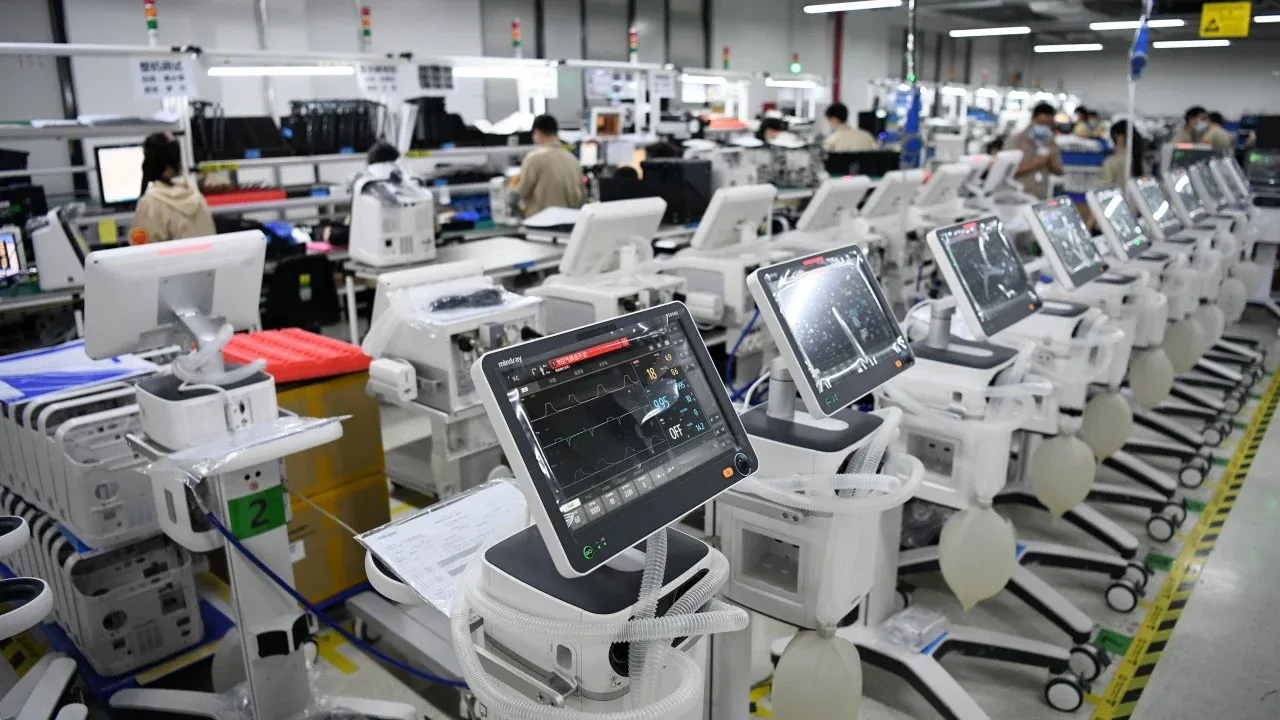
Chinese innovative medical device companies are accelerating their push into Europe as anti-corruption and profit pressure squeeze demand at home. Government-backed hospital purchases of medical devices in China fell about 12% year on year in the first five months of 2026, weighing on revenue in the first half.
Chinese innovative medical device makers are leaning harder into Europe because the home market is getting squeezed. In the first five months of 2026, government-backed hospital purchases of medical devices in China fell about 12% year on year, and the pressure is not just a demand story. It is tied to enforcement actions, including a “new anti-corruption probe into hospitals,” which is described as weighing on the revenue of major Chinese medical device makers in the first half.
The implication is straightforward but uncomfortable for executives: when hospital procurement slows due to anti-corruption enforcement, revenue timing breaks. That is why companies are accelerating cross-border expansion even as they face cross-border trade protectionism in Europe. It is a classic pivot under duress, but the stakes are higher here because the source frames the European push as happening despite “mounting cross-border trade protectionism,” meaning the path into new customers is not frictionless.
To understand why this pivot matters, you need the basic procurement reality in medical devices. Hospitals and procurement systems are deeply influenced by government signals. When anti-corruption policies tighten, spending can become cautious, approvals can slow, and vendor relationships get scrutinized. The source ties the first-half revenue drag to procurement declines and specifically points to “a new anti-corruption probe into hospitals” as a factor. That matters for any operator tracking pipeline health because this kind of enforcement can affect both current buying and future conversion. Even when clinical demand exists, procurement behavior can change fast when the risk landscape changes.
On the boardroom side, the “profit squeezing at home” described in the source turns expansion strategy into a balancing act. Companies do not just need growth; they need survivable growth. If domestic purchases drop roughly 12% year on year in the first five months of 2026, the question becomes how to keep factory utilization, R&D spend, and sales headcount funded. Pushing into Europe can be a way to diversify revenue streams, but it also introduces a new set of risks that rarely show up in internal budgets until late in the process. The source explicitly notes “mounting cross-border trade protectionism,” which typically translates into higher scrutiny, more demanding procurement hurdles, and more competitive pricing pressure in tender environments.
Regulatory dynamics also shape how companies approach Europe. Anti-corruption enforcement in China may force vendors to tighten compliance and restructure sales practices. But in Europe, the main friction in the source is described as trade protectionism rather than anti-corruption probes. That distinction matters. It suggests companies are not only trying to sell new products; they are trying to clear a moving boundary around cross-border trade acceptance. In practical terms, that can affect market access timelines and reduce the predictability of deal flow.
There is another second-order effect for management teams: the domestic procurement slowdown can change what companies can afford to offer internationally. When “profit squeezing” hits at home, pricing and margin decisions become more constrained. That can push Chinese vendors toward aggressive commercial strategies in Europe, which, in turn, can intensify protectionist responses among buyers or local competitors. The source frames the European push as happening “despite” this protectionism, which reads like companies are deciding that the upside of new demand still outweighs the costs and frictions.
For executives at companies considering similar moves, the strategic lesson is that expansion is not a separate story from enforcement. The first-half revenue drag in China is connected to procurement behavior and anti-corruption enforcement. Meanwhile, Europe adds protectionism barriers. Together, these forces mean the competitive game is shifting on two fronts: domestic compliance risk and international trade risk. Teams that can translate enforcement-driven demand changes into smarter cross-border execution, faster market entry planning, and resilient financial modeling will have a clearer path. Those that treat the Europe push as a simple growth announcement may get surprised by how quickly procurement and policy constraints can reshape their numbers.
This story's Key Insights and Take-aways are locked.
Create a free account to unlock Executive Actions for one credit.
Register to UnlockAlways free for Executives Club members. Join the Club
More in Business

SK Hynix opens at $170, raises $26.5B, and tops foreign IPO records
In Friday's Wall Street debut, SK Hynix turns AI RAM demand into a $26.5B fundraising moment that rewrites comps.

China lands a reusable Long March booster, a first that matches SpaceX and Blue Origin
A barge landing and net-based recovery move China from theory to proof, reshaping the reusability race and satellite ambitions.

AstraZeneca $27B wipeout as Wainua late trial misses cardiovascular target
A failed late-stage heart study triggered a swift market punishment, forcing investors and boards to reset timelines and risk.