
Chris Anne Affleck took oral histories after a December 2025 terminal diagnosis
Her educator and activist life, from Mississippi literacy classes to planning for a grandson's graduation, ends at 83.
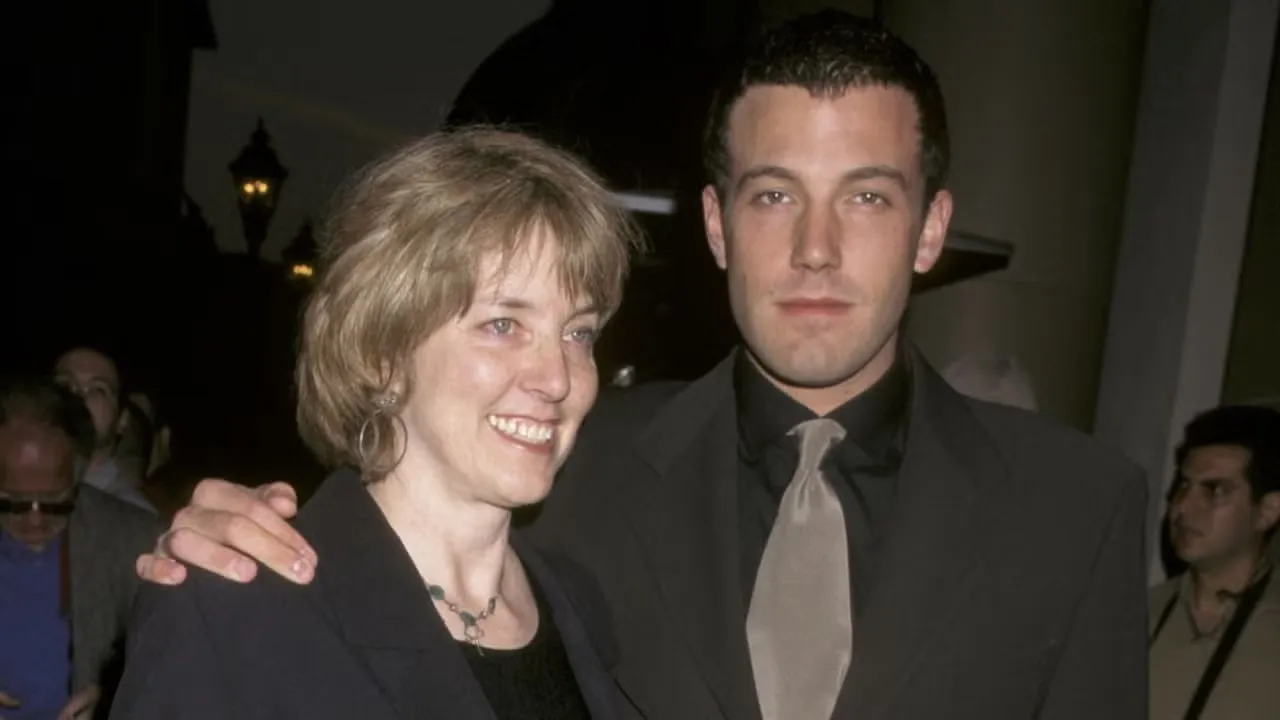
Chris Anne Affleck, mother of Oscar winners Ben and Casey Affleck, died at 83 after battling a terminal illness. Her family says she was given six months to live in December 2025, and she used that time to record oral histories before attending her grandson's high school graduation on May 31, 2026.
Chris Anne Affleck, the mother of Oscar winners Ben and Casey Affleck, died last month after battling a terminal illness. She was 83. An obituary shared in the Boston Globe confirmed her death and described a long career not just as an educator, but as an activist and a builder of community.
The most telling detail from the family statement is also the one that makes the whole timeline click. Per her family, she was given six months to live in December 2025, when she began taking oral histories of friend Josh Laub, a former principal in South Bronx. Her “greatest wish” after her diagnosis was to live to see her grandson graduate high school. She did it, attending with her family on May 31, 2026, and she died peacefully in her sleep two days later.
To understand why this story matters beyond celebrity family trees, zoom out to what Affleck represented in public life: literacy, education as leverage, and civic engagement that did not wait for permission. Born Christopher Anne Boldt in New York City in 1942, she was raised among siblings she “cherished,” according to the obituary. She idolized her stepfather Sam for serving in World War II and supporting the Civil Rights Movement. Those threads show up later in how she chose to spend her working life and her retirement, and why the obituary framed her activism as more than a personal hobby.
Affleck attended Nightingale-Bamford, where it is said she “made the most of an elite education while remaining skeptical of the tightly cloistered world it represented.” That line matters because it captures a tension many high-achievers eventually face: how do you use privilege without becoming insulated from the real problems outside the gate? The obituary says she later became one of the first Radcliffe women to receive a Harvard diploma. She then became an educator herself, teaching literacy classes in Mississippi in 1964. She would spend 35 years as a public school teacher, turning literacy into a career rather than a cause-of-the-moment.
In board terms, her life reads like a case study in durable mission infrastructure. She did not just teach. She organized. Affleck retired in 2008, but kept busy by volunteering on the Obama campaign trail and organizing for Alliance for Water Justice in Palestine. She was also a founding board member of the Sustainable Cape project. Each of those efforts points to a pattern: education and activism were not separate lanes for her, they were mutually reinforcing. If literacy is about giving people a way into the world, then organizing is about changing what the world does next.
Her family life also anchored the story with specifics that help explain her priorities late in life. She married Timothy Affleck, and the couple welcomed sons Ben and Casey in 1972 and 1975, respectively. They divorced around 1984. The obituary says her other “favorite young people” included her five grandchildren, Indiana (born 2004), Violet (2005), Atticus (2008), Fin (2009), and Sam (2012). Those grandchildren were described as “the animating force of her last two decades.” Affleck, it adds, was “suitably proud” of their achievements, but she was also delighted when they questioned, defied, or cleverly engaged authority.
For decision-makers, there is a second-order lesson here, even if the setting is personal rather than corporate. Affleck’s diagnosis came with an explicit constraint: she was given six months to live in December 2025. In that window, she did not “slow down” in the way people often imagine. She began taking oral histories of Josh Laub, a former principal in South Bronx. That is, she turned a shrinking timeline into an intentional record of lived experience and local leadership. The strategic stake is simple: when resources shrink, what you choose to capture or preserve becomes your legacy, and it also shapes how others understand the mission after you are gone.
There is also a broader governance angle hidden in plain sight. Her story spans institutions that are typically siloed in real life: elite schools like Nightingale-Bamford and Radcliffe, public schools in her 35-year teaching career, and mission-driven civic projects that rely on boards, volunteers, and sustained organizing. Affleck moved across those worlds without letting one define the boundaries of the other. In an era when many organizations struggle to translate values into consistent output, her life offers a practical model: teach, then organize, then help found structures that can outlast the founder.
Finally, the end of her timeline makes the stakes feel immediate. She had a clear wish after diagnosis, to live long enough to see her grandson graduate high school. She attended on May 31, 2026, and died two days later. For executives, founders, and investors watching mission-led efforts in education and community organizing, it is a reminder that outcomes are personal and time is finite. You can plan for scale, build boards, fund programs, and set strategy, but the human calendar still decides what gets finished, what gets recorded, and what gets remembered.
This story's Key Insights and Take-aways are locked.
Create a free account to unlock Executive Actions for one credit.
Register to UnlockAlways free for Executives Club members. Join the Club
More in Politics

Obama Defends Ilhan Omar After Agents Search Her Home in Trump Inquiry
The former president's intervention raises the stakes in a federal probe into immigration paperwork that has put a prominent progressive lawmaker in the crosshairs.

Blair-era minister: cut welfare to fund youth job support
Alan Milburn's call for welfare cuts to fund employment support opens a Labour fight over benefits and the Neet crisis.

Hot September CPI: energy costs surge, voters feel the squeeze before midterms
The latest inflation print lands as Trump campaigns for GOP control of Congress, putting cost-of-living worries at the center of the midterm fight.