

Clarity Act talks enter make-or-break stretch before August recess, last window pre-midterms
Senators have about four weeks to resolve remaining policy disputes on crypto rules, or risk losing the year.
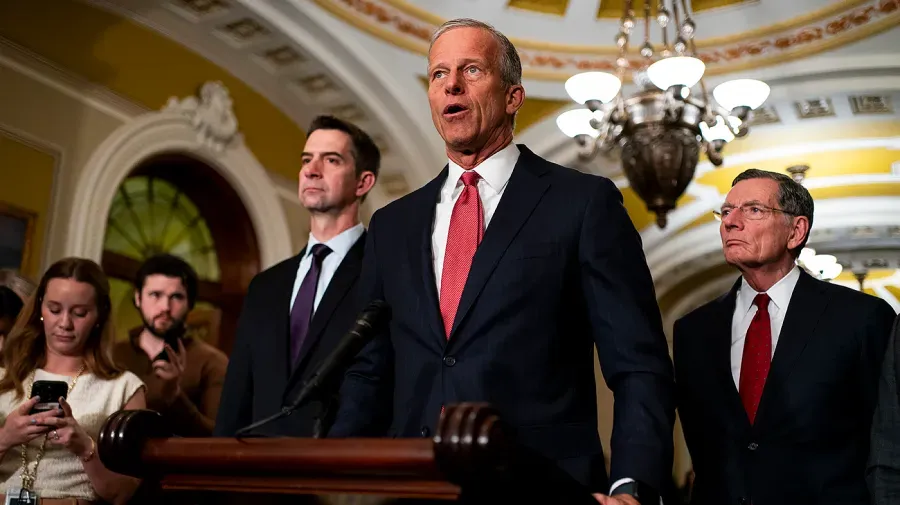
Senators are trying to resolve remaining policy disputes in the next four-week stretch on the bipartisan Clarity Act, a cryptocurrency regulation bill meant to provide a regulatory framework for digital assets. The consequence is timing: experts say this is likely the last window to pass the legislation before the midterm elections.
A cryptocurrency regulation bill is hitting a make-or-break moment as senators try to close out remaining policy disputes in the next four-week stretch ahead of the August recess. The legislation at the center of the scramble is the Clarity Act, a bipartisan effort to build a regulatory framework for digital assets. And according to experts cited in the report, lawmakers have little runway. This window is “likely the last window to pass the legislation before the midterm elections,” meaning the policy choices made over the next month could determine whether the U.S. gets clearer crypto rules this year or kicks the can into an election cycle.
That timing matters more than it sounds, because when the calendar compresses, uncertainty expands. Businesses in crypto do not just need a “yes” or “no” on regulation. They need to know what the rules actually are, which activities are regulated, and how enforcement is expected to work. A bill that provides a framework can change how platforms structure products, how exchanges handle custody and listings, and how institutions decide whether to touch a sector that has often felt like it is operating in a moving target environment. If the Clarity Act slips beyond this window, the market does not instantly collapse. But the second-order effect is continued ambiguity, which tends to make conservative partners, risk officers, and board members more cautious about exposure, partnerships, and long-term bets.
To understand why the next four weeks feel so loaded, it helps to look at how Congress typically treats big policy packages. The August recess is a natural pause point. Once lawmakers disappear for recess, momentum slows, and any unresolved issues can become politically harder to resolve when everyone returns with fresh priorities and election pressures. The report frames the next stretch as a decisive period because senators are not just reacting to public pressure or market headlines. They are also running down negotiation items inside the bill itself, trying to reconcile remaining policy disputes through bipartisan talks.
That bipartisan element is not cosmetic. Bipartisan negotiations are how you turn a theoretically popular idea into an actually passable bill. In practical terms, it means the Clarity Act is likely designed as a coalition product, where different sides can get enough of what they want to keep votes lined up. When disputes remain, it typically signals that negotiators have not fully agreed on policy details that can influence incentives across the ecosystem, including how regulators should classify or oversee certain digital assets and market structures. Those disagreements do not just sit in a spreadsheet. They affect compliance roadmaps and legal risk calculations for companies that would otherwise be ready to scale.
There is another board-level reason this moment matters: uncertainty has costs that show up on financial statements and governance processes. When regulation is unclear, companies spend more on legal work, compliance architecture, and contingency planning. They also tend to face longer decision cycles for new offerings. Investors and corporate development teams may pressure for clarity because they want to understand how regulation could change economics. Even if a company does not need new laws immediately, the existence of a regulatory framework can reduce the “unknown unknowns” that complicate due diligence.
If the Clarity Act does not move in time, the report’s warning implies the main harm is not theoretical. It is the operational reality of waiting through an election period. Midterms typically reshape legislative priorities, with lawmakers facing campaigns that can make coalition compromises harder to sustain. In that scenario, companies and investors may have to plan around longer uncertainty rather than shorter implementation timelines.
So the question for decision-makers is not just whether a bill exists. It is whether your timeline for product, partnerships, and risk management assumes a near-term regulatory framework or a longer wait. For executives and boards in crypto-adjacent businesses, the make-or-break moment ahead of the August recess is effectively a test of whether 2026 policy clarity becomes a real institutional asset or remains a recurring promise. In other words: the next four-week stretch could decide whether your compliance planning gets a finish line, or another indefinite stretch of “keep waiting.”
This story's Key Insights and Take-aways are locked.
Create a free account to unlock Executive Actions for one credit.
Register to UnlockAlways free for Executives Club members. Join the Club
More in Politics

Glacial collapse, not rain, killed 180 in Nepal's Himalayan flood
The Himalaya's extreme geography hid the true cause of Nepal's catastrophic flood, a glacial collapse that turned a geological battleground into a mass-casualty zone.

Iran’s Esmail Baghaei says Oman talks start shipping via Hormuz, not US talks yet
Temporary route plans with Oman aim to restart commerce while Tehran says Washington dialogue is not on the table.

Standards watchdog opens probe into Reform UK deputy leader Richard Tice over interests
The parliamentary standards commissioner says it began an investigation on 28 July into a possible undeclared interest.