

Cockroach genomes carry thousands of bacterial DNA fragments, showing horizontal transfer is everywhere
A new cockroach study finds bacterial genetic “threads” inside multicellular animals for millions of years.

Ars Technica reports on research examining multiple cockroach species and finding long-running horizontal gene transfer from bacteria. For decision-makers, it is a reminder that “clean” boundaries in biology do not exist, with knock-on implications for how we interpret genomes and risk.
Last week, Ars Technica highlighted a study on the origin of complex cells, and it opened a bigger question than it first appears to: how much of an organism's genetic story is inherited in neat, branching lines? The answer turns out to include something messier. The phenomenon is called horizontal gene transfer, where a gene from one species gets incorporated into the genome of a distantly related species. Horizontal transfer makes the tree of life less like a single family tree and more like a tree with small threads tying distant branches together.
The twist this week is that this is not confined to microbes. Ars Technica reports that a new study shows horizontal gene transfers are remarkably common even in multicellular animals, based on an analysis of the genomes of multiple cockroach species. Cockroaches have had bits of bacterial DNA for millions of years, and the scale is striking enough that it is easy to lose the plot: when the genomes of animals contain bacterial fragments at all, the usual assumption that multicellular species are genetically insulated from unrelated microbes stops holding.
To understand why this matters, you have to remember what horizontal gene transfer looks like in the real world. It is easy to see why it would be common among bacteria and other microbes. Their environment is chaotic. Microbes live in complex communities where DNA from dead and damaged cells is around, literally floating through the neighborhood. Then there is the structural difference that makes DNA easier to access: bacteria and archaea lack a membrane between their DNA and the rest of the cell. That means environmental DNA has a more direct path to getting into the genome. So the “why” for microbes is straightforward.
What the cockroach finding changes is the “why” for animals. Cockroaches are multicellular animals. They are not supposed to be living in a horizontal gene-transfer free-for-all. Yet the presence of bacterial DNA for millions of years implies that transfer events can persist across evolutionary timescales, and they can do real work in genomes rather than being quickly eliminated. In other words, the genetic material is not just contamination. It is evidence of long-term biological integration.
This is also a useful moment for executives because it stresses how interpretation changes when the data says the old model is incomplete. In business terms, horizontal transfer is a reminder that systems have pathways and leak points you do not see until you look hard enough. In biology, the pathway is genetic. In other industries, it can be supply chains, data flows, or compliance boundaries, where “separation” is often an assumption rather than a law.
There is also a second-order implication for research and governance. Genomics is increasingly used in everything from diagnostics to biotech product development, and it is tempting to treat genomic boundaries as clean: organism A has its genome, organism B has its genome, and inherited relationships are the dominant signal. Horizontal gene transfer complicates that. It means analysts need to treat genome comparisons as potentially cross-connected, not purely tree-like. For boards and compliance-minded leaders, that can translate into a simple governance point: if the underlying science is messier than the simplified model, your risk assessment and review processes need to reflect that messiness.
Then comes the regulatory framing angle. Regulations typically rely on definitions and categories that assume certain separations, whether those categories are about organisms, genetic traits, or intended uses. The cockroach result does not tell regulators what to do, and it certainly does not provide a policy mandate. But it does highlight why scientific review cannot be superficial. When the genetic record can be stitched from multiple species, classification becomes harder, and evidence thresholds become more important. You want your decision-making to be resilient to surprises like this, not brittle.
Finally, zoom out to the market level. If horizontal gene transfer is “remarkably common even in multicellular animals,” then it is not just an academic curiosity. It changes what genomic signals mean, and it changes what audiences assume when they hear the word “genome.” For companies that rely on genetic data or build products from genomic insights, the strategic stake is clarity. The better your teams can interpret cross-species genetic threads, the faster you can make confident decisions. And the more you understand the limits of clean evolutionary narratives, the less likely you are to misread the biological landscape.
In short: horizontal gene transfer used to feel like a microbe story, driven by dense communities and easy access to DNA. The cockroach study adds a new chapter: complex animals can carry bacterial genetic fragments for millions of years. That is not just a scientific update. It is a reminder that nature does not respect neat boundaries, and neither should the way leaders interpret data, assess risk, or design governance around biological information.
This story's Key Insights and Take-aways are locked.
Create a free account to unlock Executive Actions for one credit.
Register to UnlockAlways free for Executives Club members. Join the Club
More in Technology

Nvidia's $89B data center quarter: the 9 companies cashing in
The AI buildout is minting fortunes beyond GPUs, and memory, cloud, and cooling suppliers are riding the same wave.
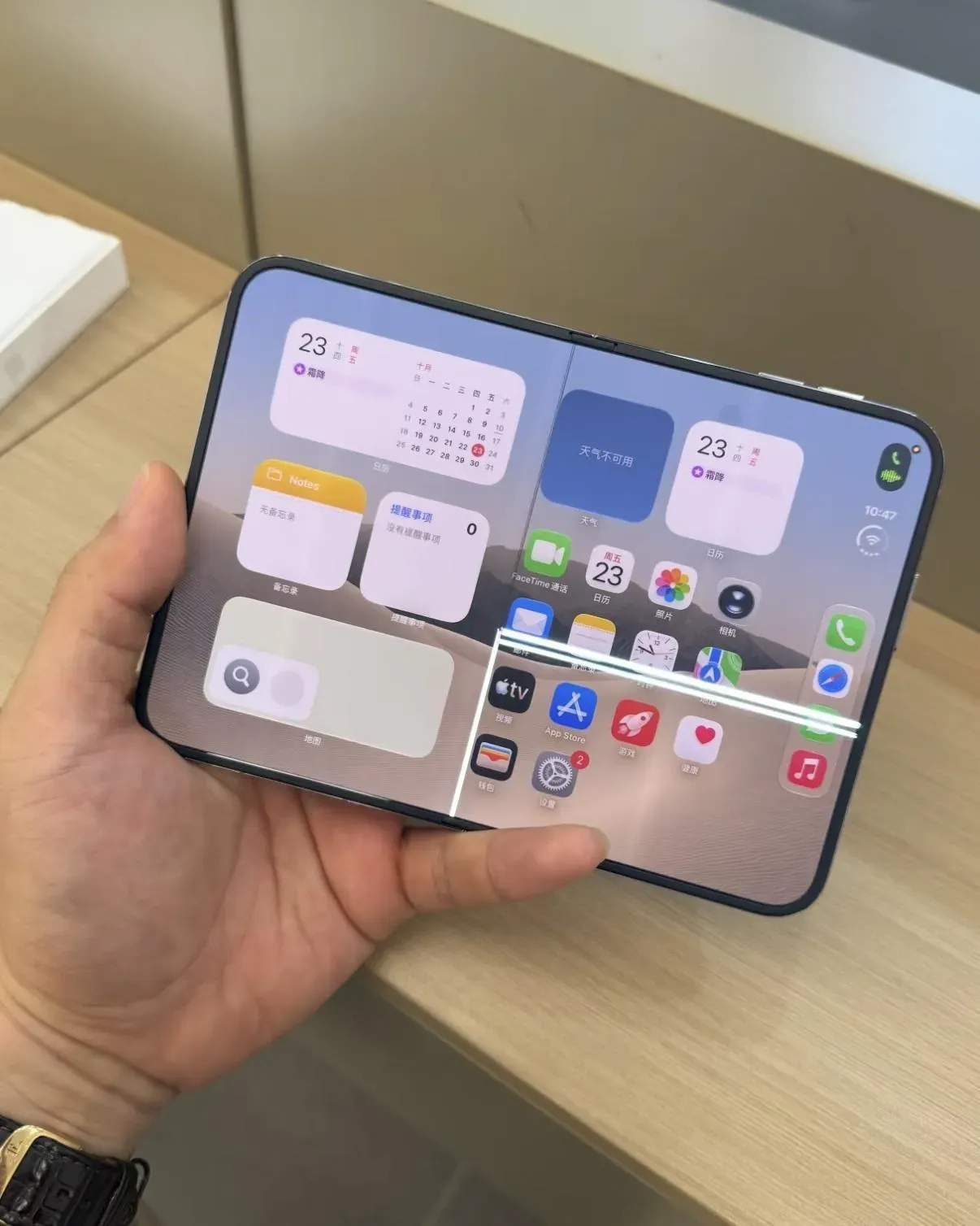
A YouTuber dissected the iPhone Duo and thinks he found crackgate's cause
CuriousHagi's teardown of Apple's foldable reveals a gear-like hinge that may explain why screens crack in the same spot within hours.

Google quietly links your phone number to every Android account on your SIM
Adding a SIM now ties your phone number to all Google accounts - and future accounts inherit it. Here's the security and privacy stakes.