

Coordinated rebel wave hits Mali again, including prison attacks months after junta setbacks
A new Saturday assault shows how quickly Mali’s security situation can spiral, with implications for regional stability and aid plans.

Jihadists and their separatist Tuareg allies launched fresh coordinated attacks in Mali on Saturday, striking multiple towns and a prison. The repeat wave, coming just months after a similar assault that hobble the country’s military junta, raises immediate risk for decision-makers focused on stability, operations, and funding.
Mali’s security calendar just got an ugly reminder: jihadists and their separatist Tuareg allies hit the country again with coordinated attacks on Saturday, including strikes in multiple towns and an attack on a prison. The fact pattern matters because this is not a one-off flare. It comes months after a similar wave of assaults “hobble” the country’s military junta, the latest sign that violent actors can coordinate, adapt, and sustain pressure even as governments try to consolidate control.
FRANCE 24 reports that the new assault landed across multiple locations and targeted a prison. That combination is more than a headline detail. Town attacks signal reach and intimidation in communities, while a prison target suggests an effort to disrupt state control of detentions and potentially complicate the government’s ability to hold suspects. In a security crisis, prisons are not just buildings. They are nodes in the system that can affect logistics, morale, and the credibility of a junta in charge of internal order.
To understand why this matters far beyond Mali’s borders, look at how coordinated attacks reshape incentives. When violence arrives in waves, it forces authorities into constant triage: protecting civilians in cities, securing transport routes, and trying to keep detention sites functioning. For the military junta, the challenge is compounded by the timing. The attacks are arriving “just months” after a previous similar wave that already “hobble” it. In other words, the government is fighting on a clock. If the state cannot translate defensive gains into lasting stabilization, it risks losing both operational ground and political legitimacy.
This is where the “coordinated” part becomes critical. Coordinated action implies planning, communications, and the capacity to synchronize pressure across areas. Even if the military junta responds aggressively, coordination can compress response time and force security forces to spread out rather than concentrate. That dynamic can create a feedback loop. Violent actors probe for weak points, the junta redistributes resources, then attackers strike again where attention temporarily shifts.
There is also a practical dimension for decision-makers in the business of stability: supply chains, humanitarian operations, and donor funding often depend on predictable access. Town-to-town incidents can delay movement of goods and personnel, increase security costs, and force changes to routes and schedules. A prison attack can further tighten the operating environment, because it tends to draw intense security restrictions afterward. For international partners, these disruptions are not abstract. They affect budgets, insurance assumptions, and the feasibility of long-planned programs.
Regulatory framing also enters the conversation, even when the story is about violence. In places where a military junta governs, compliance requirements and risk assessments for cross-border work can intensify. Organizations running programs in or around Mali typically have to navigate a patchwork of international sanctions, due diligence expectations, and risk controls. When attacks repeat in a “new wave” so quickly after a prior wave, it can trigger sharper internal review cycles. That can slow approvals, increase reporting requirements, and push some stakeholders to pause activities until conditions stabilize.
For boards, the second-order question is simple: can leadership prove resilience when the baseline keeps slipping? Mali’s junta has already faced a similar wave that “hobble” it, and now faces another Saturday set of strikes. That sequence suggests a recurring security pattern, not a one-time shock. Boards and executive teams at organizations with exposure to the region should focus on continuity planning, scenario assumptions, and the ability to maintain operations when mobility and safety are uncertain.
Strategically, the stakes are regional. Mali is a hub for security dynamics in West Africa, and repeated coordinated attacks are the kind of signals that can influence migration pressures, cross-border crime patterns, and the broader risk posture of neighboring states. When jihadists and separatist Tuareg allies can hit multiple towns and a prison in the same wave, it underlines the operational capacity of armed networks and the difficulty of imposing durable control.
Bottom line: FRANCE 24 describes a fresh coordinated rebel wave hitting Mali on Saturday, including attacks on multiple towns and a prison, months after a similar assault “hobble” the country’s military junta. For anyone making decisions that rely on stability, predictability, or secure access, this is not a distant story. It is an urgent signal that the security baseline can worsen fast, and that the ability to respond once may not be enough to survive the next wave.
This story's Key Insights and Take-aways are locked.
Create a free account to unlock Executive Actions for one credit.
Register to UnlockAlways free for Executives Club members. Join the Club
More in Politics
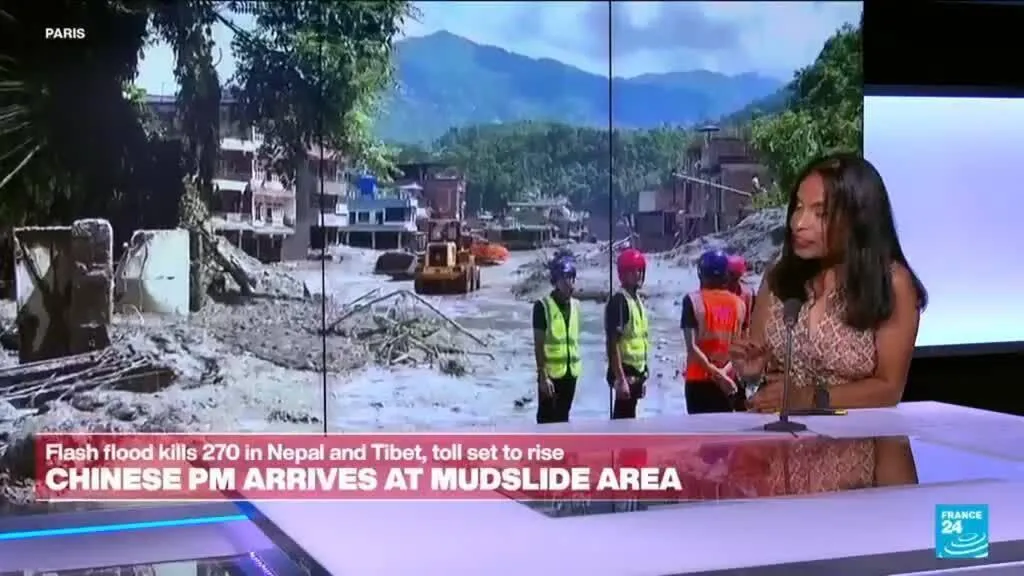
Glacial collapse, not rain, killed 180 in Nepal's Himalayan flood
The Himalaya's extreme geography hid the true cause of Nepal's catastrophic flood, a glacial collapse that turned a geological battleground into a mass-casualty zone.

Iran’s Esmail Baghaei says Oman talks start shipping via Hormuz, not US talks yet
Temporary route plans with Oman aim to restart commerce while Tehran says Washington dialogue is not on the table.

Standards watchdog opens probe into Reform UK deputy leader Richard Tice over interests
The parliamentary standards commissioner says it began an investigation on 28 July into a possible undeclared interest.