
CrankGPT runs on a hand-crank and a Raspberry Pi, hinting at an edge-AI memory fix
Squeez Labs’ CrankGPT shows voice AI could shift inference away from DRAM-hungry server stacks, at least for small tasks.
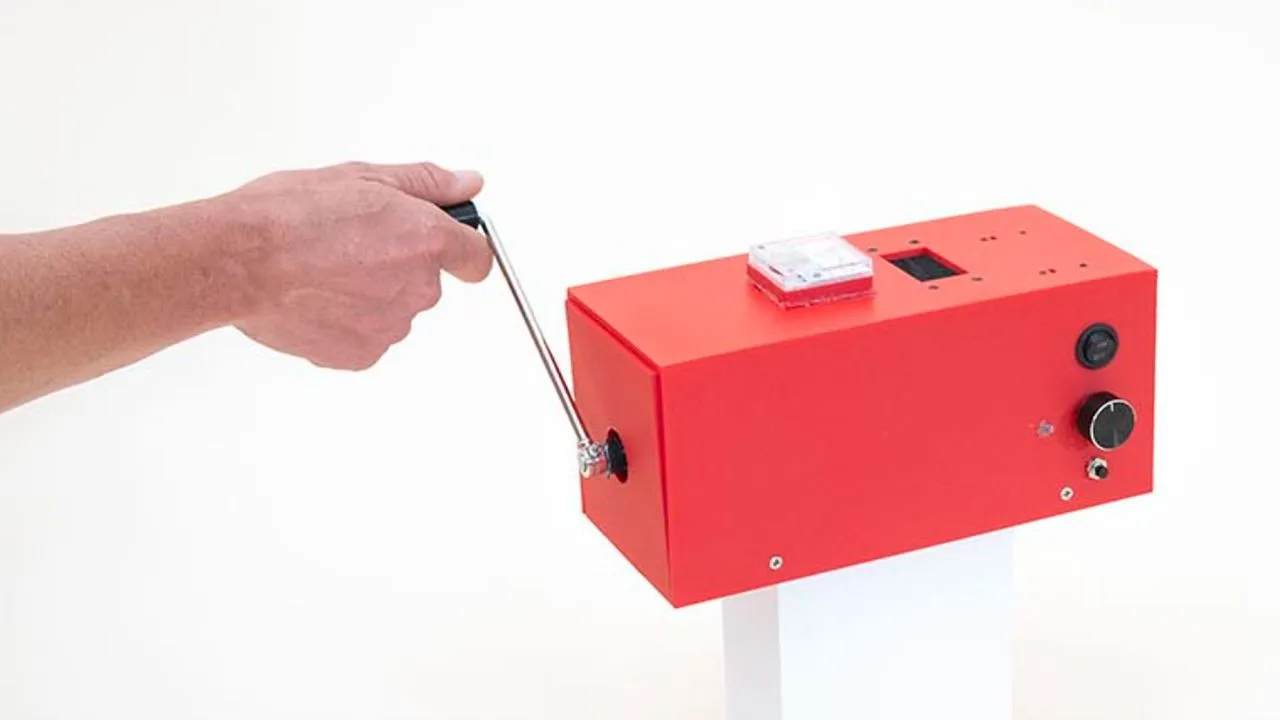
Squeez Labs, via the CrankGPT project highlighted by Hackaday and reported by PC Gamer, built a local, offline voice AI agent powered by an 8 GB Raspberry Pi and powered by a hand crank. For decision-makers wrestling with AI hardware demand and the memory crisis, it points to a plausible path where edge inference reduces pressure on DRAM and NAND.
AI is wrecking everything, right? The economy, air quality, and computing have all absorbed the churn as data centers for machine learning keep expanding. But buried inside that expansion story is a smaller, stubborn counterexample: CrankGPT by Squeez Labs. PC Gamer frames it as one AI machine that does not need a nuclear power station to run, and it does something even more interesting than that slogan suggests. It uses offline edge compute to deliver a voice agent workflow, and it hints at a way to ease the hardware strain behind the memory crisis.
Here is the core of CrankGPT, straight from the project’s premise: you get a tiny local model for voice assistance, placed in a box, and powered with a hand crank. The compute is built around a standard 8 GB Raspberry Pi, not a server full of GPUs and not a memory-and-storage inferno. According to PC Gamer’s description, the Raspberry Pi handles the voice recognition node, the local LLM stage, and the text-to-speech output. The system is powered by cranking, and the creators report that it takes roughly 30 seconds of cranking for the system to boot and be ready for input.
If this sounds quaint, that is because we are used to AI systems designed around brute force. CrankGPT flips the default architecture mindset. Instead of treating inference as something that must happen in hulking data centers, it keeps everything local and offline. PC Gamer also notes that Squeez Labs built their own edge voice agent to process the complete algorithm, meaning the flow runs from voice input, through the LLM stage, and then to text-to-voice output. In the real world, that matters because “offline” is not just a technical detail. It can change what gets stored where, what data has to traverse networks, and what compliance burden a deployment might carry.
Now zoom out to why executives should care. PC Gamer’s story ties CrankGPT to the “memory crisis” by arguing that a shift in inference behavior could lessen demand for the DRAM and NAND flash that massive AI machines rely on. In plain English: if inference migrates from data centers to smaller edge devices for certain workloads, the industry might not have to keep scaling the same memory-heavy server configurations for every use case. That is the second-order implication hiding in a hand-cranked demo. Even if CrankGPT itself is limited by the Raspberry Pi 5 not being designed to be an inference powerhouse, it functions as a proof of concept. Proofs of concept do not ship products. They change what engineers think is possible, and what investors think is fundable.
Let’s get practical about limitations, because they are part of the story. PC Gamer is explicit that there are strict limitations. A Raspberry Pi 5 can only do so much for local inference, and you can feel that in the roughly 30 seconds of cranking required just to boot and reach readiness. The system is not presented as a replacement for large language model infrastructure. It is presented as evidence that edge AI has a clear future for small-scale tasks. That distinction is critical for decision-makers: the near-term opportunity is not “move all AI off servers.” It is “identify the slices of AI workloads that can run locally without detonating latency, compute, or cost.”
This is also where incentives and capital meet reality. PC Gamer points out that hundreds of billions of dollars have been invested in AI training and inference. When capital is already committed at that scale, there is not much impetus for the industry to scale things right back toward hardware that already exists everywhere. But wholesale change rarely happens overnight. Often, the first move is a visible benchmark or a compelling demo that makes edge approaches feel less like a research toy and more like a deployment path. CrankGPT, powered by just a little processor, 8 GB of LPDDR4X, and a small SD card for OS and required data, is trying to be that kind of signal.
There is also a regulatory and compliance angle, even if PC Gamer does not dive deeply into policy. Offline, local inference can reduce the flow of raw user inputs and intermediate data across networks. That typically matters for privacy posture and data governance, especially in environments where data handling rules are strict or where organizations are cautious about model-related data retention. For boards and risk committees, it adds a new lever to evaluate: not just model capability, but where the computation happens and what that implies for data exposure.
Strategically, CrankGPT’s real message is about architecture, not electricity. If a hand-powered box can run an offline voice workflow with a local LLM, then edge devices, from basic laptops to phones, could support similar patterns for constrained workloads. If inference truly heads in that direction, PC Gamer suggests it could significantly lessen rampant demand for DRAM and NAND flash used in massive AI machines, which is exactly the kind of pressure the memory crisis is creating. For executives and investors, that is a timing problem. You do not need edge AI to replace data centers tomorrow. You need it to start eating meaningful categories of inference demand, otherwise the hardware bottlenecks will keep dictating timelines and budgets.
This story's Key Insights and Take-aways are locked.
Create a free account to unlock Executive Actions for one credit.
Register to UnlockAlways free for Executives Club members. Join the Club
More in Business

SpaceX IPO: Wedbush calls a Tesla merger “holy grail,” Morningstar pegs $63 fair value
Trading starts June 12 at $135, but analysts are split over a $72-per-share “option premium” on orbital AI dreams.

Bezos’ Prometheus raises $12B with Vik Bajaj as co-CEO after $6.2B launch
Prometheus, Bezos' AI startup, jumped from $6.2B initial funding to a $12B raise, signaling serious capital commitment and board-level scrutiny.

CazéTV wins all 104 World Cup games in Brazil, beating Globo with Twitch-born energy
FIFA expands its influencer-led model: digital-only deals with CazéTV, plus TikTok and YouTube preview windows.