

CXMT aims for $8.5bn IPO, the biggest Chinese chip listing yet
This $8.5 billion raise is a capital-and-capability bet that will reshape how peers plan for China’s chip race.

CXMT, a Chinese chip company, is preparing to raise $8.5 billion in what Nikkei Asia describes as the largest Chinese chip IPO. The move matters because it signals how much funding the industry expects to need to compete under China’s fast-moving tech constraints.
CXMT is aiming to raise $8.5 billion in what Nikkei Asia is calling the largest Chinese chip IPO. That number is not just big. It is the kind of capital raise that changes the competitive map, because it determines how fast one company can scale manufacturing, hire technical talent, and push product cycles ahead of rivals.
For decision-makers, the practical question is simple: if one Chinese chip company can go after a $8.5 billion war chest, what does that imply for everyone else in the supply chain? It pressures peers to accelerate fundraising timelines, rethink capital allocation, and assume that competitors will show up with more runway. In IPO land, “largest” is not a trophy. It is leverage.
To understand why an $8.5 billion IPO carries extra weight in China’s semiconductor space, you have to remember what chips are to modern businesses: they are capacity problems disguised as product problems. Demand is rarely the bottleneck. More often, the constraint is whether you can secure equipment, build capacity at the right node maturity, qualify supply, and sustain engineering throughput long enough to get to scale. When a company like CXMT targets an IPO of this magnitude, it is effectively saying it wants to buy down time. Time, in chips, is often the difference between being a leading supplier and being an expensive lesson.
There is also a regulatory and capital-markets layer that executives should not ignore. Semiconductor development in China operates under a mix of national industrial priorities and evolving capital rules, where investor appetite can change quickly based on policy signals and market sentiment. Large IPOs tend to draw attention from both domestic and global investors, but they also intensify scrutiny around use of proceeds, governance, and the credibility of the business plan. If CXMT is going for the biggest chip listing, it is likely preparing for a higher bar of questions, not a lower one.
Board dynamics become part of the story at this scale. When management seeks $8.5 billion, directors and key stakeholders have to align on the same core decisions: how much is necessary to reach commercial milestones, what milestones are measurable, and what level of execution risk is acceptable. IPO proceeds can reduce some financing pressure, but they also raise expectations. A bigger fundraise means the market will want faster results, cleaner metrics, and stronger proof points. That can tilt internal priorities toward projects that de-risk timelines, even if longer-term bets might be technically attractive.
For the broader ecosystem, CXMT’s IPO ambition is a signal to customers and partners too. Large funding announcements often affect how procurement and long-term planning get done. If a supplier appears to have more capital runway, customers may become more willing to sign multi-period commitments, assuming the supplier can maintain output stability. On the other hand, if customers believe the IPO is a precursor to rapid capacity expansion, they might negotiate more aggressively on pricing or terms, expecting supply to increase.
The second-order effect that is easy to miss is how the raise could influence talent markets and supplier relationships. When a company positions itself for the biggest chip IPO, it tends to attract engineers, managers, and senior operators who want to be close to growth capital and visible execution. It can also strengthen its negotiating position with upstream partners that provide critical inputs. In industries where bottlenecks are structural, the side that secures momentum often gets first access.
So what should executives take away? CXMT’s $8.5 billion target, framed as the largest Chinese chip IPO by Nikkei Asia, is a reminder that the chip race is not waiting. The capital markets window may be cyclical, but the engineering timelines are not. If CXMT secures this level of funding, peers will need to plan for a world where competitive pacing quickens, not slows. Boards and CFOs should treat the announcement as a strategic input into fundraising posture, go-to-market timing, and partner strategy across the entire stack.
This story's Key Insights and Take-aways are locked.
Create a free account to unlock Executive Actions for one credit.
Register to UnlockAlways free for Executives Club members. Join the Club
More in Business

T. rex sells for $50M, surpassing the stegosaurus Ken Griffin bought for $44.6M
A $50 million T. rex auction record reshuffles the rare-fossil leaderboard and sends a clear wealth signal to high-end bidders.
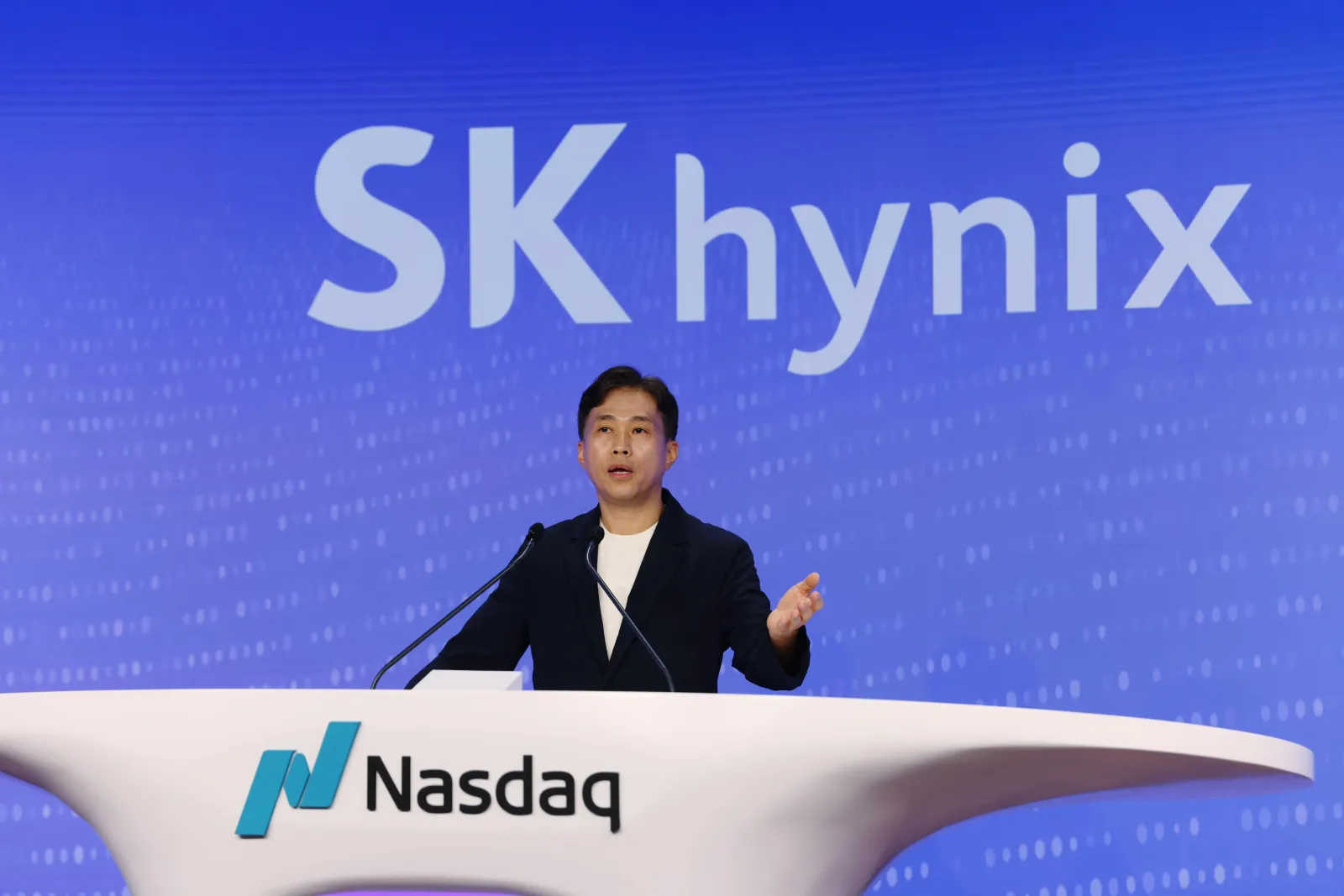
SK Hynix opens at $170, raises $26.5B, and tops foreign IPO records
In Friday's Wall Street debut, SK Hynix turns AI RAM demand into a $26.5B fundraising moment that rewrites comps.

China lands a reusable Long March booster, a first that matches SpaceX and Blue Origin
A barge landing and net-based recovery move China from theory to proof, reshaping the reusability race and satellite ambitions.