
D&D's Publisher Is Giving Its Cut of Anthropic's $1.5B Settlement to Writers
The largest copyright payout on record routes $1.5 billion to the publishers and authors of roughly half a million books, and Wizards of the Coast is redirecting its share to the writers who filled them.
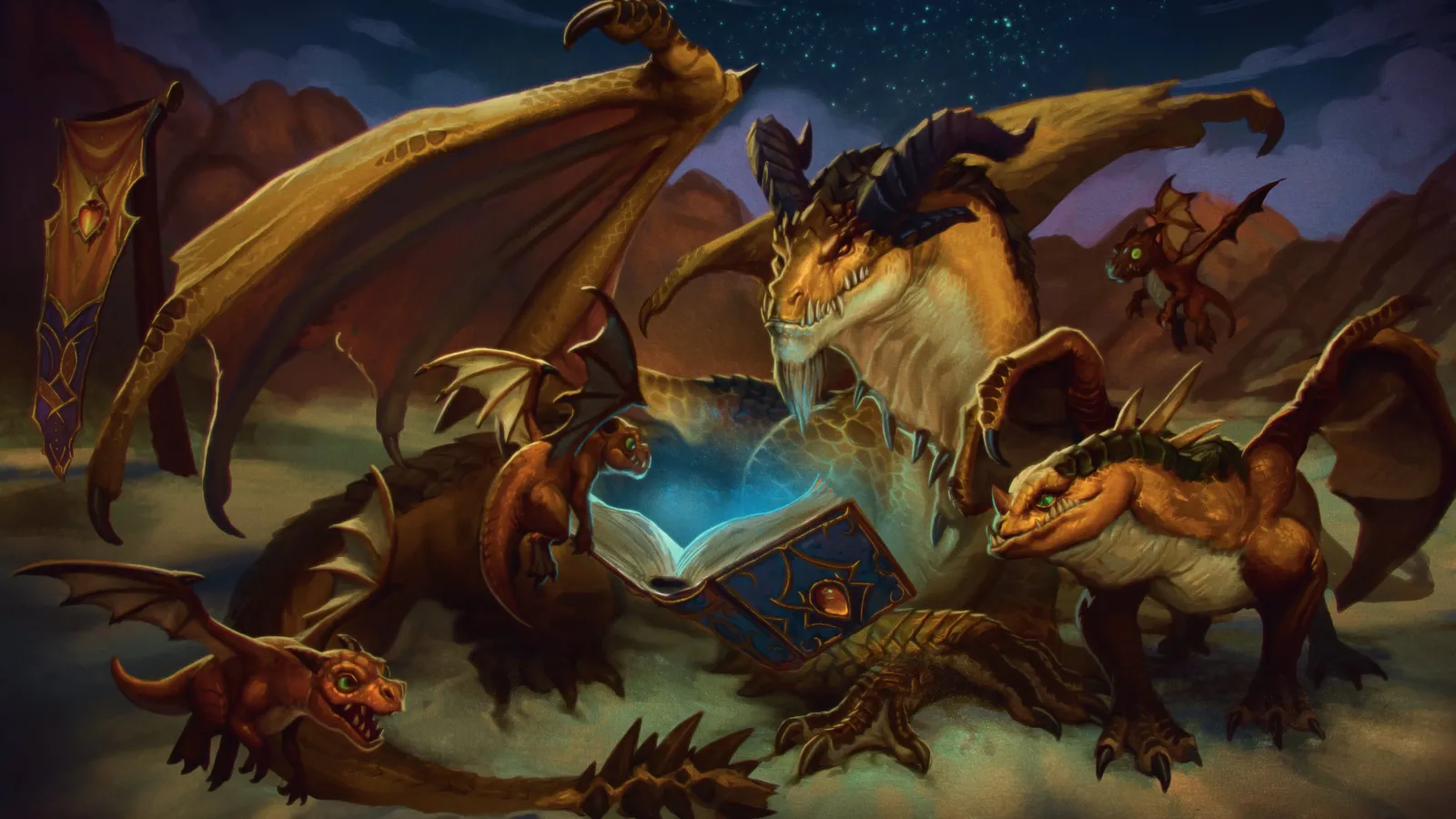
Wizards of the Coast, the Dungeons & Dragons publisher, is handing its portion of Anthropic's record $1.5 billion copyright settlement to the writers behind its books. For executives, the case sets a benchmark price for pirated training data and a public standard for sharing AI settlement proceeds with the creators whose work built the models.
Wizards of the Coast is not keeping the check. The Dungeons & Dragons publisher, which holds a claim on a slice of Anthropic's $1.5 billion copyright settlement, is handing its share to the writers who wrote the books, per Polygon. The number matters more than the gesture. $1.5 billion is the largest copyright settlement reached to date, and it came out of a case that drew a hard line between training an AI on books a company legitimately obtained and training it on books it simply took.
The defendant was Anthropic, the AI company behind the Claude models, and the vehicle was a 2025 class-action lawsuit. The ruling split in two, and the split is the story. Anthropic could train large language models on books it had fairly obtained. What it could not do was pull the same training pipeline from pirate libraries holding thousands of unauthorized copies. That was ruled an unfair use of authors' copyrighted work. Anthropic agreed to settle for $1.5 billion, distributed among the publishers and authors of roughly half a million books. Not one author. Not one bestseller list. Roughly 500,000 works pooled into a single payout that now stands as the reference price for AI copyright liability.
For anyone building or buying AI, that is closer to a compliance map than a headline. The expensive part was never the reading. It was the sourcing. A model trained on purchased, scanned, or licensed books stayed inside the lines; one trained on a scraped pirate corpus did not. Every lab that has ever pulled a dataset off a file-sharing site, or bought one from a vendor who did, is now exposed to that distinction. The practical lesson is uncomfortable because provenance is the one input you cannot reconstruct after the fact. You either have the receipts for your corpus or you do not, and no amount of fine-tuning paperwork fixes a missing license.
So why is a game company in an AI book settlement at all? Wizards of the Coast, which sits inside Hasbro, has spent decades publishing prose: novels, sourcebooks, rulebooks, and adventure modules tied to Dungeons & Dragons and its other properties. That backlist is exactly the kind of long-form text that ends up in training corpora, which made the publisher a rightsholder in a case about books. The company was entitled to a hefty sum as a result. It chose to route that money to the writers instead of booking it.
The arithmetic explains why the gesture lands. Spread across roughly half a million books, $1.5 billion works out to about $3,000 per title if it were split evenly, which is not how these settlements are actually allocated but is the right order of magnitude for a midlist novelist's advance. On a publisher's income statement that is a rounding line. For a freelance writer who spent a year on a tie-in novel, it is real money and, more to the point, a statement about who counts as a stakeholder when AI money changes hands.
There is commercial logic underneath the generosity. Tabletop roleplaying and tie-in fiction run on freelancers: contracted writers, editors, and designers who work project to project and talk to each other constantly. Publishers in that world live on those writers signing the next contract, and on a community that believes them when they say it will do right by them. Handing over settlement money buys something a marketing budget cannot, which is credibility on the question every creative partner is now asking out loud: when AI uses my work, who collects? Wizards answered in public, with its own cash.
For peers, the settlement sets a price. Any company that trained on a scraped corpus now has a reference number, and it is not small: $1.5 billion for roughly half a million works. Boards that have treated training-data provenance as a legal footnote should move it into the risk register next to cybersecurity and antitrust. The questions are unglamorous and urgent. Which corpora did we license, which did we scrape, and can we prove the difference in writing? If a vendor supplied the data, does the contract shift liability or just the blame? And if a rightsholder comes calling, is there a policy for sharing upside, or will one be improvised under pressure?
The thing to watch is allocation. Half a million works and one pool means a claims process, and how that money actually reaches individual writers, agents, and estates will become the template for the next settlement. The second thing to watch is imitation. Wizards just showed that a rightsholder can take AI settlement money and hand it to the people who made the work, and that is a far harder move to walk back than to make. A company that keeps the cash now has some explaining to do, and the writers it depends on are listening.
This story's Key Insights and Take-aways are locked.
Create a free account to unlock Executive Actions for one credit.
Register to UnlockAlways free for Executives Club members. Join the Club
More in Business

GTA VI hauls $3.79bn in one day, out-earning every film ever made
Rockstar's own estimate covers a single Thursday plus a record 32.5m prerelease units, and it lands on every board weighing IP concentration, pricing power and launch risk.
FBI's crime database breached again, the second hack in months
CNN reports hackers hit the National Crime Information Center, the shared backbone of US policing, and the repeat timing is the part every security team should study.

S&P 500 Enters Correction, Down 10% From Its High on AI Worries
The index's slide past the 10 percent line is a symbolic verdict on investor mood, and the AI trade that powered the rally is now the thing testing it.