

Dan Houser says open-world stories don’t need perfect completion to be “enough”
At Tribeca, the Rockstar co-founder argues player agency beats checklist storytelling, even when Easter eggs take years.
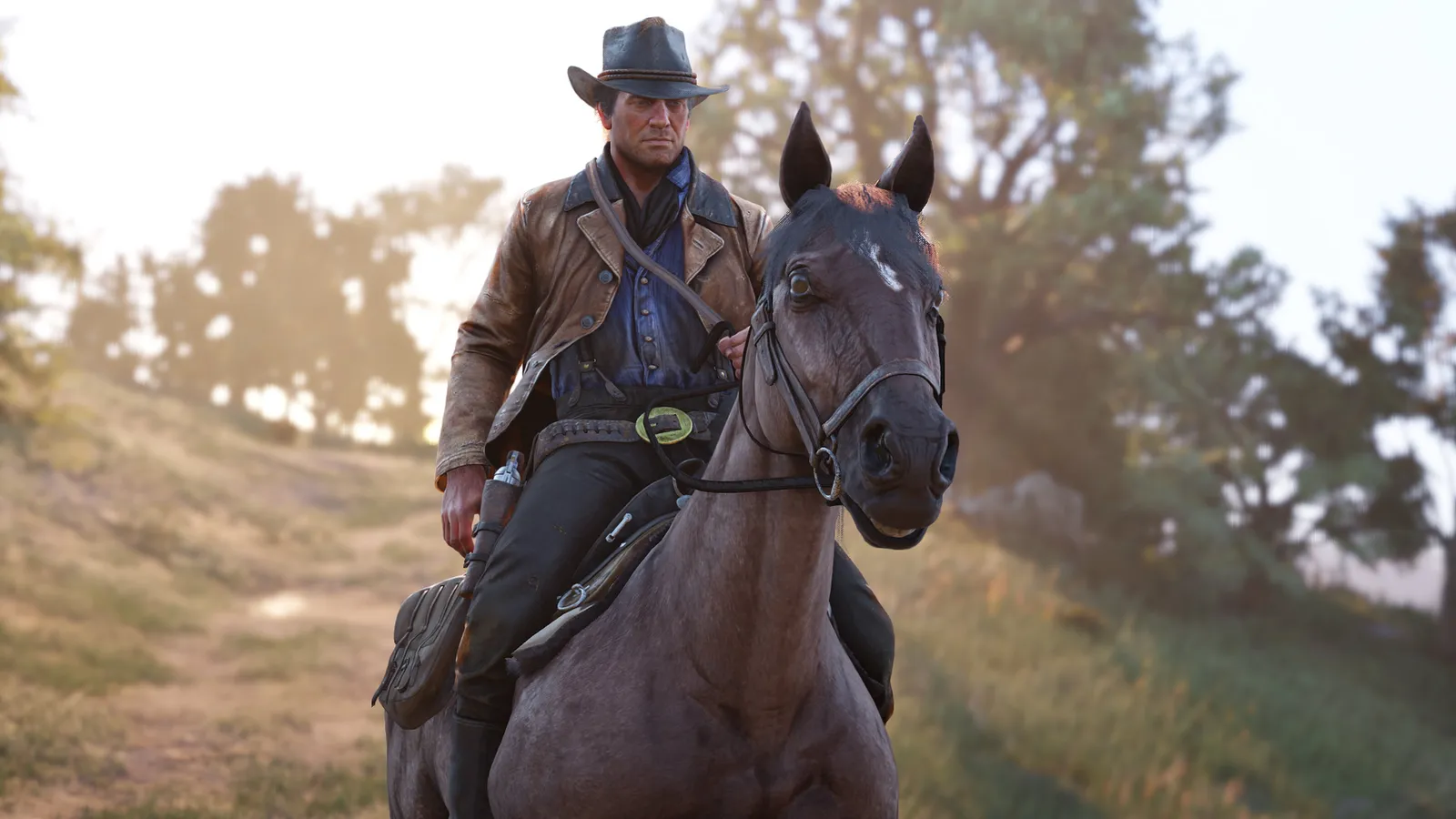
Dan Houser, Rockstar co-founder and GTA/Red Dead writer, told a Tribeca Festival panel that open-world games succeed when players have fun, not when they reach every story beat. His long-time partner Lazlow, Absurd Ventures co-founder, added how they build hyper-ridiculous satirical worlds and bury Easter eggs that can take 7 years to surface.
Dan Houser doesn't care if you finish the story as long as you enjoy the game. Speaking at a panel at the 2026 Tribeca Festival in New York City on Saturday, the Rockstar co-founder and Grand Theft Auto/Red Dead Redemption writer said, “If someone enjoyed a game, that's great.” He added, “If you can't finish a story, but you loved it in other ways: Great, I don't care.” And then came the blunt preference behind the philosophy: “I would like it if you finish the story because I spent ages on it.” The point, though, was not completion metrics for their own sake. The point was that open-world games are built to keep players in the world, not route them like traffic through a checklist.
Houser tied that to the long-running design target from GTA 3 onward: “The whole point of an open world game is we provide guides. We want you to experience the story.” He said their goal was to “try and get more and more people to finish the story,” and that “the numbers went up and up.” But he was also clear that the ultimate decision belongs to the player: players enjoy “being in the world, mucking around, doing whatever they want to do, messing with the systems.” He framed the “most fun thing about the game” as the systems and interactions, not the scripted writing. “The most fun thing about the game isn't any rubbish we write, it's the systems that we make,” Houser said, then described it in visceral, everyday actions: “being in this world, seeing what happens when you jump off this building, when you punch that person, you drive that car, when you interact with this thing, or that thing.” In other words, agency is not a feature. It is the product.
That stance is especially interesting because the audience for open-world games is not a single behavior. Some players treat story like a constraint they power through. Others treat it like background noise while they explore the simulation-like parts. When a creative leader publicly normalizes “not finishing” the story, it reshapes how teams might evaluate success internally. You are not only measuring whether a player hit the ending. You also measure whether the world generated enough emergent play, curiosity, and repeatable experimentation to keep them engaged on their own terms.
This philosophy also explains why Houser and Lazlow sound so comfortable with delays and long-tail discovery. Houser’s longtime creative partner, Lazlow, co-founded Absurd Ventures with Houser after leaving Rockstar in 2020, and he leaned into the long arc of player discovery. Lazlow said they love burying “very deep Easter eggs” that can take “one or two years or longer” for players to find. Sometimes the team wonders if it has become too hard, he said, “and somebody finds it and then it blows up on Reddit, and we're like, ‘Yay.’” He even referenced a real example: just earlier this year, Red Dead Redemption 2 players discovered a “spiderweb mystery” that had gone unnoticed for seven years since release. The subtext for executives and studios is obvious: if you design for depth, you are also designing for a form of durability that doesn't show up in the first week. Your brand and community flywheel might be powered by what players uncover later, not just what they finish now.
The panel also offered a second layer: satire and world-building that looks “deranged until reality catches up.” Lazlow talked about building cohesive absurdity across mediums inside the same universe. He described setting out with “a massive list in every game of all the media that we wanted,” including a phone players can “disappear into.” He compared their approach to “an in-house ad agency,” where a billboard, radio commercial, TV spot, and a pop-up on your phone all reference the same brand, but the whole thing is “hyper-ridiculous satire.” The goal is not random craziness. It’s satire that matches the tone of the place and the vision for how players should experience the world.
Lazlow’s anecdote from GTA 5 makes the risk and the craft clearer. He recalled creating GTA 5’s Jock Cranley and the difficulty of inventing ridiculous characters, brands, products, and situations so that “the world doesn't catch up with you.” He described an example: they had a politician in GTA, an ex-stuntman running for governor, who in a campaign ad “saying that he hates the elderly, he hates crippled people, he hates the military.” Lazlow said they laughed at the idea that “this kind of crazy shit will never happen in real life.” That moment is a reminder that satire isn't safely sealed. It exists in a world where perception and real events can converge, meaning content teams must navigate tone with care. For studios building interconnected universes, that also raises operational questions about governance, review processes, and how quickly you respond when fiction starts overlapping with headlines.
Meanwhile, Absurd Ventures’ broader media plan hints at why these storytelling principles matter beyond one game. Since its founding, Absurd Ventures has released the comic series American Caper via Dark Horse Comics, and the novel A Better Paradise plus an audiobook adaptation. An animated series of shorts, Absurdverse, premiered at the Netflix Is a Joke comedy festival. And an unnamed AAA open-world sci-fi action-adventure game set in the A Better Paradise universe is in development with South Korea’s Smilegate as publisher. Put simply: when you pitch “interconnected multimedia universes,” you are promising that players can enter from multiple doors. Houser’s “agency beats completion” message aligns with that, because universes survive when different audiences engage in different ways, at different times.
For executives and boards watching the open-world space, the strategic stakes are twofold. First, the business case is tied to engagement quality, not just linear progress. Second, long-tail community behavior matters, because Easter eggs can become the marketing after the marketing. If you build systems, not just scenes, you create more reasons for players to keep interacting long after the main quest. And if your universe design treats player exploration as canonical, you reduce the risk that your product is judged solely by whether someone reached the credits.
This story's Key Insights and Take-aways are locked.
Create a free account to unlock Executive Actions for one credit.
Register to UnlockAlways free for Executives Club members. Join the Club
More in Entertainment

Russell Brand's accuser 'bewildered and confused' as he denies 7 sex charges
The criminal case against the comedian is a live test of how media companies manage talent risk when serious allegations go public.

'It's a Magic Trick': Ballet Experts Say Rosalía's SNL Pose Is Impossible
Three ballet experts tell Rolling Stone Rosalía's gravity-defying SNL stillness shouldn't be possible - and why the debate is now part of the show.

Activision CMO: GTA 6 Will Boost Call of Duty, Not Bury It
Activision's top marketer says Rockstar's blockbuster will drive players back to consoles and into Modern Warfare 4, even as the company admits its recent strategy failed.