
Dark-sky parks lose $25M to nearly $66M in welfare value as light pollution rises
New research quantifies how worsening night-sky conditions reduce visitor satisfaction, translating skyglow into dollars for policy tradeoffs.
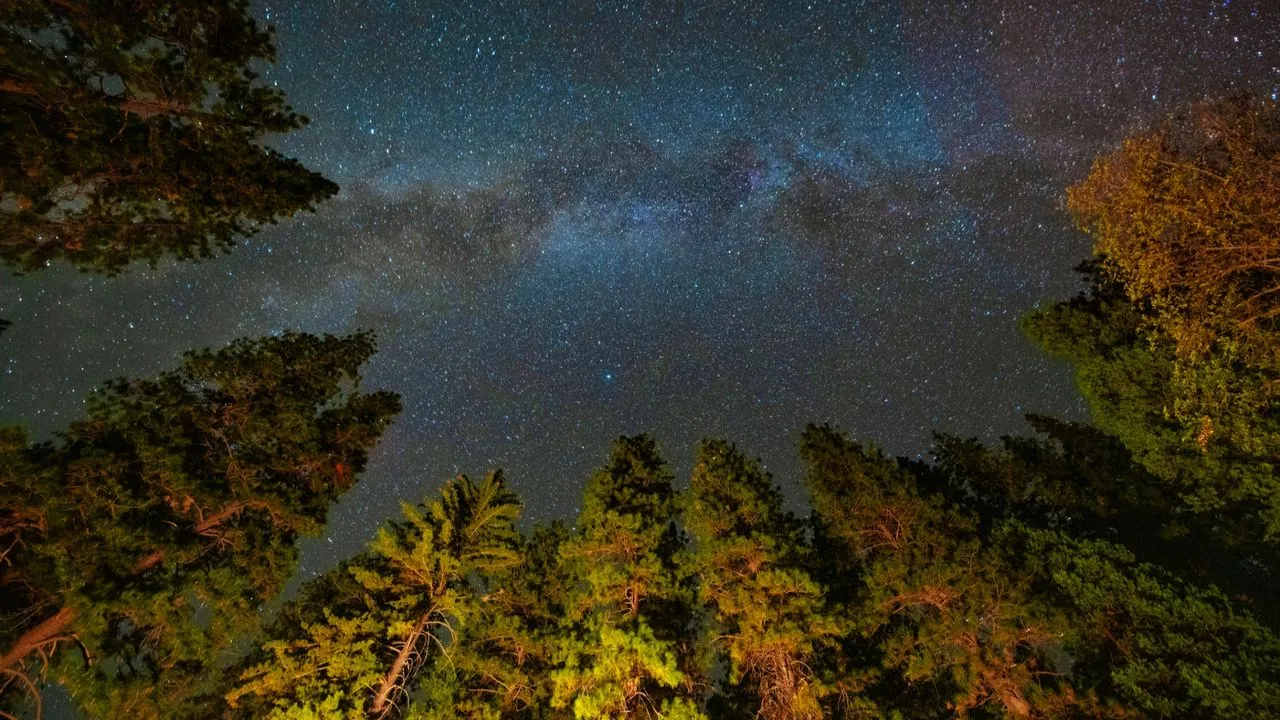
Researchers Jordan Smith and colleagues at Utah State University used satellite brightness data plus surveys from visitors at “gold-tier” dark-sky sites. They estimate that light pollution lowered recreational welfare value at flagship U.S. destinations by $25 million to nearly $66 million over four months.
The U.S. dark-sky park experience is being quietly downgraded, and the new numbers put a price tag on that loss. Over a four-month period, researchers estimate light pollution reduced the recreational value of flagship U.S. dark-sky destinations by between $25 million and nearly $66 million. Importantly, this is not framed as lost ticket revenue. It is “welfare loss,” meaning visitors get less satisfaction from the same trip when the environment that made it special, the true-dark sky, deteriorates.
The study’s lead author, Jordan Smith, director of the Institute of Outdoor Recreation and Tourism at Utah State University, presented the findings at the 248th meeting of the American Astronomical Society in California. In the research, visitors were less likely to choose parks with greater artificial skyglow and poorer night-sky conditions, and they also displayed a clear willingness to pay more for darker skies. On average, visitors would pay about $18 more per trip for marginally darker skies, and roughly $45 more per night for a one-step improvement on the Bortle Dark Sky Scale, a widely used measure of night-sky quality.
Why does this matter beyond the astronomy crowd? Because darkness does not have an obvious line item in most budgets. The background threat is well established in the source: rising levels of artificial light, increasingly amplified by satellite megaconstellations orbiting Earth, are eroding nightscapes. That erosion can mean disruptions to ecosystems, effects on human health, and dimmer views of stars and distant celestial objects. But until now, the loss of night quality has largely been missing from the economic calculations that often drive development and outdoor lighting decisions.
This research tries to close that gap by combining two types of evidence that rarely talk to each other. Satellites and ground instruments can map where artificial light is spreading and how quickly it is increasing, and the team also accounted for local atmospheric conditions including humidity, moonlight, and airborne particles because these affect sky visibility. What satellites cannot do, Smith said in a press briefing during the conference, is reveal what the value loss looks like in lived experience, the “what is actually lost” part that matters to visitors and policy tradeoffs.
To make that jump, Smith and colleagues focused on the Colorado Plateau, a rugged region spanning Utah, Arizona, Colorado, and New Mexico that contains one of the world’s highest concentrations of “gold-tier” dark-sky sites. “Gold-tier” is a designation the study notes for the darkest and clearest night skies on Earth. Over 82 nights in April, May, September, and October, researchers interviewed visitors after dusk at campgrounds, scenic overlooks, and parking areas. They surveyed 634 travelers across nine destinations: Arches, Bryce Canyon, Canyonlands, and Natural Bridges National Monument, with the study noting that the trip depended specifically on high-quality night skies.
The result is a model of preference that policymakers can actually use. The findings show consistent preference for darker skies and willingness to pay more for them. The study also links welfare losses to where visitor demand concentrates. The highest projected losses were heavily concentrated at premier destinations, led by the Grand Canyon and Zion National Park. Smaller or more remote parks showed comparatively modest total losses, and the reason is not a lack of night-sky value. It is driven by fewer visitors.
There is a further policy angle in how the researchers frame the economics. The figures presented at the conference are welfare losses, not lost park revenue. They are closer to how economists think about a concert where the performance still happens, but the sound is distorted, and therefore the experience is worth less than expected. Assigning dollar values to changes in night-sky quality gives decision-makers a “foundational building block” for cost-benefit analysis. In the source, Smith describes this as enabling policymakers to weigh hidden costs of artificial lighting against the benefits of development and outdoor illumination.
Looking ahead, the researchers suggest extending monitoring across a full year and over multiple years. The aim is to treat the night sky not just as a scientific and cultural asset, but as a measurable economic asset whose value changes with lighting policy, development, and conservation. For executives, the second-order point is simple: light policy and infrastructure decisions can create measurable externalities even when the benefits are local and the costs are distributed across visitor experience, ecosystems, and long-term public value. If you lead planning, facilities, or regional development, the question shifts from “Is this brightening necessary?” to “What are we quietly trading away, and can we price it before it hardens into policy defaults?”
This story's Key Insights and Take-aways are locked.
Create a free account to unlock Executive Actions for one credit.
Register to UnlockAlways free for Executives Club members. Join the Club
More in Science

Alaska's 1,580-foot tsunami had warning signs. Scientists just found them.
Rapid glacier retreat, heavy rainfall, and thousands of tiny tremors preceded Alaska's 1,580-foot tsunami, a warning for every coastal community in a warming world.

The rare mutation that lets high-risk brains dodge Alzheimer's
Scientists found a natural defense against protein buildup, opening a new path to preventive treatments.

3,000 steps a day may halve Alzheimer's decline, study finds
New research links a modest daily walk to less tau buildup and nearly half the cognitive and functional decline, even for those with early signs.