

DeepMind decodes all 9 billion DNA mutations and gives scientists the map free
The AI giant's AlphaGenome Atlas predicts the impact of every single-letter change in human DNA, promising to speed rare-disease diagnosis and drug discovery.

Google DeepMind released AlphaGenome Atlas, an AI-built database predicting the effects of all 9 billion possible single-letter human DNA mutations, free for academic researchers. The tool could compress decades of lab work into browser searches, accelerating rare-disease diagnosis and drug discovery.
Google DeepMind has done what would have taken many human lifetimes: it mapped the biological consequences of all 9 billion possible single-letter mutations in human DNA and made the results free for academic researchers. The database, called AlphaGenome Atlas, was announced Tuesday and is live now through a dedicated website, with commercial access to follow via Google Cloud licensing. The scale is staggering, and the practical payoff is just as large: what used to require running a model one variant at a time or testing mutations in the lab can now be looked up in seconds.
Until now, researchers had to run such models one variant at a time or test mutations in the lab, a painstakingly slow process. Atlas precomputes the likely impact of each single-base substitution on the machinery that switches genes on and off, and it does so across hundreds of cell and tissue types from humans and mice. Pushmeet Kohli, DeepMind's vice president for research and head of its AI for science team, said this is the first time any researcher can reach a comprehensive map of human genetic variation "by simply opening a browser." That is the headline promise, and the early results suggest it is not hype.
Kohli framed the release as finishing the unfinished business of the Human Genome Project, which in 2003 mapped the entire human DNA sequence. "As the saying goes, we bought the book," he said, "but we did not understand how to read it." The protein-coding part of DNA accounts for only about 2% of the genome; the other 98% governs when and where genes are switched on. Mutations in that non-coding territory have been far harder for scientists to interpret, and Atlas focuses there. That is where the biggest diagnostic gaps have been, and where the new tool could have its greatest impact.
DeepMind built Atlas by running AlphaGenome, an AI model released last year, across a reference human genome and comparing each base against the three possible alternatives. Each variant is linked to an average of about 27,000 individual predictions about effects on gene expression and transcription. The team also scored more than 100 million insertions and deletions from population databases including the U.K. Biobank and the U.S. National Institutes of Health's All of Us. A new summary metric, the AlphaGenome Variant Impact (AVI) score, folds gene-regulation predictions together with AlphaMissense, DeepMind's earlier model for protein-altering mutations. An AVI score of 10 puts a variant among the 10% most impactful in the genome; a score of 30 places it among the strongest one in a thousand.
Early beta testers report promising results. Researchers at the Broad Institute used AVI scores to re-examine unsolved rare-disease cases and found a likely pathogenic variant in a patient with epileptic encephalopathy, pointing to a splicing defect in a brain-specific version of the DNM1 gene that earlier blood-based RNA sequencing had missed. In a retrospective test on previously solved cases, AVI placed the known causal variant among a patient's top 50 candidates 29.5% of the time, versus 12.5% for CADD, an existing ranking method. Gareth Hawkes, a Medical Research Council fellow at the University of Exeter, applied Atlas to whole-genome data from more than 54,000 U.K. Biobank participants and found 22% more associations when filtering by predicted molecular effect, narrowing one region from 526 candidates to four. "The human genome is a massive search space," Hawkes said. "We can use it to shrink the haystack."
Julia Zeitlinger, an investigator at the Stowers Institute for Medical Research, used Atlas's motif maps to sort transcription factors by their behavior in different cell types, a task she said would not have been possible without the tool because four decades of experimental work has validated only a tiny share of the predicted motifs. Ewan Birney, director of EMBL's European Bioinformatics Institute, said his organization is working to integrate the AVI score into Ensembl's Variant Effect Predictor, a widely used annotation tool. "These tools reach their full value when they're open and plugged into the wider data ecosystem," he said. That integration is a signal that Atlas is not just a research toy; it is becoming infrastructure.
DeepMind is careful to note that Atlas predictions do not replace lab experiments. Žiga Avsec, DeepMind's genomics lead, said AlphaGenome works well for some classes of variants but not all. The commercial path matters too: Atlas is free for non-commercial academic use, but commercial use will require a licensing arrangement through Google Cloud "soon." Isomorphic Labs, DeepMind's sister company focused on AI drug discovery, will have access to Atlas but will also need a commercial license. That sets up a potential tension: the same model that accelerates academic research could become a toll booth for biotech and pharma companies racing to find cures.
For executives in biotech, pharma, and diagnostics, the implications are immediate. The cost of interpreting a genome just dropped dramatically, and the bottleneck shifts from data generation to data interpretation. Companies that build proprietary variant-interpretation pipelines may find their moat narrowing, while those that integrate open tools like Atlas into their workflows could compress discovery timelines. The race is no longer about who can sequence a genome, but who can read it fastest.
This story's Key Insights and Take-aways are locked.
Create a free account to unlock Executive Actions for one credit.
Register to UnlockAlways free for Executives Club members. Join the Club
More in Science
Perfused donor livers get biologically younger by ~30%, study finds
Aging-clock data shows machine perfusion reverses liver biological age, a breakthrough that could expand donor pools and justify six-figure costs for hospitals.

Diamond's melting point was 1,300 degrees too high. A laser just fixed it.
New laser experiments correct diamond's melting point, aligning with theory and sharpening models for fusion and ice giant planets.
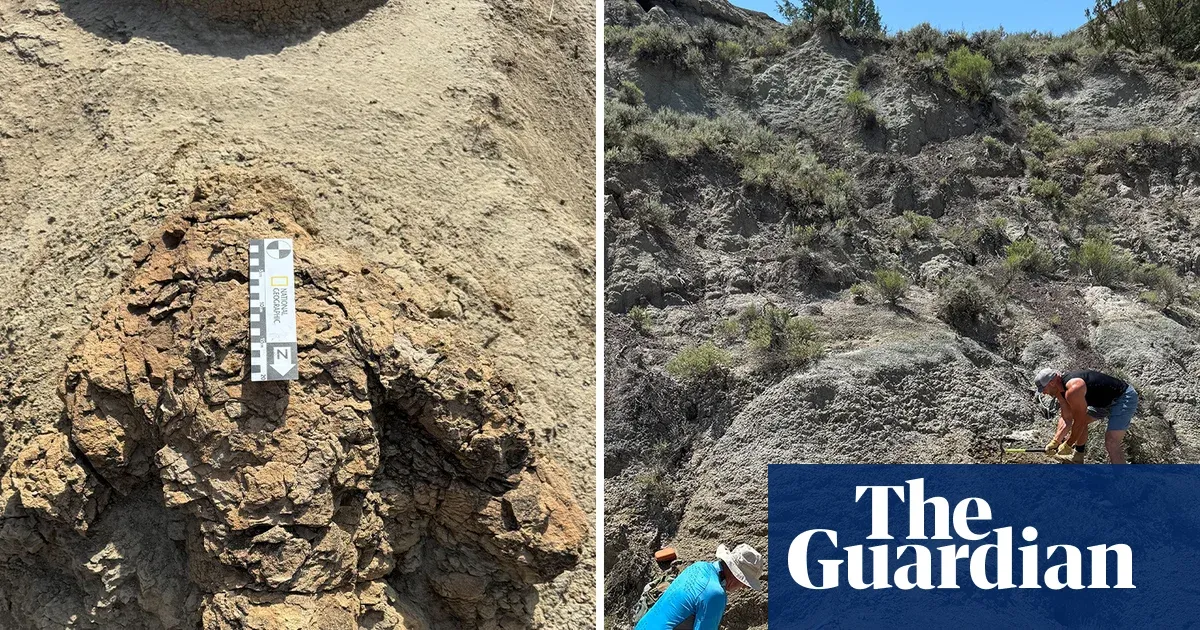
First adult T rex footprints found - 23-foot trackway from 66.5M years ago
The first known adult T rex trackway offers unprecedented insight into the predator's movement and behavior.