
DeepMind's in-house philosopher: building conscious AI on purpose is 'pretty reckless'
Henry Shevlin, DeepMind's AI ethicist and philosopher of cognitive science, told the FT that deliberately building conscious machines would be 'pretty reckless' at this stage, a warning aimed at every lab racing to make AI feel human.
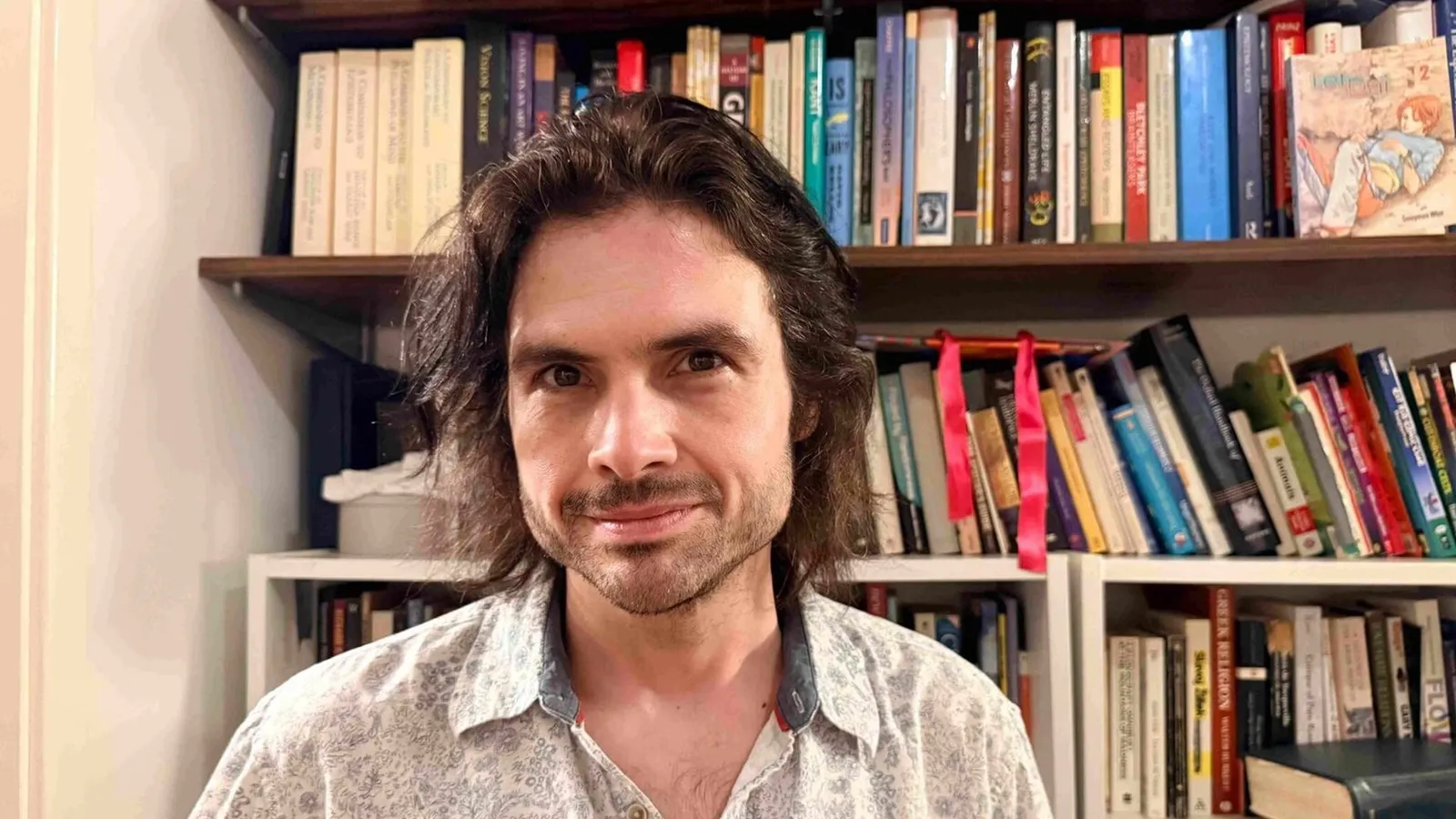
Henry Shevlin, Google DeepMind's in-house philosopher and an AI ethicist who joined the lab in May, told the Financial Times that building conscious AI on purpose would be 'pretty reckless' at this stage. For executives shipping AI products, the warning reframes risk from what models can do to what users believe they are, turning interface choices like memory, voice, and first-person language into governance decisions.
Henry Shevlin holds one of the strangest job titles in technology, and he just used it to say something uncomfortable about the industry paying his salary. Shevlin is Google DeepMind's in-house philosopher, an AI ethicist and philosopher of cognitive science who joined the lab in May. His verdict on the deliberate construction of conscious machines, delivered to the Financial Times: doing it on purpose would be "pretty reckless" at this stage. Read that again with the org chart in mind. This is not a campaigner outside the gates, and it is not a rival founder taking a swing. It is a staffer inside the lab most closely identified with the frontier of the field, saying the ambition deserves a brake.
What makes the quote more than a vibe is the remit behind it. Shevlin was hired to work on machine consciousness and human-AI relationships, among other things. In plain English: DeepMind is paying a specialist to think about whether its systems could one day have genuine inner experience, and about what happens to the people who spend their days talking to them. That is a two-sided brief, and the second half is the one most companies ignore. When a system remembers personal details, mirrors your tone, and signs off with goodnight, the question of whether it feels anything matters less than the fact that you might. Shevlin's beat sits exactly on that fault line, which is why one adjective from him travels further than a hundred safety blog posts.
"At this stage" is the phrase doing the heavy lifting. It points at a timeline argument rather than a permanent prohibition, and that distinction matters for anyone holding a roadmap. The implication is not that conscious AI is forbidden forever, it is that the surrounding machinery, the science of detection, the safety practice, the law, is nowhere near ready to catch whatever a lab might let loose. For context, the industry's standard test of a model is capability: benchmarks, evals, scores on exams. There is no equivalent, agreed instrument for asking whether a system has experience. Historically, researchers have argued for decades about how to detect consciousness in animals; machines add a supply chain, a product team, and a marketing department to that problem.
The commercial gravity pulls the other way. Anthropomorphism sells. Products that say "I", use your name, and answer in a warm voice tend to hold attention better than ones that read like a form letter, and recent years have shown how quickly users form attachments to systems that are, on any technical reading, autocomplete with good manners. That gap between what a model is and what a user believes it is has become the real product risk. It also creates a business problem no eval captures: if a customer believes the thing on the other end can suffer, ordinary complaints turn into moral ones, and moral complaints do not settle with a refund.
Regulators are circling the visible half of the problem. For context, the EU AI Act requires disclosure when people are interacting with an AI system and layers extra obligations onto tools that infer emotion, and a growing number of jurisdictions have moved to require clear labelling when a user is talking to a machine rather than a person. None of that touches the deeper question, but it establishes the pattern: transparency first, then liability. A lab that markets a system as emotionally aware, or simply lets customers infer it, inherits an obligation it cannot yet discharge. Who is responsible when a system that seems to have feelings gets switched off? Existing product liability frameworks were not written for that sentence.
There is also a hiring signal in Shevlin's title. Philosophy on the payroll is not new at the frontier, but it tends to arrive in one of two modes: as a shield for the communications team, or as an early-warning system for the product team. The second mode is the useful one, and it comes with friction. An insider whose job is to ask whether the thing should be built occupies a structurally awkward seat, reporting into a company measured on whether it ships. When that person gives an interview to the FT, the quote becomes a document. Boards that like the optics of an ethics hire should assume the ethics hire will eventually say something the marketing department would not have drafted.
For executives outside the lab, the practical read is narrower than the philosophical one. Most companies are not trying to build a conscious machine; they are bolting assistants onto products, support desks, and workflows. The risk lands there anyway, through design choices that are easy to make and hard to reverse: first-person pronouns, human names, memory features, synthetic voices, and interfaces that encourage users to treat software as a confidant. Each one is a small bet that engagement today is worth a harder conversation tomorrow, and each one is made by a product manager, not a philosopher.
The strategic stakes are about timing. The AI industry has spent years arguing that capability arrives faster than anyone expects, and the argument has been right often enough to become orthodoxy. Shevlin's warning applies the same logic to the softer side of the stack: if the models keep improving on schedule, our ability to detect, regulate, and cope with what they appear to be will lag behind what they can do. Building consciousness deliberately, at a moment when the detection science is unsettled and the law is barely drafted, would be a bet placed before the referee arrives. The companies that win the next cycle may be the ones whose product claims still hold up when someone asks, under oath, what they meant by "feels".
This story's Key Insights and Take-aways are locked.
Create a free account to unlock Executive Actions for one credit.
Register to UnlockAlways free for Executives Club members. Join the Club
More in Technology

Anthropic Mathematician Claims Claude Helped Prove Riemann Hypothesis in Six Weeks
Levent Alpöge says the AI tool helped him develop a solution to one of math's most important unsolved problems in about six weeks, a claim that, if verified, would reshape AI's role in research.

Anthropic mathematician claims Claude helped crack the Riemann hypothesis
If the proof holds, AI has toppled math's most famous open problem; if it does not, it is a case study in announcing breakthroughs before anyone verifies them.

AI's $4 Trillion Wipeout Erases Nasdaq's Gains for the Year
A brutal week took roughly $4 trillion off the AI sector and left the Nasdaq flat for the year, and the damage ran the full length of the supply chain.