
Donald Iwerks, Disney projection pioneer, dies July 9 at 96
The industry loses a man who helped build modern cinematic immersion, from projection technology to 3D and large-format film.
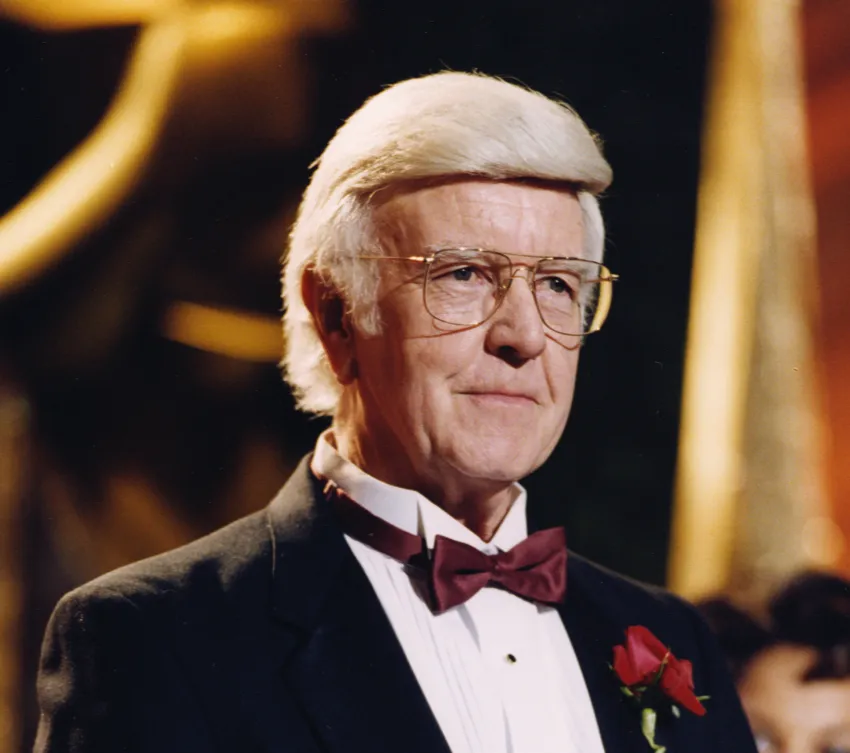
Donald Iwerks, son of Mickey Mouse co-creator Ub Iwerks and a long-time Walt Disney Company technician, died July 9 at age 96. Over six decades, he worked on Disney projects and co-founded Iwerks Entertainment, pioneering advances in projection technology, 3D, and large-format filmmaking.
Donald Iwerks, the Disney camera technician and co-founder of Iwerks Entertainment, died July 9 at 96. He spent more than six decades working on projects for The Walt Disney Company, and he also built his own studio, Iwerks Entertainment. In short, he was one of those behind-the-scenes innovators who quietly moved cinematic storytelling forward while the audience just enjoyed the ride.
The headline stake is simple: projection technology, 3D, and large-format filmmaking are not “nice-to-haves” for immersive entertainment. They are the physical, technical foundation that makes immersion possible at scale. Donald Iwerks pioneered innovations in those areas, which means the modern experience of seeing a film feel bigger, deeper, and more present has his fingerprints on it, even when viewers never know the name.
To understand why this matters to executives, you have to think beyond the credit roll. Immersive entertainment is an ecosystem. Studios need production workflows that can capture and translate depth, scale, and clarity. Distributors need projection and display systems that can reliably deliver those visuals in theaters and other venues. And theater operators need hardware and operational stability, because a projection or 3D failure is not just a technical glitch. It becomes a direct hit to customer trust and revenue.
Donald Iwerks’s career sat at the intersection of all three. The source notes that he was a son of Mickey Mouse co-creator Ub Iwerks, and that he worked on Disney projects for over six decades. That combination matters. When families, companies, and creative missions overlap over generations, the result is often long-cycle technical progress, not quick experiments. Projection systems, 3D methods, and large-format formats are the kind of technologies that improve by iteration and by accumulation of know-how, and that is exactly the kind of work someone can do over decades.
There is also an “ecosystem effect” executives should remember. When someone pioneers foundational display or filming technology, the downstream ecosystem grows around it. Filmmakers build on what the tools can do. Equipment makers and integrators refine what gets deployed. And brands that rely on immersive experiences can differentiate without constantly reinventing the underlying physics. In entertainment, that kind of foundation becomes strategic advantage. It lowers friction for new content, because the delivery system is already mature.
Iwerks Entertainment, the studio Donald Iwerks co-founded, further emphasizes that his impact was not limited to one employer. The source explicitly says he spent time both on projects for The Walt Disney Company and through his own studio. That split is important for leadership lessons. It suggests a working model where technical creators keep an internal relationship with large platforms, while also maintaining an independent channel for experimentation and specialized innovation. For boards and investors, that dual-path approach is often the difference between incremental upgrades and step-function capability.
Now zoom out to the broader industry. Immersive entertainment has become a competitive battleground, not only for studios but for any company trying to capture attention and command premium pricing. That puts extra pressure on the “infrastructure layer” of media. If projection technology and 3D and large-format filmmaking advance, the whole value chain benefits, from content variety to theatrical adoption. If they stall, everything else starts to feel less magical, even if the script and acting are outstanding.
Because Donald Iwerks pioneered those areas, his death on July 9 at 96 is more than an obituary. It is a reminder of how much of the modern entertainment experience depends on the unglamorous labor of engineers, technicians, and camera professionals who turn creative ambition into something the audience can actually see. For executives leading studios, venues, or technology partnerships, the second-order stake is obvious: innovation is not only a studio story. It is a platform story. And platforms are built by people like Donald Iwerks, long before any audience understands what they are getting.
This story's Key Insights and Take-aways are locked.
Create a free account to unlock Executive Actions for one credit.
Register to UnlockAlways free for Executives Club members. Join the Club
More in Business

SK Hynix opens at $170, raises $26.5B, and tops foreign IPO records
In Friday's Wall Street debut, SK Hynix turns AI RAM demand into a $26.5B fundraising moment that rewrites comps.

China lands a reusable Long March booster, a first that matches SpaceX and Blue Origin
A barge landing and net-based recovery move China from theory to proof, reshaping the reusability race and satellite ambitions.

AstraZeneca $27B wipeout as Wainua late trial misses cardiovascular target
A failed late-stage heart study triggered a swift market punishment, forcing investors and boards to reset timelines and risk.