

Eli Lilly turns pharma preventive care into a tech-style learning loop
The biggest drugmaker is betting on prevention and building an operating model that looks a lot like big tech.

Eli Lilly, the world’s largest drugmaker, is reinventing how it operates by betting big on preventive medicines and learning from big tech. For decision-makers, the implication is clear: competitive advantage may shift from blockbuster timing to data-driven prevention scale.
Eli Lilly, the world’s largest drugmaker, is betting big on preventive medicines and doing it while explicitly borrowing the playbook of big tech. That simple sentence is a big deal because prevention changes the whole shape of pharma. It is not just “a new product.” It is a different unit of value, a different sales cycle, and often a different customer journey. Instead of waiting for disease to show up and then treating it, prevention aims to stop problems before they become expensive, disabling, or fatal.
What makes Lilly’s move feel like more than a rebranding effort is the framing: it is trying to learn from big tech. In tech, “learning loops” are how companies iterate quickly. They test, measure, refine, and scale what works. In pharma, learning has historically been slower and more linear, constrained by clinical timelines, regulatory approval processes, and the cost of late-stage trials. If Lilly is genuinely applying a tech-like feedback approach to prevention, it is trying to compress the distance between what scientists discover, what trials show, and what the company can reliably scale into real-world impact.
To understand the strategic shift, you need to start with incentives. Traditional blockbuster pharma is built around episodic, high-revenue launches, where the main question is often whether a drug performs strongly enough in trials and launches to justify the years of investment. Prevention flips that logic. The payoff is meaningful, but it is spread over longer time horizons and depends on adherence, appropriate patient selection, and willingness by health systems and clinicians to deploy medicines earlier. That means success is not only about biology. It is about operations, evidence generation, and ongoing performance in the field.
Regulation is the guardrail, and prevention brings extra scrutiny. Regulators require convincing evidence not just that a preventive medicine is effective, but that the benefit outweighs risks for people who may not yet have symptoms. That is a tall bar, and it is one reason pharma has been cautious. However, Lilly’s thesis is that the industry can build smarter evidence and operational systems around prevention, potentially reducing uncertainty by learning faster. “Learning from big tech” matters here because it signals a bet on building processes that are designed for continuous iteration rather than one-time breakthroughs.
There is also a competitive dynamic hiding in the background. If Lilly is moving toward prevention at scale, that pressures rivals to answer a question: Are we going to stay organized around late-stage, launch-centric thinking, or do we build the capabilities needed for early intervention and longer-term outcomes? Prevention can be harder to sell because the market has to be persuaded that earlier treatment is worth it, and that often requires robust real-world data alongside clinical evidence. In other words, it is not just a scientific contest. It is a market-education and evidence-management contest.
For decision-makers, the second-order implications are the real story. Boards and executives are likely to ask whether Lilly is changing how it allocates capital and measures progress. In a prevention-first strategy, pipeline management becomes more about sustained demonstration of outcomes and less about isolated trial readouts. Supply and compliance planning can become more central too, because preventing disease typically involves broader, earlier use. And partnering can matter more, since real-world implementation often involves payers, providers, and health systems rather than only prescribing decisions after a diagnosis.
The bigger point is that Lilly is trying to create an operating model that can scale prevention without turning every step into a slow, isolated experiment. If it works, the competitive advantage may shift away from who has the flashiest late-stage results and toward who can build the fastest learning cycle that regulators and clinicians will accept. That is a profound change for an industry where the default rhythm has long been trial-to-approval-to-market.
Peers in pharma should treat Lilly’s move as a signal, not a headline. When the world’s largest drugmaker says it is reinventing the business by betting on preventive medicines and learning from big tech, it is telling the market where it thinks the next edge will come from. Prevention is where value can accumulate over time, and a tech-style learning loop is how you try to get there with fewer wasted cycles. For executives and board members evaluating strategy today, the question becomes whether your company is set up to learn at the speed your new business model demands.
This story's Key Insights and Take-aways are locked.
Create a free account to unlock Executive Actions for one credit.
Register to UnlockAlways free for Executives Club members. Join the Club
More in Business

Epic and Google drop settlement bid, forcing rival Android app stores by July 22
Google told the court it is ready to carry third-party app stores starting Wednesday, July 22.
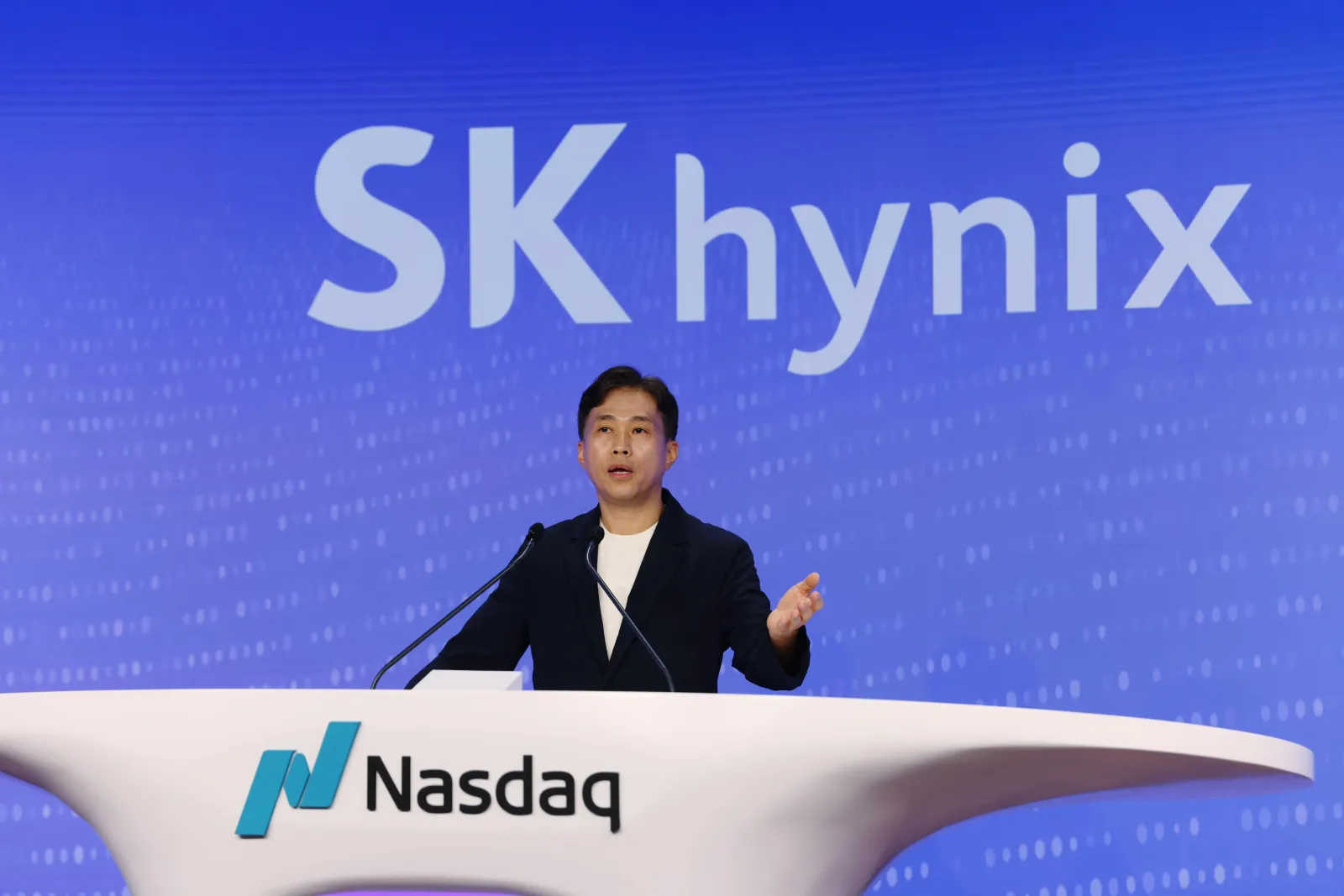
SK Hynix opens at $170, raises $26.5B, and tops foreign IPO records
In Friday's Wall Street debut, SK Hynix turns AI RAM demand into a $26.5B fundraising moment that rewrites comps.

China lands a reusable Long March booster, a first that matches SpaceX and Blue Origin
A barge landing and net-based recovery move China from theory to proof, reshaping the reusability race and satellite ambitions.