
Elon Musk backs Tim Cook: memory price jump is “biggest” he’s ever seen
Apple calls it a “hundred-year flood.” Musk says the supply-demand gap is insane, and companies are already passing costs through.
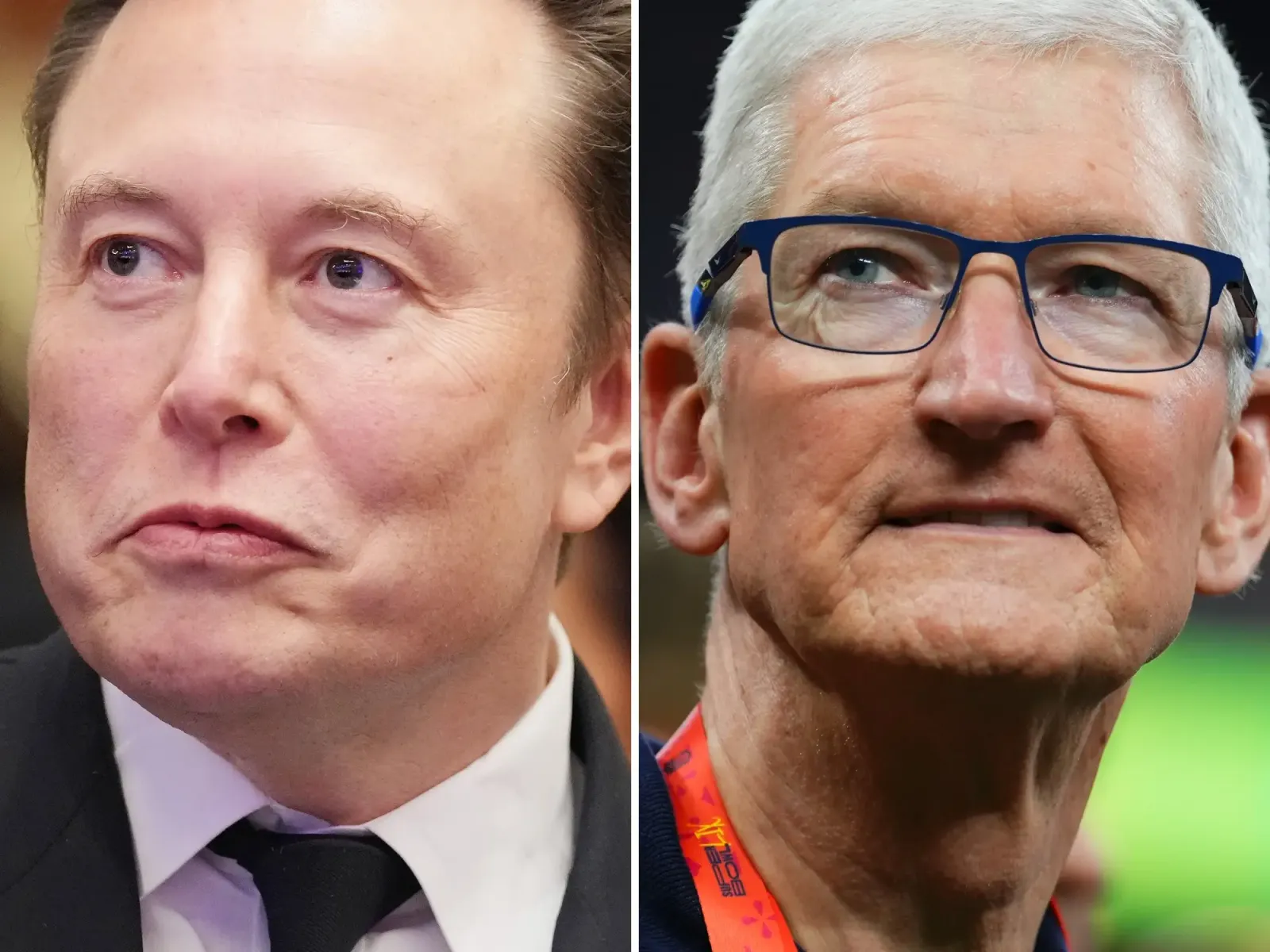
Tesla CEO Elon Musk publicly agreed with Apple CEO Tim Cook’s warning about a global memory chip shortage. The immediate consequence for decision-makers: mounting input costs are squeezing margins and forcing consumer electronics price hikes.
Tesla CEO Elon Musk is throwing his weight behind Apple CEO Tim Cook’s memory-chip warning, calling it the biggest price jump he’s ever seen. Musk posted on X, agreeing with Cook, who earlier this month described the memory shortage as “a hundred-year flood” and said he’d “never seen anything like it in any area in over 40 years.” In Musk’s words, it’s the “biggest price jump in anything I’ve ever seen.”
That’s not just tech talk. It is the same pressure showing up across the consumer electronics stack, where memory chips are widely used in devices, and where soaring input costs have started to hit company margins. The Business Insider report ties the spike directly to the imbalance between demand and production: hyperscalers and data center buildouts are straining memory chip production, and the resulting costs are being passed along via price hikes.
So why do two high-profile CEOs with very different businesses land on the same phrase? Because the shortage is a supply chain problem with a market-wide force multiplier. Memory chips, in this framing, are not a niche component. They are embedded across the consumer electronics universe, and when production cannot keep up with demand, costs rise fast enough to become a strategic constraint, not a temporary inconvenience.
The AI boom is the accelerant. As deep-pocketed hyperscalers and data center buildouts ramp up, demand for memory increases. At the same time, supply cannot flex quickly enough, meaning memory costs skyrocket and overall supply becomes tighter for companies shipping consumer products. The result, as the report describes it, is that consumer electronics companies have begun raising prices to absorb the added costs.
Apple made the move first, raising prices for MacBooks, iMacs, iPads, HomePods, and Apple TV starting Thursday, with some increases as large as $300. Microsoft’s Xbox followed with its own adjustment: Xbox game consoles would be $100 to $150 more expensive beginning August 1. These are the kinds of changes boards and CFOs hate because they can look like margin salvage, but they are also the kind that keep companies from bleeding cash if supply and input pricing stay broken.
Musk’s framing cuts to the core equation: the shortage is not merely “tight.” It is structural in the short term. He wrote on X that “the production shortfall relative to demand is insane,” and that “MUCH higher production is needed.” In executive terms, that is a request for capacity, not a request for patience. And Musk has already connected this specific constraint to Tesla’s broader AI ambition.
During Tesla’s Q4 earnings call in January, Musk said Tesla could become “limited by supplier output of chips,” adding that “memory is an even bigger limiter than AI logic.” That is a strong claim because it flips the usual narrative. Instead of treating AI constraints as algorithmic, he’s saying the real bottleneck is the physical components needed to run and scale systems. For boards and operators, that matters because it points to sourcing, contracting, and capital allocation decisions that can influence delivery timelines and project scope.
Part of Tesla’s response, per the report, has been to pursue upstream capacity. Musk earlier announced the Tesla Terafab joint project with SpaceX and Intel, described as a multibillion-dollar initiative to build a chip production facility that “combin[es] logic, memory and advanced packaging under one roof.” In other words, instead of waiting for the market to fix itself, the strategy is to move closer to where the shortage originates, potentially reducing dependency on external supply swings.
At the same time, Apple and Microsoft’s price actions show the other side of the equation: when production capacity does not quickly expand, even the best-managed consumer brands can only do so much besides adjust pricing and preserve gross margin targets. For executives in any hardware-adjacent category, this moment is a stress test of cost pass-through, demand resilience, and supply visibility. And for AI builders across industries, it is a reminder that the bottleneck is not always models. Sometimes it is memory, and the bill arrives before the compute does.
This story's Key Insights and Take-aways are locked.
Create a free account to unlock Executive Actions for one credit.
Register to UnlockAlways free for Executives Club members. Join the Club
More in Technology

Nvidia's $89B data center quarter: the 9 companies cashing in
The AI buildout is minting fortunes beyond GPUs, and memory, cloud, and cooling suppliers are riding the same wave.

Google quietly links your phone number to every Android account on your SIM
Adding a SIM now ties your phone number to all Google accounts - and future accounts inherit it. Here's the security and privacy stakes.

Hijacker AI 'Skynet mode' runs 100,000 attack steps against exposed models
Symantec caught a criminal AI agent that borrows other models, steals data, and mines crypto; the only relief is no confirmed victims yet.