

Elvis Rightsholders Sue Anthropic for $41M Over 274 Songs in AI Training
The suit against Claude's maker could decide whether AI companies must pay for music catalogs, and it raises the legal stakes for every generative AI firm.
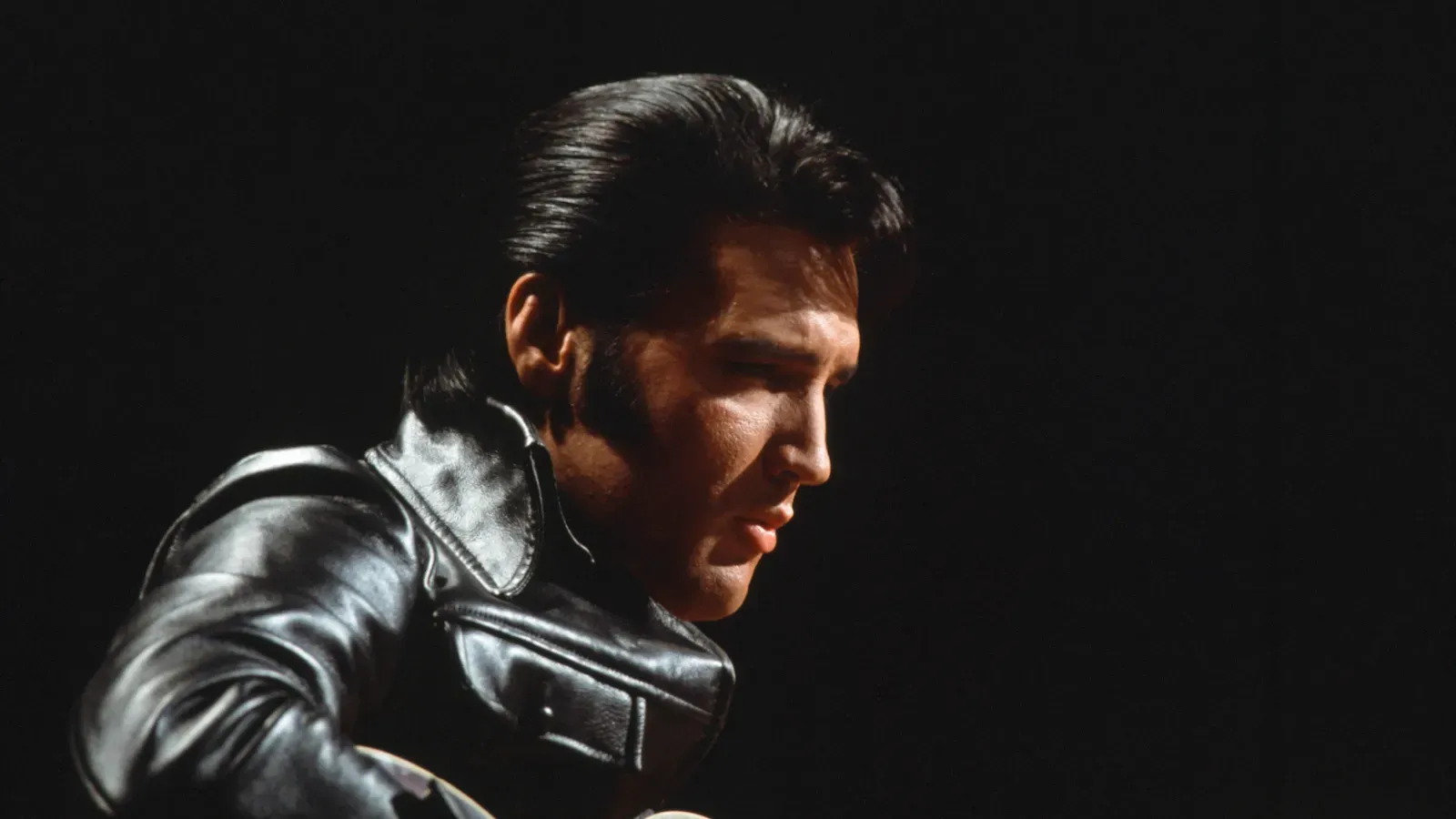
Elvis Presley's rightsholders have sued Anthropic, the company behind Claude, for $41 million, alleging it trained on 274 songs without permission. The case intensifies a wave of AI copyright litigation that could force AI firms to clear licensing rights for training data.
Elvis Presley's rightsholders have sued Anthropic, the AI company behind Claude, for $41 million, accusing it of training its models on 274 Presley songs without permission. The lawsuit, reported by Rolling Stone, does not just hinge on a single catalog; it challenges a core assumption of the generative AI boom: that publicly available creative works can be freely absorbed into a model's training data. If the plaintiffs win, the cost of building AI could rise sharply, and not just for Anthropic. If Anthropic wins, content owners across music, publishing, and journalism may lose leverage in every future negotiation with AI developers.
The rightsholders are not subtle about their stance. "The Elvis Plaintiffs are deeply protective of these iconic songs," their lawyer states in the complaint. That protectiveness reflects commercial reality. Elvis Presley's catalog is more than cultural heritage; it is a live revenue stream, with estates and publishers collecting royalties from streaming, downloads, film placements, and merchandise. The lawsuit's $41 million demand signals that the estate sees Anthropic's use not as a harmless technical step but as an unauthorized exploitation of valuable property. The plaintiffs want to establish that AI companies must ask before they take.
The suit centers on 274 compositions, which include some of the most recognizable songs in American music. According to the complaint, Anthropic reproduced those lyrics in training materials and then built a model capable of generating text that echoes or reproduces the originals. The rightsholders argue that this reproduction, even if internal to the AI's learning process, constitutes copyright infringement. They are seeking $41 million in statutory damages, a figure that could rise if the court finds that Anthropic acted willfully. For a company like Anthropic, which has positioned itself as more responsible than rivals in AI development, the accusation of willful infringement is particularly uncomfortable.
This case is part of a broader legal reckoning for generative AI. Across the industry, creators and rights owners are testing whether the fair-use doctrine, which has historically allowed limited copying for purposes like commentary and critique, extends to mass ingestion of copyrighted works into AI systems. Music is a fertile battleground because lyrics and melodies are concrete, protected expressions, not just facts or ideas. If training on lyrics is deemed fair use, then almost any text or image scraped from the internet could arguably be usable without compensation. If it is not, then AI companies may need to license every meaningful dataset, a logistical and financial burden that could reshape the AI industry's economics.
For the music business, the suit is a high-stakes hedge. Record labels and publishers have watched AI-generated covers and voice clones flood the internet, and they are worried about losing control of their intellectual property. Elvis's rightsholders, in particular, have spent decades carefully guarding the singer's image and catalog. Treating AI training as a violation is consistent with that strategy. It also gives other estates a template: sue first, establish precedent, and force AI companies to treat music as a licensed input rather than free fodder. The $41 million figure, while significant for Anthropic, is arguably small compared with the precedent it could set.
Anthropic is not the only AI company in the crosshairs. Developers of large language models have faced a rising number of copyright claims from authors, news outlets, and visual artists, and courts have yet to draw a clear line between permissible learning and infringing copying. Some judges have allowed copyright claims to proceed past initial motions; others have pushed companies toward settlement. The outcome of the Elvis case could influence how other courts view copyrighted work in training sets, especially when the copyrighted material is reproduced verbatim in model outputs. If the rightsholders can show that Claude spits out near-exact lyrics on request, the fair-use defense gets weaker.
For executives negotiating AI deals, the practical message is straightforward: content is now a liability, not just a resource. Any company building a model on scraped data should audit its sources, map which works are copied into training sets, and consider whether it can defend that use in court. A licensing agreement may be expensive, but it is often cheaper than litigation, potential damages, and the reputational cost of being the company that took Elvis Presley's songs without asking. Meanwhile, owners of iconic catalogs, whether music, books, or photographs, now have a playbook: document the works, calculate statutory damages, and file suit. The law is moving, and both sides are racing to shape it.
The Elvis case also sends a signal to boards and investors who fund AI startups. Due diligence on intellectual property is no longer just about patents and trademarks; it must include a review of training data provenance. A model built on unlicensed creative works is a known legal risk, not a hypothetical one. The $41 million demand may be modest relative to Anthropic's valuation, but follow-on suits, class actions, and regulatory scrutiny could multiply the cost. For founders and operators, the lesson is to assume that copyright owners are watching, that they will enforce their rights, and that the era of free training data is ending.
As the case moves forward, the central question is whether a machine's transformation of a song into statistical patterns is transformative enough to excuse the copying. The rightsholders say no. Anthropic has not yet responded publicly in detail to these specific allegations. But the outcome will matter far beyond Memphis or San Francisco. It will help define how the next generation of AI is built, how creators are paid, and whether the deals struck between content owners and AI developers happen in a courtroom or at a licensing table.
This story's Key Insights and Take-aways are locked.
Create a free account to unlock Executive Actions for one credit.
Register to UnlockAlways free for Executives Club members. Join the Club
More in Business

A flaw in PHP just forced governments to pull their own sites offline
European agencies from Belgium to Germany took websites dark to patch a critical weakness in the language behind almost 70% of the web, and the blast radius extends far beyond government portals.

BioWare shuts down, Mass Effect 5 dead after $55B EA buyout
The legendary RPG studio's closure lands months after a $55 billion investment group buyout of EA, raising tough questions for gaming's biggest acquirers.
Musk weighs Tesla-SpaceX mega-merger as boards form review panels
Special committees at both companies will examine a tie-up that could fuse electric vehicles and space launch, forcing a fresh look at governance and valuation.