

Embark tracks 30TB/day of bullet data for Arc Raiders and it hits BigQuery in 2 seconds
A data pipeline built for anti-cheat and matchmaking now runs at enormous scale, with weapon tuning and behavior-based fairness tied to it.
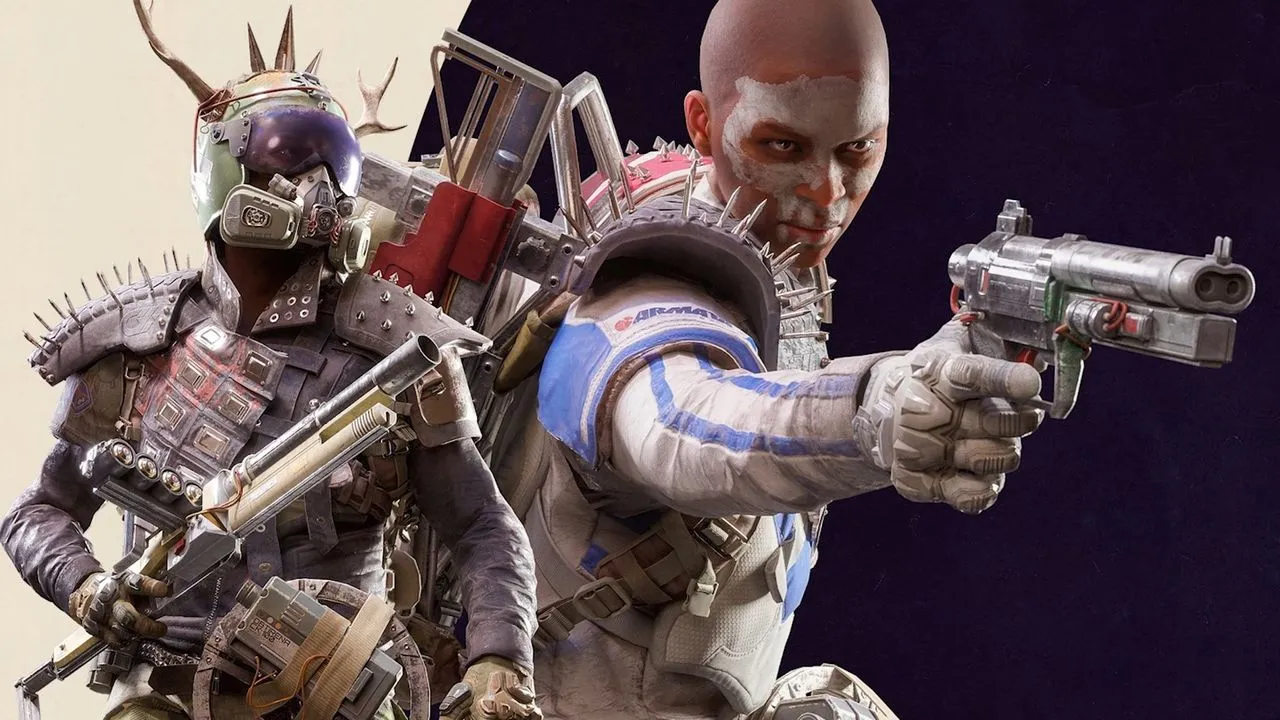
Embark Studios data engineer Mattias Andersson described at Nexon’s developer conference how Arc Raiders tracks “every bullet” and other player events, producing more than 100 billion events per day at peak. The scale, latency, and use cases matter for decision-makers because it underpins anti-cheat rollouts, bug detection, weapon balance, and matchmaking fairness.
Arc Raiders was at its peak, Embark’s pipeline was busy. Data engineer Mattias Andersson told Nexon’s developer conference that Embark tracks “every bullet” in its games, including when bullets hit, where players are, and even the high-volume reality that games can include miniguns. The result, when Arc Raiders was regularly pulling over 400,000 concurrent players on Steam, was a tracking load of more than 100 billion events per day. Andersson pegged that at 30 terabytes of data per day.
And the part that makes this more than just a brag is speed. Embark can push the tracking into BigQuery with less than two second latency, so that “as soon as you fire a bullet,” two seconds later the dev team can run a BigQuery query to find out if you hit or not. Andersson’s blunt framing is essentially a real-time feedback loop for gameplay verification and analytics: fire, then query, then adjust systems.
To understand why this matters, you have to remember what online games are really optimizing. Studios are not just building content. They are building a live service where competitive integrity, player experience, and engineering stability all depend on fast detection and fast response. Embark’s event tracking serves multiple purposes, not a single “cool demo.” Andersson said Embark uses it for anti-cheat purposes, bug detection, improving elements like weapon balancing based on accuracy and damage, and for tuning Arc Raiders’ behavior-driven matchmaking.
That last use case is where the data turns into politics, or at least into player outcomes. Andersson explained Arc Raiders matchmaking as a way to quantify how aggressive a player is, then pair people accordingly. “We try to find out how aggressive a player you are,” he said. “We want to know who shot first in any encounter.” The point is to group PvP-heavy players with PvP-heavy players who initiate fights often, while “friendly players” who never initiate get moved in with more friendly players.
There is also an important limitation baked into the system, and it connects back to a concept Arc Raiders designer director Virgil Watkins previously told GamesRadar+. The tracking can identify who shot first and who takes damage, but it does not attempt to infer intent. Watkins’ earlier explanation (as reproduced in this report) makes the constraint clear: if a very bad player is the aggressor, misses their shots, and a good player defends themselves, the game can’t know the original intent. It simply sees the outcome, like the aggressor getting killed.
From an executive perspective, the key takeaway is that “accuracy of behavior tracking” and “fairness of outcomes” are related but not identical. More granular telemetry can improve weapon balancing and matchmaking fit, but it still cannot replace intent. That creates second-order consequences for how studios measure success. You do not only look at ban rates or cheater reduction. You also watch for mismatches that come from the difference between initiating fights and meaning to initiate fights.
The pipeline itself, Andersson said, can be labyrinthine from the outside, with dashboards, printouts, and applications. But some tools are intuitive for debugging. Embark has a custom “round viewer” that can replay player actions, including a “map replay” that shows where people move throughout a round. Heatmaps show where players move, where they die, and clusters of other actions. The report also notes an in-engine voxel heatmap for Arc Raiders’ Stella Montis map, which confirms death-box outcomes in a way that is visually straightforward.
And while the data is already doing heavy lifting, Embark is still tightening the fairness perimeter. The report says Embark has “completed our rollout of Denuvo Anti-Cheat to all players,” and that it is pursuing “a more extensive update” aimed at fair play. In other words, the telemetry is not just for analytics. It is a support system for enforcement and iterative improvement. When you can query bullet-hit outcomes within two seconds and replay rounds down to movement clusters, you can investigate suspicious patterns, verify bug behavior, and refine the matchmaking models that decide who ends up in which PvP encounter.
Finally, Arc Raiders may be past its peak. Some players have moved on, or may be waiting for the big October update, and the report says the game is averaging far fewer concurrent players than its earlier Steam highs. But the core point remains: the studio built infrastructure that can handle massive throughput and low latency when the game is hot. For executives, founders, and investors watching live-service bets, that’s the real strategic signal. The studios that can scale observability and enforcement quickly, without waiting days for post-match reconstruction, can iterate matchmaking, weapon balance, and anti-cheat at the pace players and regulators increasingly expect.
This story's Key Insights and Take-aways are locked.
Create a free account to unlock Executive Actions for one credit.
Register to UnlockAlways free for Executives Club members. Join the Club
More in Entertainment

Russell Brand's accuser 'bewildered and confused' as he denies 7 sex charges
The criminal case against the comedian is a live test of how media companies manage talent risk when serious allegations go public.

'It's a Magic Trick': Ballet Experts Say Rosalía's SNL Pose Is Impossible
Three ballet experts tell Rolling Stone Rosalía's gravity-defying SNL stillness shouldn't be possible - and why the debate is now part of the show.

Activision CMO: GTA 6 Will Boost Call of Duty, Not Bury It
Activision's top marketer says Rockstar's blockbuster will drive players back to consoles and into Modern Warfare 4, even as the company admits its recent strategy failed.