

Etsy just drew a line on AI slop: one unedited photo per listing
The marketplace is forcing sellers to prove their items are real, targeting AI-generated listings that buyers say they can't identify.
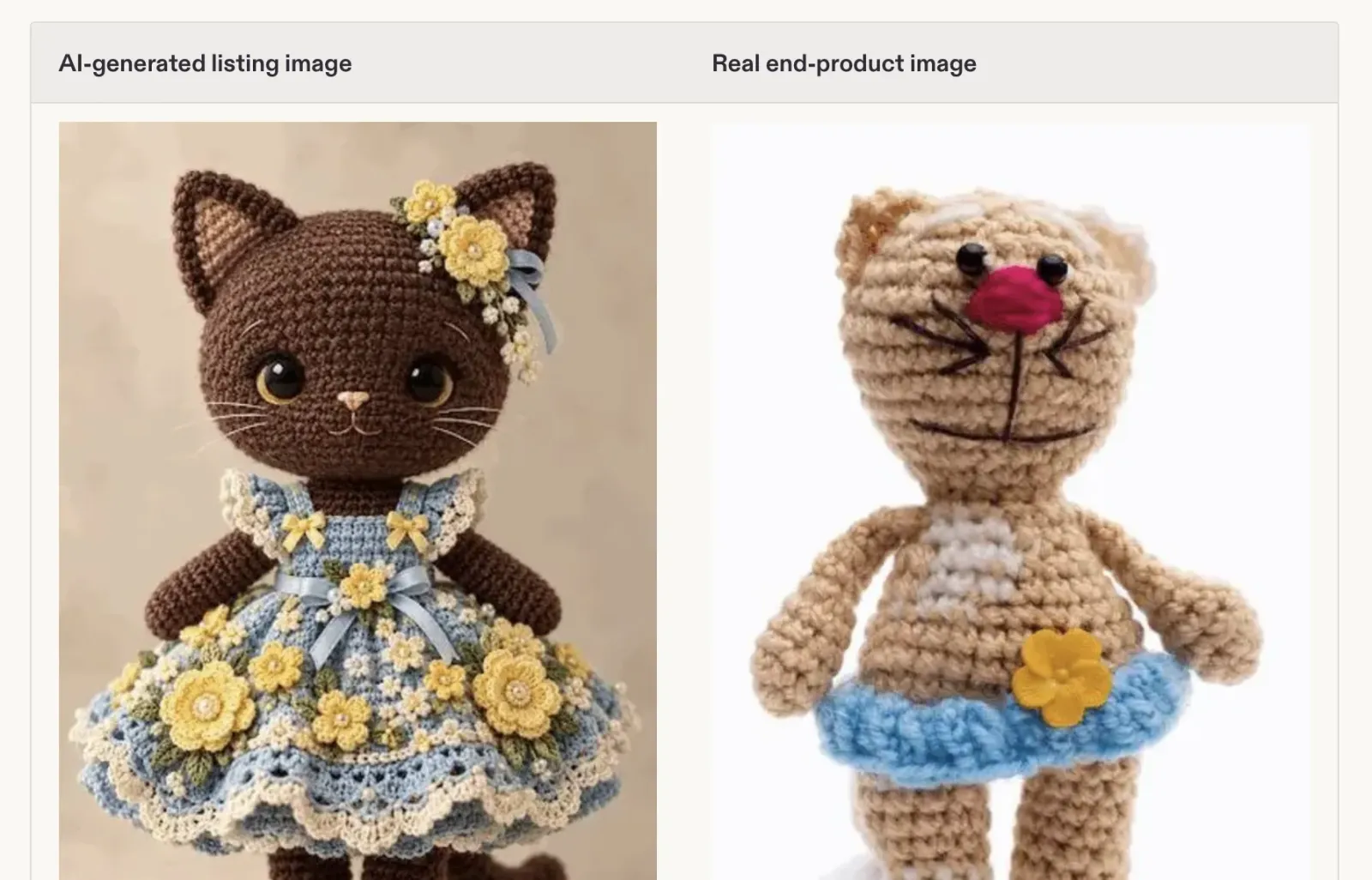
Etsy announced stricter AI-use policies requiring every listing to include at least one unedited photo of the actual item against a real background. The move responds to buyer confusion and seller concerns about AI-generated content appearing alongside authentic handmade work.
Etsy just drew a line on AI slop: every listing must now include at least one unedited photo of the actual item against a real background. The company announced the stricter policy in a post, saying that 'many active buyers say they can't tell which items involve AI-generated content' and that sellers are 'concerned about your work appearing alongside items that use AI in misleading ways.' The rule is a direct attempt to stop the flood of AI-generated listings that have been eroding trust on the platform.
Under the new policy, all photos must 'accurately represent the item a buyer will receive.' The first photo has to be unedited, though the photos that aren't the first one can be edited. That means sellers can still use AI for design, mockups, or lifestyle shots, but the lead image has to show the real product in a real setting. It is a transparency requirement, not a ban on AI. For a marketplace built on handmade and vintage goods, that distinction matters: Etsy is not trying to kill AI, it is trying to keep AI from killing the authenticity that makes the platform valuable.
The move comes as AI-generated content has become a defining problem for online marketplaces. Sellers using AI image generators can create product images that look stunning but bear little resemblance to what ships. Buyers have learned to be skeptical, and the phrase 'AI slop' has entered the lexicon to describe low-effort, algorithm-generated listings. Etsy, which built its brand on handmade and vintage goods, has more to lose than most: its entire value proposition is authenticity. If buyers cannot tell whether a product is real or AI-generated, the platform loses its reason to exist.
For Etsy sellers, the policy is a double-edged sword. Legitimate makers who use AI to brainstorm or edit photos will need to ensure their first image is a raw, unedited shot. Those who have been using AI to generate entire product lines will have to rethink their approach. The policy also creates an enforcement challenge: how will Etsy verify that a photo is unedited? The company did not specify the technical details, but the direction is clear: the burden of proof is shifting to sellers. This could lead to more manual reviews, more seller appeals, and a new cottage industry of 'AI-detection' tools.
This is not just an Etsy problem. Any platform that hosts user-generated listings faces the same tension between enabling creativity and protecting buyers. As AI tools become more accessible, the line between a helpful assist and a misleading fake will only blur. Etsy's policy is an early attempt to draw that line, and it will likely be refined as the technology evolves. The core question is whether a simple rule like 'one unedited photo' can keep pace with AI that can generate photorealistic images of objects that do not exist. And the policy will need to be enforced consistently across millions of listings, which is no small task.
For executives and operators, the takeaway is that AI governance is no longer just about internal policy or copyright. It is now a customer trust issue. The platforms that act first to police AI-generated content will win loyalty from both buyers and sellers. Those that don't will watch their marketplaces fill with listings that look good in a thumbnail and disappoint in person. Etsy is making a bet that transparency is a competitive advantage, and it is willing to impose that bet on its sellers. Boards should ask whether their own platforms have clear rules for AI-generated content before a scandal forces the issue.
The strategic stakes for peers are clear. If you run a marketplace, a social platform, or any business that relies on user-generated content, you should be watching how Etsy enforces this rule. The specific mechanism, a single unedited photo, is simple, but it signals a broader shift: platforms are moving from 'trust us' to 'prove it.' That shift will reshape how AI is used in commerce, and the companies that adapt early will be the ones that keep their users' trust.
This story's Key Insights and Take-aways are locked.
Create a free account to unlock Executive Actions for one credit.
Register to UnlockAlways free for Executives Club members. Join the Club
More in Business
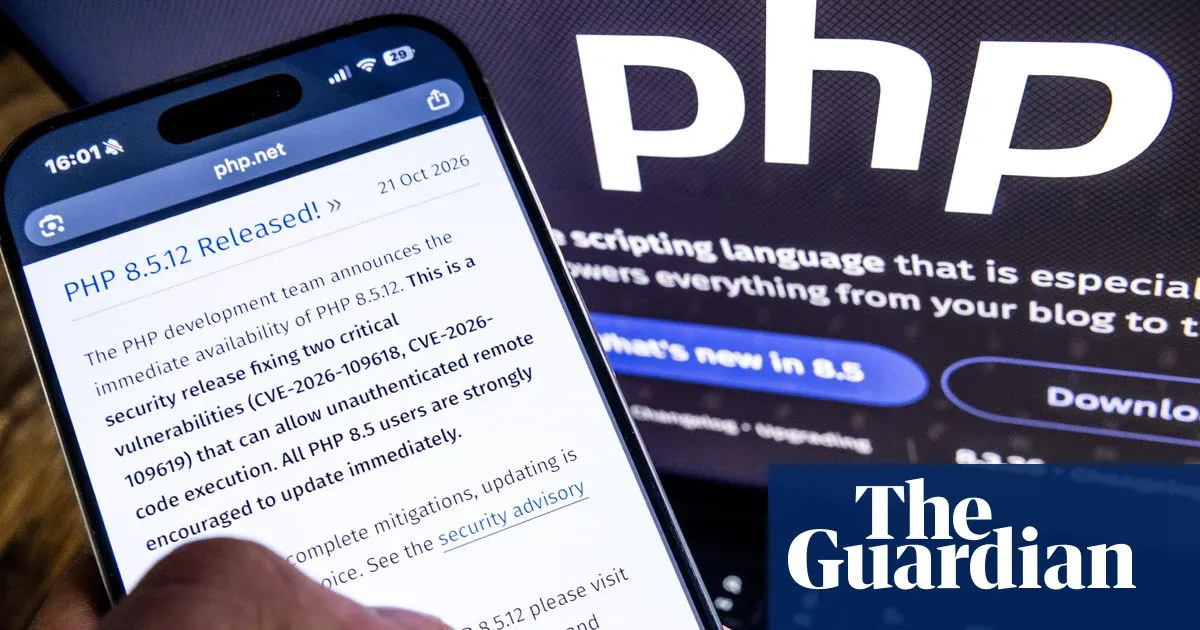
A flaw in PHP just forced governments to pull their own sites offline
European agencies from Belgium to Germany took websites dark to patch a critical weakness in the language behind almost 70% of the web, and the blast radius extends far beyond government portals.

BioWare shuts down, Mass Effect 5 dead after $55B EA buyout
The legendary RPG studio's closure lands months after a $55 billion investment group buyout of EA, raising tough questions for gaming's biggest acquirers.

Musk weighs Tesla-SpaceX mega-merger as boards form review panels
Special committees at both companies will examine a tie-up that could fuse electric vehicles and space launch, forcing a fresh look at governance and valuation.