
Europe’s wildfire week, Bulgaria’s mammoth reveal, and Ceuta crowds: one photo story
From burning landscapes to exposed ancient remains and Spain border surges, this week’s images signal escalating risk across regions.
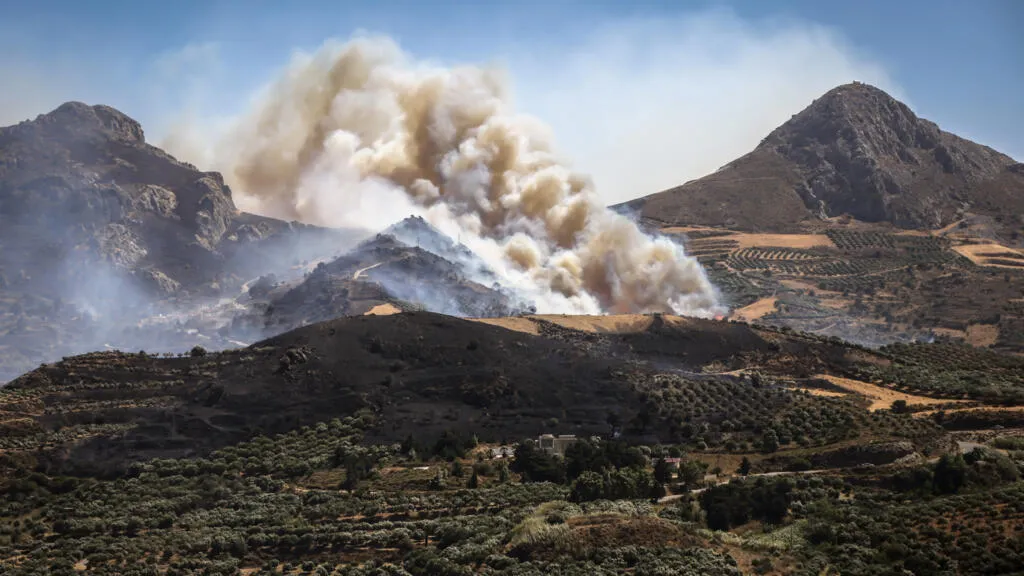
France 24’s weekly photo roundup captured European wildfires, a Japan earthquake that killed dozens, Bulgaria’s record-low water levels exposing a woolly mammoth, and tens of thousands attempting to cross into Spain’s Ceuta before returning home. For decision-makers, the common thread is compounding disruption, from emergency response to supply chain and border strain.
Europe has a way of turning “one-off” crises into multi-week operations, and this week’s images from France 24 show how fast that can happen. Fires burned across much of Europe. In parallel, an earthquake in Japan killed dozens. Meanwhile, Bulgaria’s record-low water levels exposed the remains of a woolly mammoth. And at the same time, tens of thousands tried to cross into Spain’s enclave of Ceuta, only to eventually return home.
If you run a company, manage a portfolio, sit on a board, or oversee public-facing operations, this is not just a gallery of tragedy and weirdness. It is a live demonstration of how physical shocks, climate-linked stress, and human movement can all land within days, and how that compresses decision cycles. The wildfire coverage matters because it implies prolonged emergency footing, degraded logistics routes, and higher operational risk in affected geographies. The earthquake matters because it reminds you that catastrophic infrastructure failures can be global even when the epicenter is far away.
Then there is Bulgaria. France 24 reports that record-low water levels exposed the remains of a woolly mammoth. That detail is uniquely unsettling because it is not only a climate signal. It is also a governance signal. When water levels fall, it changes what becomes visible, what becomes damaged, and what becomes legally and reputationally complicated. Ancient remains are not a standard compliance category, but when they surface, they create an immediate question for authorities and institutions: how do you protect what is exposed while still managing the underlying water scarcity?
Wildfires across much of Europe are the other pillar of the week. Fires are not just “heat and smoke.” They trigger layered second-order effects: emergency services get stretched, air quality worsens, and transport systems can be forced into reroutes or slowdowns. Even where supply chains are resilient, disruptions from road closures, power instability, and staffing limitations can cascade into deliveries and production schedules. Executives should treat this as a stress test of continuity planning, particularly where vendors rely on predictable mobility and stable utility performance.
Japan’s earthquake, which France 24 says killed dozens, adds a different kind of operational shock. Earthquakes tend to hit with suddenness that neither forecasting nor scheduling can fully prevent. The immediate consequence is loss of life, and the longer consequence is damage to facilities, interruptions to local production, and disruption to distribution networks. For companies with manufacturing footprint or procurement links, the lesson is not to guess how hard any single facility will be hit, but to have fast escalation pathways that can move from “monitoring” to “action” when impact is confirmed.
Finally, Ceuta. France 24 describes tens of thousands seeking to cross into Spain’s enclave of Ceuta before eventually returning home. This is a border story, but it is also an operational one. Border surges strain staffing, shelter capacity, medical resources, and security logistics. For decision-makers in adjacent sectors like travel, logistics, compliance, and risk insurance, the second-order effect is predictable: sudden policy shifts and enforcement changes can alter routes, timelines, and costs. Even if the immediate group returns home, the episode still signals volatility in migration flows and the administrative burden they create.
Put together, the week’s images argue for one strategic takeaway: multi-domain disruption is normal now. Climate-linked extremes reveal themselves in unexpected ways, like a mammoth exposed by low water. Human movement pressure shows up alongside environmental emergencies. And sudden disasters like earthquakes can hit far from your headquarters, while still reaching your supply chain. If you are a CEO, CFO, COO, or board member, the job is to ensure your organization can make decisions under overlapping uncertainty, with clear triggers for action, clear ownership across functions, and a willingness to treat “local” events as potential global risk.
These are photographs. But the operational message is concrete. The world is not scheduling shocks one at a time. It is stacking them. The executives who win in that reality will be the ones who planned for compounding risk, not the ones who hoped it would stay singular.
This story's Key Insights and Take-aways are locked.
Create a free account to unlock Executive Actions for one credit.
Register to UnlockAlways free for Executives Club members. Join the Club
More in Politics
Obama Defends Ilhan Omar After Agents Search Her Home in Trump Inquiry
The former president's intervention raises the stakes in a federal probe into immigration paperwork that has put a prominent progressive lawmaker in the crosshairs.

Blair-era minister: cut welfare to fund youth job support
Alan Milburn's call for welfare cuts to fund employment support opens a Labour fight over benefits and the Neet crisis.

Hot September CPI: energy costs surge, voters feel the squeeze before midterms
The latest inflation print lands as Trump campaigns for GOP control of Congress, putting cost-of-living worries at the center of the midterm fight.