
Ex-Labour deputy Tom Watson joins Palantir as NHS contract fight heats up
The former deputy leader now sits inside the data giant just as Labour mayors try to kill its £330m NHS deal and block its £50m Met Police contract.

Tom Watson, the former Labour deputy leader and peer, has taken a full-time position at Palantir, working alongside its UK and Europe chief executive Louis Mosley. The hire lands as Andy Burnham faces pressure to cancel Palantir's £330m NHS contract and Sadiq Khan fights its £50m Met Police deal in court, making Watson the company's political shield inside a Labour-led storm.
Tom Watson, the former Labour deputy leader, has joined Palantir in a full-time role, pairing him directly with Louis Mosley, the company's UK and Europe chief executive. The appointment drops Watson into the middle of two escalating contract battles: Palantir is fighting to keep a £330m NHS contract that Andy Burnham's Greater Manchester government is under pressure to axe, and it is separately in court against Sadiq Khan over a £50m deal to use its AI in Metropolitan Police investigations. Watson, a Labour peer and former cabinet office minister, is now the public face of the very company that Labour mayors are trying to push out of Britain's public sector.
For context, Palantir is the controversial US AI firm that has become one of the most consequential tech suppliers to the British state. Its UK arm already generates an annual turnover of £427m, and it wants to win even more public-sector work. That commercial ambition is what makes Watson's arrival more than a ceremonial post: he will operate alongside Mosley as Palantir tries to fend off political pressure, defend its existing contracts, and unlock new ones in health, policing, and beyond.
The first fight is with Burnham, a former cabinet colleague of Watson's from their time in Gordon Brown's government. The £330m NHS contract, which covers data systems for health services in Greater Manchester, has become a lightning rod for campaigners who argue that handing patient data to a US surveillance-tech firm crosses a line. Burnham's administration is reportedly under pressure to cancel the deal, and Palantir clearly believes that having a senior Labour insider in its corner will help it survive the assault.
The second fight is in court. Khan, the Labour mayor of London, blocked a £50m contract that would have put Palantir's software into Metropolitan Police investigations. Palantir is suing to overturn that block, and the case is now a test of how far public officials can go in refusing to buy AI tools from vendors they consider hostile to civil liberties. Watson's presence gives Palantir a political narrative to counter the legal one: that it is not an outside predator but a company with Labour pedigree on its payroll.
For executives watching from other industries, Watson's move is a case study in how tech companies are hiring political insiders to manage existential regulatory risk. The strategy is simple: when the opposition party becomes the party in power, hire its former leaders. Palantir is not the first company to do this, but it is doing it at a moment when UK public-sector AI contracts are becoming ideological battlegrounds, and when the revolving door between Westminster and Silicon Valley is spinning faster than ever.
The deeper question is whether a former Labour deputy leader can actually move the needle. Burnham and Khan are both Labour, but they have built their reputations in part on standing firm against mass surveillance and unaccountable data sharing. Watson's own record - he resigned as deputy leader in 2019 citing health reasons and later became a vocal critic of online harms - gives him credibility with the party's base, but that credibility cuts both ways. If he defends Palantir too aggressively, he risks being seen as a hired gun; if he stays quiet, the company might as well have bought a very expensive letterhead.
There is also a second-order effect for the UK's public-sector AI market. Palantir's opponents will use Watson's hire as fresh ammunition, arguing that the company is trying to buy political influence rather than win contracts on merit. Palantir's supporters, meanwhile, will point to Watson as proof that the firm is engaging seriously with Labour's values. Either way, the debate is no longer just about technology or price; it is about who gets to shape the rules for AI in British government, and Watson is now on the inside of that negotiation.
For CEOs and boards considering similar public-sector expansions, the lesson is that political hires are not a cheap insurance policy. They come with public scrutiny, editorial coverage, and the risk of mobilising the opposition. Watson's appointment does not guarantee Palantir a single new contract, but it does guarantee that the company's name will stay in the headlines. The next quarter will show whether that is a clever hedge or a costly distraction.
This story's Key Insights and Take-aways are locked.
Create a free account to unlock Executive Actions for one credit.
Register to UnlockAlways free for Executives Club members. Join the Club
More in Business

Royal Caribbean just spent $3B to own half of Sandals
The cruise giant is buying a 50% stake in the all-inclusive resort chain for $3 billion, a bet that land-based vacations are the next growth engine.

Paramount's Ellison: Merger Clearance Done, WBD Deal by Oct 1
David Ellison says the Paramount-WBD merger has full clearance after settling with state AGs, clearing the path for an October 1 close.
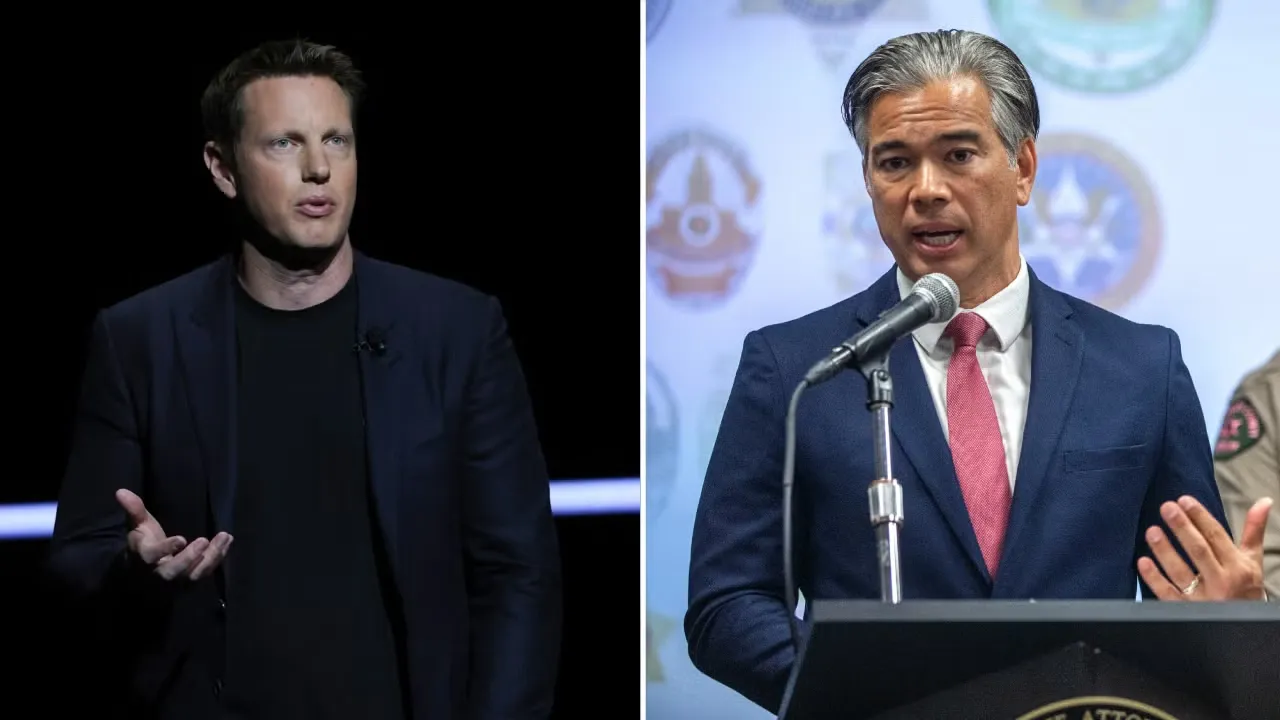
Paramount settles with 12 states, $110B Warner merger clears final hurdle
David Ellison's studio avoids a March trial and a $7M-a-day ticking fee by settling with state AGs over local job losses.