
Extreme heat turns wildfires deadly across Sicily, France, Spain, killing three firefighters
Thousands were evacuated as rescue teams fought dozens of blazes driven by dry conditions and worsening weather.

Wildfires swept southern Europe on Wednesday, killing three firefighters and forcing thousands to evacuate in Sicily, southwestern France, and central Spain. For decision-makers, the operational and risk implications compound as extreme heat and dry weather intensify.
Wildfires ravaged southern Europe on Wednesday, killing three firefighters and forcing thousands of people to evacuate in Sicily, southwestern France, and central Spain. The trigger was brutally straightforward: extreme heat and dry conditions fuelled fires that quickly overwhelmed local response capacity. Rescue teams battled dozens of fires across the region as officials warned about increasingly severe weather events.
For executives, the immediate takeaway is that wildfire risk is not a distant, seasonal backdrop. It is a day-to-day operational threat that can shut down logistics, disrupt staffing, and stretch emergency services in multiple jurisdictions at once. This Wednesday’s deaths of three firefighters are a stark reminder that even trained responders can get caught in rapidly changing conditions, especially when the fire environment accelerates.
Zoom out one step and the pattern becomes clearer. Southern Europe routinely faces wildfire season pressure, but the source points to a specific acceleration in the danger: warnings over increasingly severe weather events. When heat spikes and dryness persists, fires do not just burn longer. They ignite more easily, spread faster, and create conditions where containment can become a moving target. That matters for governments and for the private sector, because emergency planning is built around assumptions about how quickly conditions change, how much warning time exists, and whether resources can be shared across regions.
This kind of multi-country episode also exposes a second-order problem: coordination bandwidth. The source describes dozens of fires across Sicily, southwestern France, and central Spain at the same time. When multiple areas are hit simultaneously, mutual aid becomes harder to execute, and dispatch decisions can be constrained by distance, road access, and ongoing hazards. For companies operating in these regions, the operational risk is not only the direct impact of flames near a facility. It is the cascade effect when roads close, transport networks slow, and local authorities prioritize life safety and evacuation routes.
There is also a governance and accountability angle that boards should not ignore. Extreme weather events tend to draw public scrutiny, and that scrutiny often lands on preparedness: training, equipment readiness, emergency communications, and the speed of evacuations when conditions worsen. While the source does not provide details about specific policy actions or regulatory changes, it does clearly frame the environment as one with warnings of increasingly severe weather. In practice, that typically increases the pressure on risk committees to ensure that wildfire scenarios are treated as material hazards, not as generic “acts of nature.”
Capital markets and risk modeling are affected too, even if investors are not actively underwriting wildfire exposure in the same way they do for credit. Insurers, lenders, and risk analysts pay attention when events cluster across geographies, because simultaneous demand for equipment and response services can change cost curves. More broadly, repeated severe events can make catastrophe modeling assumptions feel less reliable. That pushes organizations to revisit how they document readiness and how they account for downtime, damage, and business interruption impacts.
Operational planning also gets harder when evacuations become a mass exercise. The source says thousands of people were forced to evacuate, which implies the need for clear, fast communication and the capacity to move populations safely. For employers, schools, and logistics operators, evacuation scenarios force decisions about where people go, how workforce schedules adjust, and what happens to critical inventory or data systems. Even if your company is not on the “fireline,” your systems are still downstream of evacuation traffic patterns and emergency response routes.
Strategically, this is a reminder that extreme heat and dry conditions can turn a wildfire event into a broader societal disruption in a single day. As the source notes, rescue teams battled dozens of fires while warnings increased about increasingly severe weather. That combination is what executives should treat as the new baseline risk signal. If you run operations across Europe, you should assume that the next incident may not stay local, and the next warning may translate into escalating conditions faster than plans expect.
This story's Key Insights and Take-aways are locked.
Create a free account to unlock Executive Actions for one credit.
Register to UnlockAlways free for Executives Club members. Join the Club
More in Politics

LA County: DOJ's 20,000 'noncitizen' voter list is 'unreliable,' includes U.S.-born
Preliminary review by Los Angeles County election officials finds errors in the federal list, raising the stakes for voter roll integrity ahead of November.

Trump's $1.5B Pentagon chip investment lands in North Carolina
A $1.5 billion defense infusion for North Carolina chipmaking signals a new era of Pentagon-backed reshoring - here's what it means for the industry.
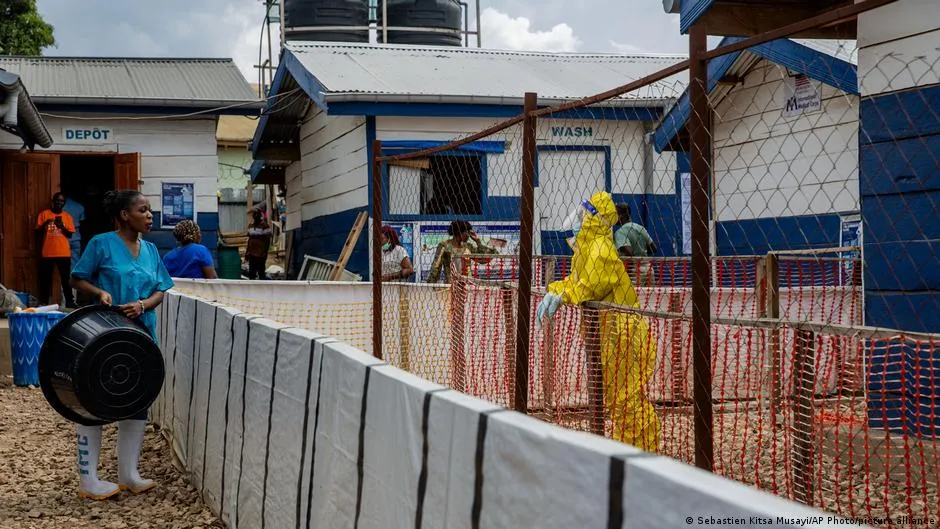
Nigeria confirms first Ebola case in Abuja, a woman just off a Uganda flight
Health Minister Muhammad Ali Pate says the patient flew in from Uganda, putting Africa's latest outbreak on Nigeria's doorstep.